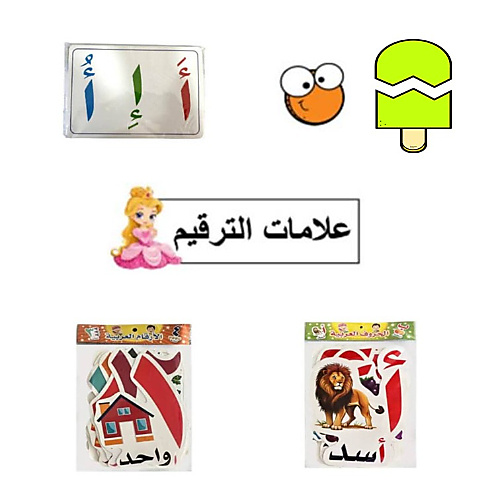
 All
All
Chicken and eggs
2.500 KWDBee Strategy 3
2.500 KWDBee Strategy 4
2.500 KWDWay of questions
2.500 KWDFootball 2
3.500 KWDDays of the week in English
3.000 KWDColor box
2.750 KWDNew
English letters
6.500 KWDMeans of states of matter
2.500 KWDFun answer for boys
2.000 KWD2.500 KWDXO game
3.500 KWDIce cream dish
3.000 KWDNew
Information Sorting Worm
3.000 KWDNew
Laptop_English
2.500 KWDNew
Laptop_Arabic
2.500 KWDNew
Punctuation Marks
2.750 KWDNew
Life stages method
4.750 KWDNew
"Medial Hamza Tool"
3.750 KWD"Arabic numbers – the number with the quantity"
2.500 KWDNew
"Demonstrative Pronouns Tool"
3.000 KWDNew
"Cards in True/False Shape"
1.000 KWDArabic Letters 3
Details:Number of Cards: 28 cards representing all Arabic alphabet letters. Size: A5 for each card. Materials:The cards are made of paper and laminated for durability. Equipped with a magnetic backing for easy attachment to a whiteboard or any metallic surface.Description:Design: Cards shaped like colorful pencils, each featuring an Arabic letter with an illustrative image that starts with the respective letter, enhancing understanding and learning.Usage:An educational tool used to teach Arabic alphabet letters to children in a visual and engaging way, helping them connect letters with words and images.Objectives:Teach Arabic alphabet letters in a visual and interactive manner. Enhance understanding by connecting letters with words and images. Improve children’s reading and writing skills.How It Works:Display the cards on the board in alphabetical order. The teacher introduces the letter, encourages children to repeat it, and connects it to the word and image. The cards can be used in various activities, such as arranging letters, identifying missing letters, or forming words.Applications:Teaching Reading:Help children learn the alphabet and pronounce letters correctly. Building Vocabulary:Introduce children to new words starting with each letter. Classroom Activities:Organize competitions like arranging letters or selecting the correct letter.Target Audience:Children in kindergarten and early primary grades.Strategy Benefits:Promotes interactive and enjoyable learning. Improves visual discrimination skills and helps connect letters to words. Provides an innovative educational tool to reinforce the alphabet in children’s minds. Supports active learning through classroom activities.
4.000 KWD4.750 KWDDate bowl
1.750 KWDNew
Ramadan dish 1
2.500 KWDPillars of Islam
2.500 KWDRamadan dish 2
2.500 KWDvon Anzor in English
2.500 KWDMovements for the Arabic language 1
2.500 KWDMovements for the Arabic language 2
2.500 KWDThe mosque and the prostrations of prayer
Strategy DetailsStrategy Name: The Mosque and Prayer Rugs Number of Cards: 6 cards, with a magnetic adhesive on the back Size: 5 cards A4 + 1 card A3 Strategy Type: An educational strategy in the form of laminated whiteboard cards.Components:Mosque and Prayer Rugs Cards: The strategy consists of one card representing a mosque and 5 cards representing prayer rugs in different colors (yellow, red, green, blue, pink). The cards are designed attractively and in vibrant colors to capture students' attention and encourage participation.Educational Purpose:Teaching Classification and Matching: The strategy aims to teach students how to classify the different prayer rugs by color and match them with the mosque, enhancing their classification and matching skills. Developing Fine Motor Skills: The strategy encourages students to move the cards and place the prayer rugs in the correct position near the mosque, helping improve hand-eye coordination. Enhancing Visual Understanding and Learning Through Play: The strategy helps develop students' visual understanding by using familiar and colorful visual elements, making learning both fun and effective.Usage Method:Writing Questions on Cards: The teacher can write questions or simple instructions on the prayer rug or mosque cards and ask students to answer them while engaging in the activities. Matching Prayer Rugs with the Mosque: The teacher can guide students to match the prayer rugs with the mosque based on color or shape, helping them learn classification and matching. Classifying Colors and Shapes: The cards can be used to teach students how to classify the prayer rugs by color or shape, enhancing their classification skills. Interactive Games: Students can be divided into groups to compete in placing the prayer rugs in the correct spot near the mosque as quickly as possible, promoting teamwork and social interaction.Benefits:Motivating Learners: The colorful and attractive design of the strategy makes learning more engaging and motivates students to participate. Enhancing Fine Motor Skills and Visual Understanding: The activities associated with the strategy contribute to improving motor coordination and enhancing visual understanding. Developing Classification and Matching Skills: The strategy helps improve classification and matching skills through practical exercises.Additional Notes:Adaptation for Different Ages: The activities can be adjusted to suit different age groups and educational levels. Integration with Other Subjects: This strategy can be integrated with other subjects such as Islamic studies (teaching the basics of prayer) and art (teaching colors and design).Conclusion:The "Mosque and Prayer Rugs" strategy is an effective educational tool that combines learning with fun, enhancing students' classification, matching, and visual understanding skills. By using the mosque and colorful prayer rugs, teachers can present engaging educational activities that support the achievement of educational goals in interactive and enjoyable ways.
2.750 KWDQarqaan
Strategy DetailsStrategy Name: Gergean Number of Cards: 5 cards, with a magnetic backing Size: 4 cards A4 + 1 card A3 Strategy Type: Educational strategy in the form of laminated whiteboard cards.Components:Candy Cards and Gergean Bag: The strategy consists of one card representing the Gergean bag and 4 cards representing different types of candy (in various colors: pink, orange, green, and red). The candy pieces are designed to be "collected" in the bag.Educational Purpose:Teaching Classification and Matching: The strategy aims to teach students how to classify the candy by color or shape and match it with the appropriate bag. Developing Fine Motor Skills: The interaction between the student and the cards encourages improvement in hand-eye coordination through the process of "collecting" the candy and placing it in the bag. Enhancing Visual Understanding: The strategy helps enhance students' visual understanding by recognizing different colors and shapes and how to combine them.Usage Method:Writing Questions on the Cards: The teacher can write questions on the candy cards, and students must answer them correctly to collect the candy and place it in the Gergean bag. Color Matching: Students are asked to select the candy and place it in the bag based on color, helping them learn how to classify and make decisions. Part Assembly Activities: The teacher can guide students to gather the different types of candy together in the bag, enhancing their organizational and classification skills. Interactive Games: Students can be divided into groups to compete in collecting the candy and placing it in the bag as quickly as possible, encouraging teamwork and social interaction.Benefits:Motivating Learners: The strategy provides an enjoyable learning experience by using candy shapes, which motivates students to participate. Enhancing Visual and Sensory Understanding: Interaction with colors and shapes helps improve students' visual and sensory understanding. Developing Fine Motor Skills: The interactive nature of the activity promotes the development of fine motor skills and hand-eye coordination.Additional Notes:Adaptability to Different Ages: Activities can be adjusted to suit various age groups and learning levels. Integration with Other Subjects: This strategy can be integrated with other subjects such as mathematics (teaching classification) and language (expanding vocabulary).Conclusion:The "Gergean" strategy is an innovative and effective educational tool that makes the learning process more engaging and interactive. By using candy cards and the Gergean bag, teachers can offer a variety of educational activities that enhance classification skills, sensory interaction, and the development of fine motor skills. This strategy provides an engaging learning environment that supports achieving educational goals in a fun and interactive way.
2.250 KWD2.750 KWDMinaret
2.500 KWDRamadan sambousek
2.500 KWDCotton Candy
Strategy DetailsStrategy Name: Cotton Candy Number of Cards: 5 cards, with a magnetic adhesive on the back Size: 4 cards A4 + 1 card A3 Strategy Type: An educational strategy in the form of laminated whiteboard cards.Components:Cotton Candy Cart: A3 -The strategy includes a colorful and attractive cotton candy cart, which serves as the central element of the strategy. Cotton Candy Pieces: A4 -The strategy also includes 4 cotton candy pieces in different and varied colors (pink, blue, green, multicolored), each with a magnet to be attached and used in activities.Educational Purpose:This strategy aims to teach basic concepts such as colors, counting, and categorization through the use of colorful cotton candy pieces. Each piece can represent an educational activity or question that learners need to answer. The strategy adds a fun element to the learning process by using the form and colors of cotton candy, which children love.Usage Method:Color Matching: The teacher can use the cotton candy pieces to teach learners how to match colors by selecting the correct color and attaching it to the cart. Learning through Play: The cotton candy pieces can be used as part of an educational game where learners are asked to choose the correct color or number and attach it to the cart. Collaborative Learning: Learners can be divided into groups, where each group works on choosing a cotton candy piece and attaching it based on the required activities.Benefits:Motivating Learners: The strategy offers an enjoyable educational experience by using bright colors and fun elements like cotton candy. Enhancing Visual Understanding: It helps learners develop their visual skills by recognizing colors and applying them correctly. Active Engagement: It encourages learners to actively participate through interactive activities and group play.Additional Notes:This strategy can be used in early educational stages to enhance color recognition, counting, and categorization skills. The strategy is an ideal tool to make learning more engaging for learners by combining fun with education.Conclusion:The "Cotton Candy" strategy is an innovative and effective educational tool that makes the learning process more exciting and interactive. By using the attractive colors and shapes of cotton candy, teachers can implement motivating educational activities that support the achievement of educational goals in a fun and interactive learning environment.
2.500 KWDBasil 2
2.500 KWDNew
Question Basket
2.250 KWDNew
The Arrows and the Target
3.500 KWDNew
Traffic light strategy
3.000 KWDNew
Hamad and Sheikha family
2.000 KWDNew
Sheikha and Hamad
1.000 KWDSteps towards the goal
2.500 KWDPaws
2.000 KWDMind map
3.900 KWDFruit Basket
Details:Number of elements:Basket: A3 size, with a white space for writing tasks or questions. Fruit pieces: A3 Small size, including various fruits such as apples, mangoes, watermelon, and oranges.Materials:The basket and fruit pieces are made of paper and laminated for durability and repeated use. Equipped with adhesive magnets on the back to attach to the whiteboard or metallic surfaces.Description:Design:A colorful basket design filled with bright and vibrant fruit pieces. The basket has a space for writing questions or instructions, while the fruit pieces serve as interactive tools during the educational activity.Usage:This strategy presents educational questions in an interactive way, where students choose a fruit piece, read the task, complete it, and then return the fruit to the basket.Objective:Foster interaction and active participation among students in a fun and creative way. Improve reading and comprehension skills by discovering and completing tasks. Promote cooperation and positive competition among students.How it works:The basket and fruit pieces are attached to the whiteboard using magnets. The teacher writes the questions or instructions in the white space on the basket or fruit pieces. A student selects a fruit piece from the basket and reads the task written on it. The student completes the task and returns the fruit to the basket. The activity continues with other students to enhance group participation.Applications:Teaching letters and words:Write letters or words on the fruit pieces and ask students to read them or form sentences. Teaching math operations:Place math problems on the fruit pieces for students to solve. Creative writing activities:Write story prompts or motivational phrases and ask students to complete them in their own style.Target audience: Children in kindergarten and elementary school levels. Benefits of the strategy:Provides a fun and innovative educational experience that promotes exploration. Captures students' attention with vibrant fruit designs. Enhances reading, writing, and creative thinking skills. Encourages cooperation and positive classroom interaction through engaging activities.
4.750 KWDNew
Train - 1
3.000 KWDNew
Sun Letter "Lam"
4.000 KWDLunar lam
4.000 KWDNew
The Hot Seat
2.000 KWDNew
"Sara and Nasser Character Cards"
1.000 KWDNew
"Red Card – Warning Card"
1.000 KWDNew
"Math Table Template – 1"
2.500 KWDNew
"Math Table Template – 2"
2.500 KWDNew
"Math Table Template – 3"
2.500 KWDNew
"Math Table Template – 4"
2.500 KWDNew
"Math Table Template –5"
2.500 KWDNew
"Math Table Template –6"
2.500 KWDBasketball 2
2.500 KWDColoring Bucket
Strategy DetailsStrategy Name: Color Bucket Number of Cards: 6 cards, with a magnetic adhesive on the back Size: A4 Strategy Type: An educational strategy in the form of laminated whiteboard cards.Components:Paint Colors: The strategy includes three paint cans in different colors (red, blue, green), with paint flowing out of the buckets. Color Palettes: The strategy also includes three round color palettes with brushes, each connected to a colored dot that matches one of the paint colors (red, blue, green).Educational Purpose:This strategy aims to teach learners how to connect colors with different tools. It can be used to teach colors, enhance fine motor skills by guiding the brush to the correct color, or even teach basic art concepts. Each paint bucket can represent an educational activity or question that requires the learner to choose the correct color and link it to the appropriate palette.Usage Method:Color Matching: The teacher can use the buckets to teach learners how to match colors by selecting the correct color from the bucket and guiding it to the right palette. Sensory Learning: The strategy can be used to enhance sensory understanding of colors and how to use them in art or daily activities. Collaborative Learning: Learners can be divided into groups, where they work together to choose the correct color and link it to the appropriate palette.Benefits:Motivating Learners: The strategy offers a fun educational experience by using colors and art tools as interactive elements. Enhancing Visual Understanding: It helps learners develop their visual skills by recognizing colors and applying them correctly. Active Engagement: It encourages learners to actively participate through interactive activities.Additional Notes:This strategy can be used in early educational stages to enhance color education and develop fine motor skills. The strategy is an ideal tool to make learning more engaging for learners by combining art and education.Conclusion:The "Color Bucket" strategy is an effective educational tool that makes the learning process more interactive and enjoyable. By using colors and art tools, teachers can enhance color and art education in a fun and engaging way, supporting educational goals in an interactive and enjoyable environment.
2.500 KWDDial the Answer
Strategy DetailsStrategy Name: Dial the Answer Number of Cards: Five cards, with a magnetic adhesive on the back Size: 5 cards A4 Strategy Type: An educational strategy in the form of laminated whiteboard cards.Components:Colored Phones: The image shows five phones in different colors (yellow, red, green, purple, blue), each with numeric buttons similar to old-fashioned phones.Educational Purpose:This strategy aims to enhance interactive learning by linking numbers to educational activities. It can be used to teach numbers, math, or even to pose questions that learners need to answer using the numeric keypad. Each phone can represent a question or task that requires the learner to input the correct answer using the numeric buttons.Usage Method:Number Input: The teacher can ask learners to input a specific number on the phone that represents the correct answer to a question. Learning through Play: These phones can be used as part of an educational game, where learners are given questions and must "dial" the correct answer using the numeric buttons. Collaborative Learning: Learners can be divided into small groups, where each group collaborates to solve questions and input answers on the phones.Benefits:Motivating Learners: The strategy provides an enjoyable learning experience by using phones as an interactive tool. Learning Numbers: It helps reinforce number recognition and how to use them to answer questions. Active Engagement: It encourages learners to actively participate through interactive activities.Additional Notes:This strategy can be used in various educational stages, from kindergarten to primary school, to enhance math skills and critical thinking. The strategy is an ideal tool to add fun to the educational process and make it more engaging for learners.Conclusion:The "Dial the Answer" strategy is an innovative way to make learning more interactive and enjoyable. By using colorful phones and numeric buttons, teachers can enhance the teaching of numbers, math, and interaction among learners in a stimulating and engaging educational environment.
2.500 KWDGift 2
Strategy DetailsStrategy Name: The Gift 2 Number of Cards: 5 cards, with a magnetic adhesive on the back Size: 4 A4 cards + 1 A3 card Strategy Type: An educational strategy in the form of laminated whiteboard cards.Components:Clown: The strategy includes a playful clown character popping out of a gift box, serving as a visual element to capture learners' attention. Gift Boxes: The strategy contains four gift boxes in different colors and designs (pink, green, blue, red), each decorated with a colorful bow.Educational Purpose:This strategy aims to motivate learners by using the concept of gifts that may contain different educational activities. Each gift box can represent a different educational task or question that learners need to answer. The strategy allows learners the opportunity to randomly choose a gift (box), adding an element of excitement and suspense to the learning process.Usage Method:Choosing Gifts: The teacher can ask learners to pick one of the gift boxes to discover the activity or question inside. Classifying Activities: Activities can be classified according to the colors or designs of the boxes and linked to different levels of difficulty or educational topics. Interactive Learning: This strategy can be used to enhance interactive learning by integrating various activities inside the gift boxes.Benefits:Motivating Learners: The strategy provides an enjoyable learning experience by using the idea of gifts, increasing learners' willingness to participate. Varied Learning: The strategy allows for a variety of educational activities, making them more engaging and interactive. Active Engagement: It encourages learners to interact and participate by choosing gifts and completing the educational activities.Additional Notes:This strategy can be used in different educational stages to teach various topics, whether it’s teaching colors, numbers, or even complex concepts. The strategy is an ideal tool for adding fun and interaction to the educational process, enhancing learners' understanding and increasing their focus.Conclusion:The "The Gift 2" strategy is an innovative and effective educational tool that makes learning more exciting and interactive. By using colorful gift boxes and the playful clown character, teachers can implement motivating educational activities that support the achievement of educational goals in a fun and interactive learning environment.
2.500 KWDThe Duck and Her Ducklings
Strategy DetailsStrategy Name: The Duck and Her Ducklings Number of Cards: Five cards Size: 4 cards A4 + 1 card A3 Strategy Type: An educational strategy in the form of laminated whiteboard cards.Components:The Large Duck: A3 -The image shows a large, brightly colored duck wearing a green bow on her head. The Small Ducks: A4 - There are four small ducks in different colors (purple, pink, green, blue), each also wearing a green bow.Educational Purpose:This strategy is likely used to teach basic concepts such as colors, categorization, or even simple math like addition or subtraction by associating the large duck with the small ducks. The small ducks can represent different questions or educational tasks that learners need to solve or select based on specific instructions.Usage Method:Color Categorization: The teacher can use the small ducks to teach colors by asking learners to categorize the ducks by a specific color or to select the duck that matches the large duck's color. Task Completion: Each duck can be associated with an educational task or question, and learners are asked to choose a duck to answer the question or complete the task. Collaborative Learning: Learners can be divided into small groups, where each group collaborates to choose a duck and complete the related tasks.Benefits:Motivating Learners: The strategy makes learning more enjoyable by using fun shapes that attract learners' attention. Active Engagement: It encourages learners to actively participate through interactive activities. Flexible Learning: The strategy can be adapted to suit various educational topics, whether it's teaching colors, developing counting skills, or categorizing objects.Additional Notes:This strategy can be used in teaching kindergarten or early primary school levels to enhance visual understanding and sensory skills. The strategy also enhances the ability to connect different concepts by providing simplified education in a playful context.Conclusion:The "Duck and Her Ducklings" educational strategy is an effective tool for making learning more interactive and enjoyable for children. By using colorful and attractive shapes, the teacher can enhance understanding among young learners in a fun and engaging way, whether it’s in teaching colors, simple math, or even encouraging teamwork.
2.500 KWDFootball
Strategy DetailsStrategy Name: Football Number of Cards: 5 cards, with a magnetic adhesive on the back Size: 4 cards A4 + 1 card A3 Strategy Type: An educational strategy in the form of laminated whiteboard cards. Components:Goal: A3 - A clear football goal with a green area representing grass. Balls: A4 - Four balls in different colors (yellow, pink, green, blue), which give the impression of representing different options or challenges. Educational Purpose:This strategy is based on the concept of a football game to capture learners' attention by using familiar components like balls and the goal. The balls can represent different questions or tasks that learners need to complete or overcome to achieve the goal (the goalpost). Usage Method:The teacher can divide learners into groups or individuals, with each group or individual selecting a ball to kick towards the goal. Upon selecting a ball, a task or question may appear, which learners need to answer correctly to score a goal. The ball colors can be used to categorize activities according to difficulty levels or different topics. Benefits:Motivating Learners: The strategy encourages learners to participate by introducing a competitive element that aligns with the concept of sports games. Active Engagement: It makes learners more interactive by combining learning with play. Variety of Activities: It provides flexibility in using activities according to educational goals, whether in explaining concepts, assessment, or group activities. Additional Notes:This strategy can be used as part of a teaching session to enhance the concept of teamwork and cooperation, in addition to motivating learners to think quickly and make decisions. Conclusion: The "Football" educational strategy blends learning and play in a way that captures learners' attention and encourages active participation. By using familiar visual elements such as the goalpost and colored balls, the teacher can implement engaging educational activities that support the achievement of educational objectives in an interactive and enjoyable environment.
2.500 KWDIce Cream Half and Half
Strategy DetailsStrategy Name: Ice Cream Half and Half Number of Cards: 6 cards, with a magnetic adhesive on the back Size: 6 cards A4 Strategy Type: An educational strategy in the form of laminated whiteboard cards.Components:Ice Cream Pieces and Serving Cups: The strategy consists of 3 cards representing half pieces of ice cream in different colors (green, red, blue) and 3 cards representing serving cups. The pieces are designed to be assembled together to form a complete ice cream shape inside the cup.Educational Purpose:Teaching Classification and Matching: The strategy aims to teach learners how to match the half pieces of ice cream with the other half and connect them to the appropriate serving cups. Enhancing Fine Motor Skills: Learners will develop coordination between the eyes and hands by assembling the ice cream pieces together. Developing Visual Understanding: The strategy helps enhance learners' visual understanding by recognizing different colors and shapes and how to assemble them to form a complete picture.Usage Method:Color Matching: Learners are asked to select half pieces of ice cream and connect them with the other half of the same color, then place them in the appropriate serving cup. Assembly Activities: The teacher can guide learners in assembling the different ice cream pieces together to form the complete shape, enhancing their critical thinking skills. Interactive Games: Learners can be divided into groups where they compete to assemble the ice cream pieces as quickly as possible, encouraging teamwork and quick thinking.Benefits:Motivating Learners: The strategy provides an enjoyable educational experience by using the familiar ice cream shape, which motivates children to participate. Enhancing Visual and Sensory Understanding: The bright colors and familiar shapes help enhance learners' visual and sensory understanding. Developing Fine Motor Skills: The interactive activities promote the development of fine motor skills and coordination between the eyes and hands.Additional Notes:Adaptation for Different Ages: The activities can be modified to suit different age groups and educational levels. Integration with Other Subjects: This strategy can be integrated with other subjects such as mathematics (recognizing shapes) and language (learning new vocabulary).Conclusion:The "Ice Cream Half and Half" strategy is an innovative and effective educational tool that makes the learning process more exciting and interactive. By using ice cream pieces and serving cups, teachers can present a variety of educational activities that enhance classification skills, sensory interaction, and fine motor skills development. This strategy provides an engaging learning environment that supports the achievement of educational goals in a fun and interactive way.
2.500 KWDThe Amazing Blender
Strategy DetailsStrategy Name: Magic Blender Number of Cards: 5 cards, with a magnetic adhesive on the back Size: 4 cards A4 + 1 card A3 Strategy Type: An educational strategy in the form of laminated whiteboard cards.Components:Blender and Fruits: The strategy consists of one card representing an electric blender and 4 cards representing different types of fruits (apple, strawberry, peach, pineapple). The images are designed in a colorful and attractive way to capture learners' attention and motivate them to participate.Educational Purpose:Teaching Colors and Fruits: The strategy aims to teach learners the names of fruits and their different colors by associating them with the blender. Enhancing Classification Skills: The strategy can be used to teach learners how to classify fruits based on color or type. Developing Sensory and Visual Skills: The strategy encourages sensory interaction by using colorful fruit images and linking them to interactive activities.Usage Method:Classification Activities: The teacher can guide learners to classify the fruits by color or type and "place" them inside the blender. Learning through Play: The blender and fruits can be used as part of an educational game where learners are asked to "mix" the fruits inside the blender to prepare a pretend juice, enhancing their understanding of fruit names and their functions. Interactive Games: Learners can be divided into groups, where they compete to classify the fruits and place them in the blender as quickly as possible, promoting teamwork and quick thinking.Benefits:Motivating Learners: The strategy provides an enjoyable educational experience by using the blender and colorful fruits, which capture students' attention and encourage participation. Enhancing Sensory and Visual Understanding: The bright colors and familiar shapes help to enhance learners' sensory and visual understanding. Active Engagement: The strategy encourages active participation through interactive activities and group play.Additional Notes:Adaptation for Different Ages: The activities can be adjusted to suit different age groups and educational levels. Integration with Other Subjects: This strategy can be integrated with other subjects such as science (studying fruits) and language (learning new vocabulary).Conclusion:The "Magic Blender" strategy is an innovative educational tool that makes the learning process more exciting and interactive. By using images of the blender and colorful fruits, teachers can present a variety of educational activities that enhance classification skills, sensory interaction, and learning the names of fruits. This strategy provides an engaging learning environment that supports the achievement of educational goals in a fun and interactive way.
2.500 KWDMemory tree
Strategy DetailsStrategy Name: Memory Tree Number of Cards: 7 cards, with a magnetic adhesive on the back Size: 7 A4 cards Strategy Type: An educational strategy in the form of laminated whiteboard cards.Components:Tree and Leaves: The strategy consists of one card representing a tree without leaves and six cards representing leaves. The tree is designed in brown, and the leaves are light green, aimed at capturing learners' attention and motivating them to actively participate.Educational Purpose:Enhancing Memory: The strategy aims to enhance learners' memory skills by associating information with the leaves that are attached to the tree. Teaching Classification and Sequencing: The leaves can be used to represent different pieces of information that learners need to classify and arrange correctly on the tree. Developing Motor Skills: Physical interaction plays a significant role in this strategy, as learners place the leaves on the tree themselves, helping to develop fine motor skills.Usage Method:Memory Recall: The teacher gives learners specific information linked to the leaves, then asks them to recall this information and place the leaves on the correct part of the tree. Classifying and Sequencing Information: The leaves can be used to classify and sequence information on the tree, such as arranging events chronologically or categorizing words by type (nouns, verbs, adjectives). Educational Games: Learners can be divided into groups, with each group tasked with placing the leaves on the tree according to certain instructions, promoting teamwork and critical thinking.Benefits:Motivating Learners: The simple and attractive design of the cards encourages learners to participate and increases their engagement in educational activities. Enhancing Memory: By associating information with the leaves and tree, the strategy helps learners improve their ability to remember and recall information. Developing Motor and Visual Skills: Activities that involve physical interaction, such as placing leaves on the tree, help develop fine motor and visual skills. Teaching Classification and Sequencing: The strategy encourages learners to think critically and analytically by classifying and sequencing information correctly.Additional Notes:Adaptation for Different Age Groups: The activities can be adjusted to meet the needs of various age groups and educational levels. Integration with Other Subjects: This strategy can be used across multiple subjects, such as science (plant life cycles), language (word classification), and social studies (historical event sequencing).Conclusion:The "Memory Tree" strategy is an innovative and effective educational tool that contributes to enhancing learners' memory skills in an interactive and enjoyable way. By using the tree and leaves as educational tools, teachers can offer a variety of activities that support the development of memory, classification, sequencing, and fine motor skills. This strategy provides an engaging learning environment that helps achieve educational goals in a fun and interactive manner.
3.500 KWDComparison Cards - Greater Than, Less Than And Equal To
2.500 KWDJam
Strategy DetailsStrategy Name: Jam Number of Cards: 5 cards, with a magnetic adhesive on the back Size: 4 cards A4 + 1 card A3 Strategy Type: An educational strategy in the form of laminated whiteboard cards.Components:Bread and Jam: The strategy consists of 5 cards: one card representing a jar of red jam and four cards representing slices of bread. The images are designed in a simple and clear way to capture learners' attention and encourage active participation.Educational Purpose:Teaching Counting and Grouping: This strategy can be used to teach counting and grouping skills by guiding learners to associate each slice of bread with a specific amount of jam. Enhancing Basic Arithmetic Skills: The strategy helps learners practice basic arithmetic operations like addition and subtraction using tangible elements like bread and jam. Fostering Classification Skills: Learners can classify the elements based on size, quantity, or usage.Usage Method:Counting Activities: The cards can be used to teach learners how to count by guiding them to place a specific amount of jam on each slice of bread. Addition and Subtraction Activities: The teacher can use the cards for simple math exercises, such as "If you have two slices of bread and put jam on one, how many are left without jam?" Classification Games: Learners can be divided into groups to classify the slices of bread based on a certain number of jam applications, promoting teamwork and critical thinking.Benefits:Motivating Learners: The simple and clear design of the cards captures learners' attention and increases their enthusiasm for participating in educational activities. Enhancing Visual and Sensory Understanding: The simple shapes and hands-on activities help develop learners' visual and sensory skills. Developing Arithmetic Skills: Through educational activities, basic arithmetic skills such as counting, addition, and subtraction are reinforced. Encouraging Collaborative Learning: The strategy provides opportunities for learners to work together in groups, fostering communication and teamwork skills.Additional Notes:Adaptation for Different Age Groups: The activities can be modified to suit different age groups and educational levels. Integration with Other Subjects: This strategy can be integrated with other subjects such as mathematics (counting and addition) and social studies (teaching nutrition).Conclusion:The "Jam" strategy is a simple yet effective educational tool that helps make the learning process more engaging and interactive. By using images of bread and jam, teachers can present motivating educational activities that support the development of counting, addition, and subtraction skills in learners. This strategy provides a stimulating learning environment that supports the achievement of educational goals in a tangible and interactive way.
2.500 KWDShell And Pearl
Strategy DetailsStrategy Name: Shell and Pearl Number of Cards: 5 cards, with a magnetic adhesive on the back Size: 4 cards A4 + 1 card A3 Strategy Type: An educational strategy in the form of laminated whiteboard cards.Components:Shells and Pearls: The strategy consists of 5 cards, each featuring a seashell with a pearl inside. The images are designed to be attractive and colorful to capture learners' attention and encourage active participation.Educational Purpose:Enhancing Counting Skills: The number of pearls inside each shell can be used to enhance learners' counting and addition skills. Developing Knowledge of Marine Life: The strategy provides an opportunity for learners to learn about marine life and its importance in the ecosystem. Fostering Classification Skills: Learners can classify the shells and pearls based on size or number.Usage Method:Counting Activities: The cards can be used for counting exercises, where learners count the number of pearls in each shell and perform simple addition. Interactive Stories: The teacher can use the cards to create interactive stories about marine life and the role of shells and pearls in the environment. Classification Games: Learners can be divided into groups to classify the shells and pearls based on specific criteria, promoting teamwork and critical thinking.Benefits:Motivating Learners: The attractive and colorful design of the cards captures learners' attention and increases their enthusiasm for participating in educational activities. Enhancing Visual and Sensory Understanding: The different shapes help develop learners' visual and sensory skills. Fostering Critical Thinking: Classification and counting activities help enhance learners' critical and analytical thinking skills. Encouraging Collaborative Learning: Group activities provide learners with the opportunity to work together, fostering communication and collaboration skills.Additional Notes:Adaptation for Different Age Groups: The activities can be modified to suit different age groups and educational levels. Integration with Other Subjects: This strategy can be integrated with other subjects such as science (studying marine life) and mathematics (counting and addition).Conclusion:The "Shell and Pearl" strategy is an innovative and effective educational tool that adds excitement and interaction to the learning process. By using shells and pearls, teachers can present a variety of educational activities that enhance learners' skills in areas such as counting, classification, and understanding marine life. This strategy provides an engaging learning environment that supports the achievement of educational goals in a fun and interactive way.
2.500 KWDCamera 3
Strategy DetailsStrategy Name: Camera 3 Number of Cards: 5 cards, with a magnetic adhesive on the back Size: 4 cards A4 + 1 card A3 Strategy Type: An educational strategy in the form of laminated whiteboard cards.Components:Camera: The strategy includes a card depicting a camera in an attractive pink color, designed to capture the attention of young learners and motivate them to participate. Film Strips: The strategy also includes four cards representing film strips in different colors (blue, yellow, pink, green), with each film strip potentially representing an educational activity or question.Educational Purpose:This strategy aims to teach basic concepts such as colors, sequencing, and categorization through the use of the camera and colored film strips. Each film strip can represent an educational activity or question that learners need to answer. The strategy helps enhance learners' critical thinking, sensory, and visual skills by integrating colors and shapes related to the camera into educational activities.Usage Method:Color Matching: The teacher can use the film strips to teach learners how to match colors by selecting the appropriate film based on the educational activity. Learning through Play: The camera and film strips can be used as part of an educational game where learners are asked to choose the appropriate film based on a specific color or activity. Collaborative Learning: Learners can be divided into groups where they collaborate to select the correct film strip and link it to the camera according to the required educational activities.Benefits:Motivating Learners: The strategy provides an enjoyable educational experience by using the camera and colorful film strips, which attract students' attention and encourage participation. Enhancing Visual Understanding: It helps learners develop their visual skills by recognizing colors and shapes and applying them correctly. Active Engagement: It encourages learners to actively participate through interactive activities and group play.Additional Notes:This strategy can be used in early educational stages to enhance the teaching of colors, sequencing, and categorization skills. The strategy is an ideal tool to make learning more engaging for learners by combining fun with education.Conclusion:The "Camera 3" strategy is an innovative and effective educational tool that makes the learning process more exciting and interactive. By using the camera and colorful film strips, teachers can implement motivating educational activities that support the achievement of educational goals in a fun and interactive learning environment.
2.500 KWDMacintosh
Strategy DetailsStrategy Name: Macintosh Number of Cards: 5 cards, with a magnetic adhesive on the back Size: 4 cards A4 + 1 card A3 Strategy Type: An educational strategy in the form of laminated whiteboard cards.Components:Colorful Candies in Geometric Shapes: The strategy includes 5 cards, each displaying a piece of candy wrapped in different colors and various geometric shapes (octagon, circle, triangle, rectangle). The candies are designed to capture the attention of young learners and encourage participation.Educational Purpose:This strategy aims to teach basic concepts such as geometric shapes, colors, and categorization through the use of colorful candies. Each shape can represent an educational activity or question that learners need to answer. The strategy helps enhance learners' sensory and visual thinking skills by integrating different colors and geometric shapes into educational activities.Usage Method:Shape Matching: The teacher can use the candies to teach learners how to match geometric shapes by selecting the appropriate shape based on the educational activity. Learning through Play: The colorful candies can be used as part of an educational game where learners are asked to choose the appropriate candy based on its geometric shape or color. Collaborative Learning: Learners can be divided into groups where they collaborate to classify or arrange the candies according to the required educational activities.Benefits:Motivating Learners: The strategy offers an enjoyable educational experience by using geometric shapes and colorful candies that attract students' attention. Enhancing Visual Understanding: It helps learners develop their visual skills by recognizing geometric shapes and colors and applying them correctly. Active Engagement: It encourages learners to actively participate through interactive activities and group play.Additional Notes:This strategy can be used in early educational stages to enhance the teaching of geometric shapes, colors, and categorization skills. The strategy is an ideal tool to make learning more engaging for learners by combining fun with education.Conclusion:The "Macintosh" strategy is an innovative and effective educational tool that makes the learning process more exciting and interactive. By using colorful candies and geometric shapes, teachers can implement motivating educational activities that support the achievement of educational goals in a fun and interactive learning environment.
2.500 KWDCubes
Strategy DetailsStrategy Name: Blocks Number of Cards: 5 cards, with a magnetic adhesive on the back Size: 5 A4 cards Strategy Type: An educational strategy in the form of laminated whiteboard cards.Components:Colored Blocks: The strategy includes 5 cards, each displaying a block in different colors (yellow, orange, pink, light green, blue). The blocks are drawn simply and clearly, resembling LEGO pieces, designed to capture the attention of young learners.Educational Purpose:This strategy aims to teach basic concepts such as colors, counting, and categorization through the use of colorful blocks. Each block can represent an educational activity or question that learners need to answer. The strategy helps enhance learners' sensory and visual thinking skills by integrating colors and simple geometric shapes into educational activities.Usage Method:Color Matching: The teacher can use the blocks to teach learners how to match colors by selecting the appropriate block based on the educational activity. Building and Design: The blocks can be used as part of a building and design activity, where learners are asked to arrange the blocks in certain colors or in a specific way to achieve a particular educational goal. Collaborative Learning: Learners can be divided into groups where they collaborate to classify or build with the blocks according to the required educational activities.Benefits:Motivating Learners: The strategy provides an enjoyable educational experience by using colorful blocks resembling LEGO, which attracts students' attention and encourages participation. Enhancing Visual Understanding: It helps learners develop their visual skills by recognizing colors and geometric shapes and applying them correctly. Active Engagement: It encourages learners to actively participate through interactive activities and group play.Additional Notes:This strategy can be used in early educational stages to enhance color recognition, counting, categorization, and logical thinking skills. The strategy is an ideal tool to make learning more engaging for learners by combining fun with education.Conclusion:The "Blocks" strategy is an innovative and effective educational tool that makes the learning process more exciting and interactive. By using colorful and simple blocks, teachers can implement motivating educational activities that support the achievement of educational goals in a fun and interactive learning environment.
2.500 KWDAnts 1 (Arabic)
Strategy DetailsStrategy Name: Ants 2 (English) Number of Cards: 5 cards, with a magnetic adhesive on the back Size: 5 A4-sized cards Strategy Type: An educational strategy in the form of laminated whiteboard cards.Components:Ants Carrying Candy: The strategy consists of cards representing ants carrying colorful candy pieces in various colors (red, green, yellow, orange, purple). The cards are attractively and colorfully designed to capture students' attention and motivate them to participate.Educational Purpose:Teaching Classification and Differentiation: The strategy aims to teach students how to classify candy pieces based on color or shape and how to differentiate between different types of candy. Developing Fine Motor Skills: The strategy encourages students to move and arrange the cards, which helps improve hand-eye coordination. Enhancing Visual Understanding and Learning Through Play: The strategy helps develop students' visual understanding by using familiar and appealing visual elements, making learning both fun and effective.Usage Method:Writing Questions on Cards: The teacher can write questions or instructions on the ant or candy cards and ask students to answer them while arranging the cards. Classifying Candy Pieces: The teacher can guide students to classify the different candy pieces based on color or shape, helping them learn how to classify and differentiate. Linking Information and Arranging Concepts: The cards can be used to link information or arrange scientific concepts, definitions, or Hadiths in order. Arranging Letters and Words: The cards can be used to arrange letters, words, sentences, or numbers in the correct order, helping students improve their reading and writing skills. Correcting Mistakes and Multiple-Choice: The teacher can use the cards to correct mistakes or present multiple-choice questions where students select the correct answer from the available options. Enhancing Differentiation and Classification Skills: The cards can be used to reinforce differentiation and classification skills by identifying different components on each candy card. Interactive Games: Students can be divided into groups to compete in correctly arranging the candy pieces as quickly as possible, promoting teamwork and social interaction.Benefits:Motivating Learners: The attractive and colorful design of the strategy makes learning more engaging and motivates students to participate. Teaching Classification and Differentiation Skills: The strategy helps improve students' classification and differentiation skills through practical activities. Enhancing Visual and Motor Coordination: The activities associated with the strategy contribute to improving motor coordination and enhancing visual understanding.Additional Notes:Adaptation for Different Ages: The activities can be adjusted to suit different age groups and educational levels. Integration with Other Subjects: This strategy can be integrated with other subjects such as math (teaching classification) and art (teaching colors and design).Conclusion:The "Ants 2" strategy is an effective educational tool that combines learning with fun, enhancing students' classification, differentiation, and visual understanding skills. By using the ant and candy cards, teachers can present engaging educational activities that support the achievement of educational goals in interactive and enjoyable ways.
2.500 KWDLadybug 2 (English)
Strategy DetailsStrategy Name: Ladybug 2 (English) Number of Cards: 5 cards, with a magnetic adhesive on the back Size: 5 A4 cards Strategy Type: An educational strategy in the form of laminated whiteboard cards.Components:Colored Ladybugs: The strategy includes 5 cards, each featuring a different colored ladybug (blue, yellow, pink, purple, green) with colored spots on its back. The ladybugs are smiling and appear in a way that is appealing to children.Educational Purpose:This strategy aims to teach basic concepts such as colors, counting, and categorization through the use of colorful ladybugs. Each ladybug can represent an educational activity or question that learners need to answer. This strategy helps enhance learners' sensory and visual skills by incorporating colors and shapes into the educational process.Usage Method:Color Matching: The teacher can use the ladybugs to teach learners how to match colors by selecting the correct color and identifying the right ladybug. Learning through Play: The ladybugs can be used as part of an educational game where learners are asked to choose the appropriate ladybug based on the color or the number of spots it has. Collaborative Learning: Learners can be divided into groups, where they work together to classify the ladybugs according to the required educational activities.Benefits:Motivating Learners: The strategy offers an enjoyable educational experience by using playful and colorful ladybug characters that capture children's attention. Enhancing Visual Understanding: It helps learners develop their visual skills by recognizing colors and shapes. Active Engagement: It encourages learners to actively participate through interactive activities and group play.Additional Notes:This strategy can be used in early educational stages to enhance color recognition, counting, and object categorization skills. The strategy is an ideal tool to make learning more engaging for learners by combining fun with education.Conclusion:The "Ladybug" strategy is an innovative and effective educational tool that makes the learning process more exciting and interactive. By using colorful and attractive ladybugs, teachers can implement motivating educational activities that support the achievement of educational goals in a fun and interactive learning environment.
2.500 KWDPac-Man 1 (Arabic)
Strategy DetailsStrategy Name: Pac-Man 1 (Arabic) Number of Cards: 5 cards, with a magnetic adhesive on the back Size: 5 A4 Strategy Type: An educational strategy in the form of laminated whiteboard cards.Components:Pac-Man and Ghost Characters: The strategy consists of 1 card representing the famous "Pac-Man" character and 4 cards representing colored ghosts (pink, green, blue, orange). The cards are designed in a colorful and attractive way, mimicking the classic "Pac-Man" game.Educational Purpose:Teaching Basic Mathematical Concepts: The strategy aims to teach students basic mathematical concepts like counting and sequencing using the "Pac-Man" and ghost characters. Developing Fine Motor Skills: The strategy encourages students to move the cards on the board, helping improve hand-eye coordination. Enhancing Strategic Thinking and Problem-Solving: The strategy helps students develop strategic thinking skills by arranging the cards in a way that reflects Pac-Man's path and avoids the ghosts.Usage Method:Counting and Sequencing Game: The teacher can organize an activity where students arrange the ghosts in a specific sequence and guide Pac-Man to move through them with a certain number of steps, helping them learn counting and sequencing. Color Arrangement: The cards can be used to teach students how to classify the ghosts by color and arrange them on the board, enhancing their classification skills. Interactive Games: Students can be divided into groups to compete in guiding Pac-Man through the ghosts as quickly as possible, promoting teamwork and social interaction. Writing Questions on Cards: The teacher can write mathematical or educational questions on the ghost cards (such as "What is the total number of ghosts Pac-Man passed?" or "If Pac-Man passed three ghosts, how many are left?"), for students to answer while engaging in the activities.Benefits:Motivating Learners: The fun and engaging design of the strategy makes learning more exciting and motivates students to participate. Developing Fine Motor and Strategic Thinking Skills: The activities associated with the strategy contribute to improving motor coordination and developing strategic thinking skills. Enhancing Counting and Sequencing Skills: The strategy helps improve counting and sequencing skills through practical exercises.Additional Notes:Adaptation for Different Ages: The activities can be adjusted to suit different age groups and educational levels. Integration with Other Subjects: This strategy can be integrated with other subjects such as math (teaching counting, addition, and subtraction) and physical education (developing motor skills).Conclusion:The "Pac-Man" strategy is an innovative and effective educational tool that makes the learning process more exciting and interactive. By using the Pac-Man and ghost characters, teachers can present a variety of educational activities that help develop students' counting, sequencing, and strategic thinking skills in a fun and engaging way.
2.500 KWDKnowledge Wall
Strategy DetailsStrategy Name: Knowledge WallNumber of Cards: 7 cards, with a magnetic adhesive on the backSize: 7 A4-sized cardsStrategy Type: An educational strategy in the form of laminated whiteboard cards.Components:Knowledge Wall: The strategy consists of 7 colored cards representing the bricks that are assembled to form the "Knowledge Wall." Each card comes in a different color (blue, yellow, green, pink, purple, and others) and forms part of the wall.Educational Purpose:Organizing Ideas and Classifying Information: The strategy aims to help students organize their ideas and classify different pieces of information on the "Knowledge Wall." The cards can be classified according to the topics or concepts being taught.Promoting Collaborative Learning: The strategy encourages students to work together to build the wall by arranging information on the cards and deciding the placement of each card based on the context or related idea.Developing Fine Motor Skills: The strategy encourages students to use their fine motor skills when arranging the cards to form the wall, enhancing hand-eye coordination.Usage Method:Building the Wall: The teacher can guide students to build the Knowledge Wall by placing the colored cards in a specific order that reflects the topics or concepts learned during the lesson. Each color can represent a different category or topic.Identifying Relationships: The strategy can be used to help students identify relationships between different ideas, where certain cards can be linked to others on the wall to represent how concepts overlap.Writing Questions on Cards: The teacher can write questions or educational concepts on the cards and ask students to answer or explain them while building the wall.Benefits:Motivating Learners: The colorful design and interactive strategy make learning more engaging and motivate students to participate.Enhancing Collaborative Learning: Building the wall as a team helps promote cooperation among students and develop teamwork skills.Developing Organizational and Classification Skills: The strategy helps students organize their thoughts and classify information effectively.Additional Notes:Adaptation for Different Ages: The activities can be adjusted to suit different age groups and educational levels.Integration with Other Subjects: This strategy can be integrated with other subjects such as science (classifying scientific information) and language (organizing ideas and writing).Conclusion:The "Knowledge Wall" strategy is an effective educational tool that helps in organizing ideas and classifying information interactively. By using colored cards to build the Knowledge Wall, teachers can present educational activities that enhance collaborative learning and help students develop their organizational and classification skills in a fun and creative way.
2.500 KWDBowling
Strategy DetailsStrategy Name: Bowling Number of Cards: 5 cards, with a magnetic adhesive on the back Size: 4 cards A4 + 1 card A3 Strategy Type: An educational strategy in the form of laminated whiteboard cards.Components:Bowling Tools: The strategy consists of one card representing a blue bowling ball and 4 cards representing bowling pins arranged in an attractive manner, resembling a real bowling setup. The cards are designed to capture students' attention and motivate them to participate.Educational Purpose:Teaching Counting and Sequencing: The strategy aims to teach students counting skills by guiding them to count the bowling pins after each attempt. It can also be used to teach sequencing skills when resetting the bowling pins. Developing Fine Motor Skills: The strategy encourages students to coordinate hand and eye movements when "throwing" the ball towards the bowling pins. Enhancing Mathematical Understanding: The strategy helps students learn basic mathematical concepts such as addition and subtraction in a practical and fun way.Usage Method:Challenge Game: Challenges can be organized among students to knock down as many pins as possible using the ball, helping them learn counting in an enjoyable way. Resetting the Pins: After each round, students can be guided to reset the bowling pins according to a specific sequence, enhancing their sequencing and classification skills. Writing Questions on Cards: The teacher can write simple math questions on the bowling pin cards (such as "What is the total number of pins knocked down?" or "If two pins are knocked down, how many are left?"), for students to answer while engaging in the activities.Benefits:Motivating Learners: The fun and engaging design of the strategy makes learning more exciting and motivates students to participate. Developing Fine Motor and Mathematical Skills: The activities associated with the strategy contribute to improving motor coordination and applying mathematical concepts in an interactive way. Enhancing Counting and Sequencing Skills: The strategy helps improve counting and sequencing skills through practical exercises.Additional Notes:Adaptation for Different Ages: The activities can be adjusted to suit different age groups and educational levels. Integration with Other Subjects: This strategy can be integrated with other subjects such as math (teaching counting, addition, and subtraction) and physical education (developing motor skills).Conclusion:The "Bowling" strategy is an innovative and effective educational tool that makes the learning process more exciting and interactive. By using bowling tools, teachers can present a variety of educational activities that help develop counting, sequencing, and fine motor skills in students in a fun and engaging way.
2.500 KWDChicken
Strategy DetailsStrategy Name: The Chicken Number of Cards: 5 cards, with a magnetic adhesive on the back Size: 4 cards A4 + 1 card A3 Strategy Type: An educational strategy in the form of laminated whiteboard cards.Components:Chicken Dish and Chicken Pieces: The strategy consists of one card representing a large dish with a chicken surrounded by vegetables and fruits, and 4 cards representing chicken pieces in different colors (yellow, green, orange, brown). The cards are designed in an attractive way to capture students' attention and motivate them to participate.Educational Purpose:Teaching Classification and Color Recognition: The strategy aims to teach students how to recognize different colors and classify the chicken pieces based on their color. Developing Fine Motor Skills: The strategy encourages students to place the chicken pieces in the correct spots on the dish, helping to improve hand-eye coordination. Enhancing Nutritional Understanding and Food Recognition: The strategy helps students understand the importance of eating healthy and recognizing the components of balanced meals.Usage Method:Color Matching: Students are asked to match the chicken pieces with the appropriate spots on the dish based on color, helping them learn to recognize and match colors. Classifying Chicken Pieces: The teacher can guide students to classify the chicken pieces by color or size, enhancing their classification skills. Interactive Games: Students can be divided into groups to compete in arranging the chicken pieces on the dish quickly and accurately, promoting teamwork and social interaction. Writing Questions on Cards: The teacher can write simple questions on the chicken cards (such as "What nutrients does this food provide?" or "What foods should be part of a balanced meal?"), and students can answer them while engaging in the activities.Benefits:Motivating Learners: The attractive design with colors and chicken shapes makes learning more engaging and motivates students to participate. Enhancing Fine Motor Skills and Nutritional Understanding: The activities associated with the strategy contribute to developing fine motor skills and enhancing nutritional understanding. Developing Classification Skills and Food Recognition: The strategy helps improve classification skills and increases students' awareness of the importance of healthy eating.Additional Notes:Adaptation for Different Ages: The activities can be adjusted to suit different age groups and educational levels. Integration with Other Subjects: This strategy can be integrated with other subjects such as science (teaching food benefits) and math (counting and classification).Conclusion:The "Chicken" strategy is an effective educational tool that combines learning with fun, enhancing students' classification skills and nutritional understanding. By using visual and tangible elements, teachers can present engaging educational activities that support the achievement of educational goals in interactive and enjoyable ways.
2.500 KWDVisa card
Strategy DetailsStrategy Name: Visa Card Number of Cards: 5 cards, with a magnetic adhesive on the back Size: 4 cards A4 + 1 card A3 Strategy Type: An educational strategy in the form of laminated whiteboard cards.Components:Visa Cards and Payment Terminal: The strategy consists of 4 cards representing Visa cards in different colors (green, yellow, orange, pink), along with one card representing a payment terminal. These cards are designed to mimic real financial transactions, making them attractive and engaging for students.Educational Purpose:Teaching Basic Financial Concepts: The strategy aims to teach students how to use Visa cards safely and how to correctly input financial information. Developing Fine Motor Skills: The strategy encourages students to insert the card into the payment terminal, helping to improve hand-eye coordination. Enhancing Practical Understanding of Financial Concepts: The strategy helps students understand how to conduct financial transactions practically by simulating the process of paying with a Visa card.Usage Method:Simulating Payment Process: The teacher can organize an activity where students simulate the payment process using Visa cards and the payment terminal, allowing them to understand the steps required to complete financial transactions. Teaching Money Management: The cards can be used to teach students how to allocate funds within a budget and emphasize the importance of smart spending. Interactive Games: Students can be divided into groups where they take turns using the Visa cards to "purchase" certain "products" represented in the activity, promoting critical thinking and collaboration skills.Benefits:Motivating Learners: The realistic design of the strategy makes learning more engaging and motivates students to participate. Enhancing Fine Motor Skills and Practical Understanding: The activities associated with the strategy contribute to the development of fine motor skills and enhance practical understanding of financial concepts. Teaching Students Money Management: The strategy helps instill principles of financial management in students by providing an interactive learning experience.Additional Notes:Adaptation for Different Ages: The activities can be adjusted to suit different age groups and educational levels. Integration with Other Subjects: This strategy can be integrated with other subjects such as math (counting and money management) and social studies (understanding the financial system).Conclusion:The "Visa Card" strategy is an effective educational tool that combines learning with fun, helping students better understand basic financial concepts and money management. By simulating real-life financial transactions, teachers can present engaging educational activities that support the achievement of educational goals in interactive and enjoyable ways.
2.500 KWDVegetable Basket 1
Strategy DetailsStrategy Name: Vegetable Basket 1 Number of Cards: 5 cards, with a magnetic adhesive on the back Size: 5 cards A4 + 1 card A3 Strategy Type: An educational strategy in the form of laminated whiteboard cards.Components:Vegetable Basket and Vegetables: The strategy consists of one card representing a vegetable basket containing various vegetables, along with 5 cards representing individual vegetables (potato, tomato, eggplant, and zucchini). The cards are designed so that each vegetable can be placed in the appropriate basket.Educational Purpose:Teaching Classification and Vegetable Recognition: The strategy aims to teach students how to recognize different types of vegetables and classify them by type. Developing Fine Motor Skills: The strategy encourages students to place the vegetables in the correct spots within the basket, helping improve hand-eye coordination. Enhancing Visual Understanding and Recognizing Healthy Foods: The strategy helps enhance visual understanding and promotes the recognition of healthy foods and their importance in daily life.Usage Method:Vegetable Classification: Students are asked to classify the vegetables and place each type in the appropriate basket, helping them learn classification in a practical way. Interactive Games: Students can be divided into groups to compete in arranging the vegetables in the basket quickly and accurately, promoting teamwork and social interaction. Writing Questions on Cards: The teacher can write simple questions on the vegetable cards (such as "What are the benefits of this vegetable?" or "Name a dish that can be made using this vegetable?"), and students can answer them while engaging in the activities.Benefits:Motivating Learners: The distinctive and colorful design of the basket and vegetables makes learning more engaging and motivates students to participate. Enhancing Motor and Visual Skills: The activities associated with the strategy contribute to the development of fine motor skills and visual understanding. Developing Classification Skills and Recognizing Healthy Foods: The strategy helps improve classification skills and raises awareness of the importance of consuming vegetables as part of a balanced diet.Additional Notes:Adaptation for Different Ages: The activities can be adjusted to suit different age groups and educational levels. Integration with Other Subjects: This strategy can be integrated with other subjects such as science (studying the benefits of vegetables) and math (classifying and counting vegetables).Conclusion:The "Vegetable Basket" strategy is an effective educational tool that combines learning with fun, enhancing students' classification skills and recognition of healthy foods. By using visual and tangible elements, teachers can present engaging educational activities that support the achievement of educational goals in interactive and enjoyable ways.
2.500 KWDCoffee cups 1
Strategy DetailsStrategy Name: Coffee Cups Number of Cards: 6 cards, with a magnetic adhesive on the back Size: 5 cards A4 + 1 card A3 Strategy Type: An educational strategy in the form of laminated whiteboard cards.Components:Coffee Cups and Café: The strategy consists of 5 cards representing coffee cups in different colors (blue, green, yellow, pink, orange), and one card representing a café. The cups are designed to match the café and can be placed next to it to complete the activity.Educational Purpose:Teaching Colors and Classification: The strategy aims to teach students how to recognize different colors and classify the cups based on their color. Developing Fine Motor Skills: The strategy encourages students to place the cups in the correct spots next to the café, helping improve hand-eye coordination. Enhancing Visual and Spatial Understanding: The strategy helps enhance visual and spatial understanding by arranging and classifying the cups by color.Usage Method:Color Matching: Students are asked to match the coffee cups with the designated spots next to the café based on color. Cup Classification: The teacher can guide students to classify the cups by color or size, enhancing their classification skills. Interactive Games: Students can be divided into groups to compete in arranging the cups next to the café as quickly as possible, promoting teamwork and social interaction. Writing Questions on Cards: The teacher can write simple questions on the cup cards (such as "Which cup has the most coffee?" or "Which cup matches the color of the café?"), and students can answer them while engaging in the activities.Benefits:Motivating Learners: The attractive and colorful design of the cups and café makes learning more engaging and motivates students to participate. Enhancing Motor and Visual Skills: The activities associated with the strategy contribute to the development of fine motor skills and visual and spatial understanding. Developing Classification Skills: The strategy helps improve classification skills through the use of visual and tangible elements.Additional Notes:Adaptation for Different Ages: The activities can be adjusted to suit different age groups and educational levels. Integration with Other Subjects: This strategy can be integrated with other subjects such as math (counting and classification) and art (teaching colors and design).Conclusion:The "Coffee Cups" strategy is an effective educational tool that combines learning with fun, enhancing students' classification and visual and spatial coordination skills. By using familiar characters and shapes, teachers can present engaging educational activities that support the achievement of educational goals in interactive and enjoyable ways.
2.500 KWDThe Rabbit and the Carrot
Strategy DetailsStrategy Name: The Rabbit and the Carrot Number of Cards: 5 cards, with a magnetic adhesive on the back Size: 4 cards A4 + 1 card A3 Strategy Type: An educational strategy in the form of laminated whiteboard cards.Components:The Rabbit and Carrots: The strategy consists of one card representing a rabbit holding an empty frame where carrots can be placed, along with 4 cards representing carrots. The cards are designed with bright and attractive colors to capture students' attention and motivate them to participate.Educational Purpose:Teaching Counting and Classification: The strategy aims to teach students counting skills by adding carrots to the frame held by the rabbit. It can also be used to teach classification and grouping skills. Developing Fine Motor Skills: The strategy encourages students to coordinate hand and eye movements when placing the carrots in the frame. Enhancing Visual Understanding: The strategy helps improve visual understanding by using familiar colors and shapes like the rabbit and carrots.Usage Method:Counting Activities: The teacher can guide students to add a specific number of carrots to the frame held by the rabbit, helping them learn counting in a practical way. Carrot Classification: The cards can be used to classify the carrots based on size or color, enhancing students' classification skills. Interactive Games: Students can be divided into groups to compete in adding the carrots to the frame quickly and accurately, promoting teamwork and social interaction. Writing Questions on Cards: The teacher can write simple questions on the carrot cards (such as "How many carrots does the rabbit need?" or "If you take one carrot, how many are left?"), for students to answer while engaging in the activities.Benefits:Motivating Learners: The fun and creative design makes learning more engaging and motivates students to participate. Enhancing Motor and Visual Skills: The activities associated with the strategy contribute to the development of fine motor skills and visual understanding. Developing Counting and Classification Skills: The strategy helps improve counting and classification skills through the use of visual and tangible elements.Additional Notes:Adaptation for Different Ages: The activities can be adjusted to suit different age groups and educational levels. Integration with Other Subjects: This strategy can be integrated with other subjects such as math (counting and classification) and science (teaching the benefits of carrots and healthy foods).Conclusion:The "Rabbit and Carrot" strategy is an effective educational tool that combines learning with fun, enhancing students' counting and classification skills. By using familiar characters and shapes, teachers can present engaging educational activities that support the achievement of educational goals in interactive and enjoyable ways.
2.500 KWDColors and brush
Strategy DetailsStrategy Name: Colors and Brush Number of Cards: 6 cards, with a magnetic adhesive on the back Size: 6 cards A4 Strategy Type: An educational strategy in the form of laminated whiteboard cards.Components:Brushes and Colors: The strategy consists of 3 cards representing paintbrushes in different colors (orange, red, purple) and 3 cards representing matching color splashes (orange, red, purple). The pieces are designed so that each brush can be matched with the corresponding color splash.Educational Purpose:Teaching Colors and Matching: The strategy aims to teach students how to recognize different colors and match the brushes with the corresponding color splashes. Developing Fine Motor Skills: Interaction with the cards helps improve students' hand-eye coordination by matching the brushes with the colors. Enhancing Visual Understanding: This strategy contributes to enhancing students' visual understanding by recognizing different colors and shapes and learning how to match them.Usage Method:Color Matching: Students are asked to match each brush with the corresponding color splash, helping them learn how to recognize and correctly match colors. Color Classification Activities: The teacher can guide students to classify the brushes by color and link them to the matching color splashes, enhancing their classification skills. Interactive Games: Students can be divided into groups where they compete to match the brushes with the color splashes as quickly as possible, encouraging teamwork and social interaction. Writing Questions on Cards: The teacher can write questions on the brush or color splash cards related to the topics being taught (such as "What is the primary color that makes up this color?" or "What colors are produced when mixing this color with another?"). Students would then answer these questions as they work with the cards.Benefits:Motivating Learners: The strategy provides an enjoyable educational experience using colors and brushes, motivating students to participate and learn. Enhancing Visual and Sensory Understanding: Bright colors and familiar shapes help enhance students' visual and sensory understanding. Developing Fine Motor Skills: The interactive activity promotes the development of fine motor skills and hand-eye coordination.Additional Notes:Adaptation for Different Ages: The activities can be modified to suit different age groups and learning levels. Integration with Other Subjects: This strategy can be integrated with other subjects such as art (teaching colors and painting) and math (color classification).Conclusion:The "Colors and Brush" strategy is an effective educational tool that makes the learning process more engaging and interactive. By using the brush and color splash cards, teachers can present various activities that enhance matching skills, classification, and the development of fine motor skills in students. This strategy supports achieving educational goals in a fun and interactive way.
2.500 KWDPrincess 1
Strategy DetailsStrategy Name: Princess 1 Number of Cards: 5 cards, with a magnetic adhesive on the back Size: 4 cards A4 + 1 card A3 Strategy Type: An educational strategy in the form of laminated whiteboard cards.Components:Princess and Dresses: The strategy consists of one card representing a princess character and 4 cards representing dresses in different colors (pink, blue, green, purple). The dresses are designed to fit the princess character, allowing students to "dress" the princess with one of the dresses.Educational Purpose:Teaching Colors and Fashion: The strategy aims to teach students different colors and how to match dresses with the character, enhancing their understanding of fashion and the importance of choosing appropriate outfits. Developing Fine Motor Skills: The interaction between the student and the cards encourages improved hand-eye coordination through the process of dressing the princess. Fostering Creativity and Imagination: This strategy provides students with the opportunity to choose the dresses and imagine how the princess will look in each outfit, thereby enhancing their creativity.Usage Method:Color Matching: The teacher can guide students to match the dresses with the princess based on color or occasion, helping them learn how to make decisions based on colors and fashion. Dressing Activities: Students can participate in activities where they dress the princess in different dresses, enhancing their fine motor skills. Interactive Games: Students can be divided into groups where they take turns choosing dresses and dressing the princess, encouraging teamwork and social interaction. Adding Writing to Cards: Space on the cards can be used to write some words or sentences describing each dress or the occasion it is associated with, enhancing students' reading and writing skills.Benefits:Motivating Learners: The strategy provides an enjoyable educational experience using a character beloved by students, such as the princess, which motivates them to participate and learn. Enhancing Visual and Sensory Understanding: Interaction with colors and shapes helps enhance students' visual and sensory understanding. Developing Fine Motor Skills: The interactive activity promotes the development of fine motor skills and hand-eye coordination.Additional Notes:Adaptation for Different Ages: The activities can be modified to suit different age groups and learning levels. Integration with Other Subjects: This strategy can be integrated with other subjects such as art (teaching colors and design) and language (expanding vocabulary).Conclusion:The "Princess 1" strategy is an innovative educational tool that contributes to making the learning process more exciting and interactive. By using the princess character and colorful dresses, teachers can present a variety of activities that enhance classification skills, sensory interaction, and the development of fine motor skills in students. Adding writing to the cards can also enhance reading and writing skills, making this strategy versatile and supportive of achieving educational goals in a fun and interactive way.
2.500 KWDPenguin 1
Strategy DetailsStrategy Name: The Penguin 1 Number of Cards: 5 cards, with a magnetic adhesive on the back Size: 4 cards A4 + 1 card A3 Strategy Type: An educational strategy in the form of laminated whiteboard cards.Components:Penguin and Ice Cubes: The strategy consists of one card representing a penguin and 4 cards representing ice cubes. The cards are designed simply and attractively to help students interact with the components in a fun and educational way.Educational Purpose:Teaching Matching and Classification: The strategy aims to teach students how to match the ice cubes with the penguin, enhancing their classification and matching skills. Developing Fine Motor Skills: The strategy encourages students to move the cards and place the ice cubes in the correct position near the penguin, helping improve hand-eye coordination. Enhancing Visual Understanding and Learning Through Play: The strategy helps develop students' visual understanding by using simple and colorful visual elements, making learning both fun and effective.Usage Method:Writing Questions on Cards: The teacher can write questions or simple instructions on the ice cube or penguin cards and ask students to answer them while engaging in the activities. Matching Ice Cubes with the Penguin: The teacher can guide students to match the ice cubes with the penguin based on a specific order or shape, helping them learn classification and matching. Shape Classification: The cards can be used to teach students how to classify the ice cubes by size or shape, enhancing their classification skills. Interactive Games: Students can be divided into groups to compete in placing the ice cubes near the penguin as quickly as possible, promoting teamwork and social interaction.Benefits:Motivating Learners: The attractive design of the strategy makes learning more engaging and motivates students to participate. Enhancing Fine Motor Skills and Visual Understanding: The activities associated with the strategy contribute to improving motor coordination and enhancing visual understanding. Developing Matching and Classification Skills: The strategy helps improve matching and classification skills through practical exercises.Additional Notes:Adaptation for Different Ages: The activities can be adjusted to suit different age groups and educational levels. Integration with Other Subjects: This strategy can be integrated with other subjects such as science (teaching about animals and polar environments) and art (teaching shapes and design).Conclusion:The "Penguin" strategy is an effective educational tool that combines learning with fun, enhancing students' matching, classification, and visual understanding skills. By using the penguin and ice cubes, teachers can present engaging educational activities that support the achievement of educational goals in interactive and enjoyable ways.
2.500 KWDThe well and the water bucket
Strategy DetailsStrategy Name: The Well and Water Bucket Number of Cards: 6 cards, with a magnetic adhesive on the back Size: 6 A4-sized cards Strategy Type: An educational strategy in the form of laminated whiteboard cards.Components:Wells and Water Buckets: The strategy consists of 3 cards representing wells in different colors (pink, green, blue) and 3 cards representing water buckets matching the colors of the wells. The cards are designed attractively to help students match the buckets with the wells.Educational Purpose:Teaching Matching and Classification: The strategy aims to teach students how to match the buckets with the wells based on color, enhancing their classification and matching skills. Developing Fine Motor Skills: The strategy encourages students to move the cards and place the buckets in the correct position near the well, helping improve hand-eye coordination. Enhancing Visual Understanding: The strategy helps develop students' visual understanding by teaching them how to complete the picture by matching the buckets with the wells.Usage Method:Writing Questions on Cards: The teacher can write questions or simple instructions on the bucket or well cards and ask students to answer them while engaging in the activities. Matching Buckets with Wells: The teacher can guide students to match the buckets with the wells based on color, helping them learn classification and matching. Color Classification: The cards can be used to teach students how to classify the buckets and wells by color, enhancing their classification skills. Interactive Games: Students can be divided into groups to compete in placing the buckets near the wells as quickly as possible, promoting teamwork and social interaction.Benefits:Motivating Learners: The colorful and attractive design of the strategy makes learning more engaging and motivates students to participate. Enhancing Fine Motor Skills and Visual Understanding: The activities associated with the strategy contribute to improving motor coordination and enhancing visual understanding. Developing Matching and Classification Skills: The strategy helps improve matching and classification skills through practical exercises.Additional Notes:Adaptation for Different Ages: The activities can be adjusted to suit different age groups and educational levels. Integration with Other Subjects: This strategy can be integrated with other subjects such as science (teaching the water cycle) and art (teaching colors and design).Conclusion:The "Well and Water Bucket" strategy is an effective educational tool that combines learning with fun, enhancing students' matching, classification, and visual understanding skills. By using the colorful wells and water buckets, teachers can present engaging educational activities that support the achievement of educational goals in interactive and enjoyable ways.
2.500 KWDBasket of colored eggs
Strategy DetailsStrategy Name: Colored Eggs Number of Cards: 5 cards, with a magnetic adhesive on the back Size: 4 cards A4 + 1 card A3 Strategy Type: An educational strategy in the form of laminated whiteboard cards.Components:Colored Eggs and Basket: The strategy consists of 4 cards representing colored eggs in different colors (purple, pink, yellow, blue) and one card representing a basket containing colored eggs. The cards are designed attractively to encourage student participation.Educational Purpose:Teaching Classification and Matching: The strategy aims to teach students how to classify the eggs by color and match them with the basket, enhancing their classification and matching skills. Developing Fine Motor Skills: The strategy encourages students to move the cards and correctly place the eggs inside the basket, helping improve hand-eye coordination. Enhancing Visual Understanding: The strategy helps develop students' visual understanding by teaching them how to organize shapes and colors logically.Usage Method:Writing Questions on Cards: The teacher can write questions or simple instructions on the egg or basket cards and ask students to answer them while engaging in the activities. Matching Eggs with the Basket: The teacher can guide students to match the eggs with the basket based on color, helping them learn classification and matching. Color Classification: The cards can be used to teach students how to classify the eggs by color and arrange them inside the basket, enhancing their classification skills. Interactive Games: Students can be divided into groups to compete in placing the colored eggs in the basket as quickly as possible, promoting teamwork and social interaction.Benefits:Motivating Learners: The colorful and attractive design of the strategy makes learning more engaging and motivates students to participate. Enhancing Fine Motor Skills and Visual Understanding: The activities associated with the strategy contribute to improving motor coordination and enhancing visual understanding. Developing Classification and Matching Skills: The strategy helps improve classification and matching skills through practical exercises.Additional Notes:Adaptation for Different Ages: The activities can be adjusted to suit different age groups and educational levels. Integration with Other Subjects: This strategy can be integrated with other subjects such as science (teaching object classification) and art (teaching colors and design).Conclusion:The "Colored Eggs" strategy is an effective educational tool that combines learning with fun, enhancing students' classification, matching, and visual understanding skills. By using the colored eggs and basket, teachers can present engaging educational activities that support the achievement of educational goals in interactive and enjoyable ways.
2.500 KWDThe Apple: The Half and the Other Half
Strategy DetailsStrategy Name: The Apple: The Half and the Other Half Number of Cards: 6 cards, with a magnetic adhesive on the back Size: 6 cards A4 Strategy Type: An educational strategy in the form of laminated whiteboard cards.Components:Apples: The strategy consists of 6 cards representing apples split into halves. Each apple contains two halves that are not exactly identical, requiring students to match the halves to complete the apple shape.Educational Purpose:Teaching Matching and Classification: The strategy aims to teach students how to match the halves to complete the apple shape, enhancing their classification and matching skills. Developing Fine Motor Skills: The strategy encourages students to move the cards and correctly place the halves together, helping improve hand-eye coordination. Enhancing Visual Understanding: The strategy helps develop students' visual understanding by teaching them how to complete the picture by matching the halves.Usage Method:Writing Questions on Cards: The teacher can write questions or simple instructions on the apple cards and ask students to answer them while engaging in the activities. Matching Apple Halves: The teacher can guide students to match the apple halves together to complete the shape, helping them learn classification and matching. Shape Classification: The cards can be used to teach students how to classify the apple halves by shape or design, enhancing their classification skills. Interactive Games: Students can be divided into groups to compete in completing the matching of apple halves as quickly as possible, promoting teamwork and social interaction.Benefits:Motivating Learners: The attractive design of the strategy makes learning more engaging and motivates students to participate. Enhancing Fine Motor Skills and Visual Understanding: The activities associated with the strategy contribute to improving motor coordination and enhancing visual understanding. Developing Matching and Classification Skills: The strategy helps improve matching and classification skills through practical exercises.Additional Notes:Adaptation for Different Ages: The activities can be adjusted to suit different age groups and educational levels. Integration with Other Subjects: This strategy can be integrated with other subjects such as science (teaching parts of fruits) and art (teaching shapes and design).Conclusion:The "Apple: The Half and the Other Half" strategy is an effective educational tool that combines learning with fun, enhancing students' matching, classification, and visual understanding skills. By using the split apples, teachers can present engaging educational activities that support the achievement of educational goals in interactive and enjoyable ways.
2.500 KWDCloud and rain
Strategy DetailsStrategy Name: Cloud and Rain: The Half and the Other Half Number of Cards: 6 cards, with a magnetic adhesive on the back Size: 6 cards A4 Strategy Type: An educational strategy in the form of laminated whiteboard cards.Components:Clouds and Raindrops: The strategy consists of 3 cards representing clouds in different colors (blue, pink, green) and 3 cards representing raindrops matching the colors of the clouds. The cards are designed to be attractive and simple, helping students match the halves to complete the picture.Educational Purpose:Teaching Matching and Classification: The strategy aims to teach students how to match the clouds with the corresponding raindrops based on color, enhancing their classification skills. Developing Fine Motor Skills: The strategy encourages students to move the cards and correctly place the halves together, helping improve hand-eye coordination. Enhancing Visual Understanding: The strategy helps develop students' visual understanding by teaching them how to complete the picture by matching the halves.Usage Method:Writing Questions on Cards: The teacher can write questions or simple instructions on the cloud or raindrop cards and ask students to answer them while engaging in the activities. Matching Clouds and Raindrops: The teacher can guide students to match the clouds with the raindrops based on color, helping them learn classification and matching. Color Classification: The cards can be used to teach students how to classify the clouds and raindrops by color, enhancing their classification skills. Interactive Games: Students can be divided into groups to compete in completing the matching of clouds with raindrops as quickly as possible, promoting teamwork and social interaction.Benefits:Motivating Learners: The colorful and engaging design of the strategy makes learning more exciting and motivates students to participate. Enhancing Fine Motor Skills and Visual Understanding: The activities associated with the strategy contribute to improving motor coordination and enhancing visual understanding. Developing Matching and Classification Skills: The strategy helps improve matching and classification skills through practical exercises.Additional Notes:Adaptation for Different Ages: The activities can be adjusted to suit different age groups and educational levels. Integration with Other Subjects: This strategy can be integrated with other subjects such as science (teaching weather and the water cycle) and art (teaching colors and design).Conclusion:The "Cloud and Rain: The Half and the Other Half" strategy is an effective educational tool that combines learning with fun, enhancing students' matching, classification, and visual understanding skills. By using the colorful clouds and raindrops, teachers can present engaging educational activities that support the achievement of educational goals in interactive and enjoyable ways.
2.500 KWDSquirrel
Strategy DetailsStrategy Name: The Squirrel Number of Cards: 6 cards, with a magnetic adhesive on the back Size: 5 cards A4 + 1 card A3 Strategy Type: An educational strategy in the form of laminated whiteboard cards.Components:Squirrel and Acorns: The strategy consists of one card representing the squirrel and 5 cards representing acorns in different colors. The cards are designed attractively and in bright colors to capture students' attention and motivate them to participate.Educational Purpose:Teaching Classification and Matching: The strategy aims to teach students how to match the acorns with the squirrel based on color or size, enhancing their classification skills. Developing Fine Motor Skills: The strategy encourages students to move the cards and place the acorns correctly near the squirrel, helping improve hand-eye coordination. Enhancing Visual Understanding and Learning Through Play: The strategy helps develop students' visual understanding by using familiar and colorful visual elements, making learning both fun and effective.Usage Method:Writing Questions on Cards: The teacher can write questions or simple instructions on the acorn cards and ask students to answer them while engaging in the activities. Matching Acorns with the Squirrel: The teacher can guide students to match the acorns with the squirrel based on color or size, helping them learn classification and matching. Color Classification: The cards can be used to teach students how to classify the acorns by color or size, enhancing their classification skills. Interactive Games: Students can be divided into groups to compete in placing the acorns near the squirrel as quickly as possible, promoting teamwork and social interaction.Benefits:Motivating Learners: The colorful and attractive design of the strategy makes learning more exciting and motivates students to participate. Enhancing Fine Motor Skills and Visual Understanding: The activities associated with the strategy contribute to improving motor coordination and enhancing visual understanding. Developing Classification and Matching Skills: The strategy helps improve classification and matching skills through practical exercises.Additional Notes:Adaptation for Different Ages: The activities can be adjusted to suit different age groups and educational levels. Integration with Other Subjects: This strategy can be integrated with other subjects such as science (teaching classification of living organisms) and art (teaching colors and design).Conclusion:The "Squirrel" strategy is an effective educational tool that combines learning with fun, enhancing students' classification and visual understanding skills. By using the squirrel and colorful acorns, teachers can present engaging educational activities that support the achievement of educational goals in interactive and enjoyable ways.
2.500 KWDOne half frog and the other half
Strategy Details Strategy Name: The Frog Half and Half Number of Cards: 6 cards, with a magnetic adhesive on the back Size: 6 A4-sized cards Strategy Type: An educational strategy in the form of laminated whiteboard cards.Components:Frogs and Lily Pads: The strategy consists of 3 cards representing brightly colored green frogs and 3 cards representing lily pads on which the frogs sit. The cards are designed attractively and in bright colors to capture students' attention and motivate them to participate.Educational Purpose:Teaching Classification and Matching: The strategy aims to teach students how to match the frogs with the appropriate lily pads, enhancing their classification and matching skills. Developing Fine Motor Skills: The strategy encourages students to move the cards and correctly place the frogs on the lily pads, helping improve hand-eye coordination. Enhancing Visual Understanding and Learning Through Play: The strategy helps develop students' visual understanding by using familiar and colorful visual elements, making learning both fun and effective.Usage Method:Writing Questions on Cards: The teacher can write questions or simple instructions on the frog or lily pad cards and ask students to answer them while engaging in the activities. Matching Frogs and Lily Pads: The teacher can guide students to match each frog with the appropriate lily pad based on shape, size, or design, helping them learn classification and matching. Color Classification: The cards can be used to teach students how to classify the frogs and lily pads by color or size, enhancing their classification skills. Interactive Games: Students can be divided into groups to compete in placing the frogs on the lily pads as quickly as possible, promoting teamwork and social interaction.Benefits:Motivating Learners: The colorful and attractive design of the strategy makes learning more exciting and motivates students to participate. Enhancing Fine Motor Skills and Visual Understanding: The activities associated with the strategy contribute to improving motor coordination and enhancing visual understanding. Developing Classification and Matching Skills: The strategy helps improve classification and matching skills through practical exercises.Additional Notes:Adaptation for Different Ages: The activities can be adjusted to suit different age groups and educational levels. Integration with Other Subjects: This strategy can be integrated with other subjects such as science (teaching classification of living organisms) and art (teaching colors and design).Conclusion:The "Frog" strategy is an effective educational tool that combines learning with fun, enhancing students' classification and visual understanding skills. By using the colorful frogs and lily pads, teachers can present engaging educational activities that support the achievement of educational goals in interactive and enjoyable ways.
2.500 KWDpeacock
Strategy DetailsStrategy Name: The Peacock Number of Cards: 5 cards, with a magnetic adhesive on the back Size: 4 cards A4 + 1 card A3 Strategy Type: An educational strategy in the form of laminated whiteboard cards.Components:Peacock and Feathers: The strategy consists of one card representing the body of the peacock and 4 cards representing the peacock's colorful feathers. The cards are designed to attract students' attention, allowing them to add the feathers to the peacock to complete its form.Educational Purpose:Teaching Colors and Classification: The strategy aims to teach students how to recognize different colors and classify the feathers based on color, placing them in the appropriate spots on the peacock. Developing Fine Motor Skills: The strategy encourages students to move the cards and correctly place the feathers on the peacock's body, helping improve hand-eye coordination. Enhancing Visual Understanding: The strategy helps develop students' visual understanding by showing them how to assemble the parts of the peacock to create a complete image.Usage Method:Color Matching: The teacher can guide students to match the feathers with the appropriate areas on the peacock based on color, helping them learn classification and matching. Color Classification: The cards can be used to teach students how to classify the feathers by color and arrange them on the peacock, enhancing their classification skills. Interactive Games: Students can be divided into groups to compete in completing the peacock's form as quickly as possible, promoting teamwork and social interaction. Writing Questions on Cards: The teacher can write questions or simple instructions on the feather cards for students to answer or follow while engaging in the activities.Benefits:Motivating Learners: The attractive design of the peacock and its feathers makes learning more engaging and motivates students to participate. Enhancing Fine Motor Skills and Visual Understanding: The activities associated with the strategy contribute to improving motor coordination and enhancing visual understanding. Developing Classification and Matching Skills: The strategy helps improve classification and matching skills through practical exercises.Additional Notes:Adaptation for Different Ages: The activities can be adjusted to suit different age groups and educational levels. Integration with Other Subjects: This strategy can be integrated with other subjects such as science (teaching color classification) and art (teaching drawing and coloring).Conclusion:The "Peacock" strategy is an effective educational tool that combines learning with fun, enhancing students' classification and visual understanding skills. By using the colorful peacock and its feathers, teachers can present engaging educational activities that support the achievement of educational goals in interactive and enjoyable ways.
2.500 KWDThe cook
Strategy DetailsStrategy Name: The Cook Number of Cards: 5 cards, with a magnetic adhesive on the back Size: 4 cards A4 + 1 card A3 Strategy Type: An educational strategy in the form of laminated whiteboard cards.Components:Cooking Tools: The strategy consists of 4 cards representing pots in different colors (pink, blue, yellow, green) and one card representing the oven. The cards are designed to be colorful and attractive to encourage student participation.Educational Purpose:Teaching Classification and Matching: The strategy aims to teach students how to match the pots with the oven based on color or pot size, enhancing their classification skills. Developing Fine Motor Skills: The strategy encourages students to move the cards and place the pots in the correct positions on the oven, helping improve hand-eye coordination. Enhancing Practical Understanding of Concepts: The strategy helps students understand how to organize and arrange household tools practically through simulation.Usage Method:Matching Game: Students are asked to match the pots with the appropriate positions on the oven based on color or size, helping them learn classification and matching. Tool Classification: The teacher can guide students to classify the pots by color or size, enhancing their classification skills. Interactive Games: Students can be divided into groups to compete in arranging the pots on the oven quickly and accurately, promoting teamwork and social interaction. Writing Questions on Cards: The teacher can write simple questions on the pot cards for students to answer while engaging in the activities.Benefits:Motivating Learners: The colorful and engaging design of the strategy makes learning more exciting and motivates students to participate. Enhancing Fine Motor Skills and Classification: The activities associated with the strategy contribute to improving motor coordination and developing classification skills. Developing Practical Understanding: The strategy helps improve students' understanding of how to correctly organize household tools.Additional Notes:Adaptation for Different Ages: The activities can be adjusted to suit different age groups and educational levels. Integration with Other Subjects: This strategy can be integrated with other subjects such as science (teaching classification and matching) and home economics (teaching household tool organization).Conclusion:The "Cook" strategy is an effective educational tool that combines learning with fun, enhancing students' classification skills and practical understanding. By using colorful cooking tools, teachers can present engaging educational activities that support the achievement of educational goals in interactive and enjoyable ways.
2.500 KWDLock and key
Strategy DetailsStrategy Name: Lock and Key Number of Cards: 6 cards, with a magnetic adhesive on the back Size: 6 cards A4 Strategy Type: An educational strategy in the form of laminated whiteboard cards.Components:Locks and Keys: The strategy consists of 3 cards representing locks in different colors (pink, yellow, blue) and 3 cards representing keys matching the locks in color. The cards are designed in an attractive way that makes it easy for students to understand the relationship between the lock and the key.Educational Purpose:Teaching Matching and Classification: The strategy aims to teach students how to match the keys with the corresponding locks based on color, enhancing their classification skills. Developing Fine Motor Skills: The strategy encourages students to move the cards and place the correct key in the lock, helping improve hand-eye coordination. Enhancing Logical Thinking and Problem-Solving: The strategy helps students develop logical thinking skills by finding the correct key for each lock.Usage Method:Matching Game: Students are asked to match each key with the lock that matches its color, helping them learn color recognition and apply the concept of matching. Color Classification: The teacher can guide students to classify the keys and locks by color, enhancing their classification skills. Interactive Games: Students can be divided into groups to compete in matching the keys with the locks as quickly as possible, promoting teamwork and social interaction. Writing Questions on Cards: The teacher can write simple questions on the key cards (such as "Which key fits this lock?" or "What is the color of the lock that needs this key?") for students to answer while engaging in the activities.Benefits:Motivating Learners: The attractive design of the locks and keys makes learning more engaging and motivates students to participate. Enhancing Fine Motor Skills and Logical Thinking: The activities associated with the strategy contribute to improving motor coordination and developing logical thinking skills. Developing Matching and Classification Skills: The strategy helps improve matching and classification skills through practical exercises.Additional Notes:Adaptation for Different Ages: The activities can be adjusted to suit different age groups and educational levels. Integration with Other Subjects: This strategy can be integrated with other subjects such as math (teaching classification and matching) and art (teaching colors).Conclusion:The "Lock and Key" strategy is an effective educational tool that combines learning with fun, enhancing students' matching and classification skills. By using colorful locks and keys, teachers can present engaging educational activities that support the achievement of educational goals in interactive and enjoyable ways.
2.500 KWDColored ball
Strategy DetailsStrategy Name: The Colored Ball Number of Cards: 5 cards, with a magnetic adhesive on the back Size: 5 cards A4 + 1 card A3 Strategy Type: An educational strategy in the form of laminated whiteboard cards.Components:Colored Ball and Elephant Character: The strategy consists of one card representing an elephant character holding a board, and 5 cards representing colored balls in different colors (red, blue, green, yellow, pink). The cards are designed attractively and in vibrant colors to capture students' attention and motivate them to participate.Educational Purpose:Teaching Classification and Matching: The strategy aims to teach students how to classify the different balls by color and match them with the elephant character, enhancing their classification and matching skills. Developing Fine Motor Skills: The strategy encourages students to move the cards and place the balls in the correct spot beside the elephant, helping improve hand-eye coordination. Enhancing Visual Understanding and Learning Through Play: The strategy helps develop students' visual understanding by using familiar and colorful visual elements, making learning both fun and effective.Usage Method:Writing Questions on Cards: The teacher can write questions or simple instructions on the ball cards or on the elephant's board, and ask students to answer them while engaging in the activities. Matching Balls with the Elephant: The teacher can guide students to match the balls with the elephant character based on color or shape, helping them learn classification and matching. Classifying Colors and Shapes: The cards can be used to teach students how to classify the balls by color or shape, enhancing their classification skills. Interactive Games: Students can be divided into groups to compete in placing the balls in the correct spot beside the elephant as quickly as possible, promoting teamwork and social interaction.Benefits:Motivating Learners: The colorful and attractive design of the strategy makes learning more engaging and motivates students to participate. Enhancing Fine Motor Skills and Visual Understanding: The activities associated with the strategy contribute to improving motor coordination and enhancing visual understanding. Developing Classification and Matching Skills: The strategy helps improve classification and matching skills through practical exercises.Additional Notes:Adaptation for Different Ages: The activities can be adjusted to suit different age groups and educational levels. Integration with Other Subjects: This strategy can be integrated with other subjects such as math (teaching shapes and colors) and art (teaching design and creativity).Conclusion:The "Colored Ball" strategy is an effective educational tool that combines learning with fun, enhancing students' classification, matching, and visual understanding skills. By using the colored balls and elephant character, teachers can present engaging educational activities that support the achievement of educational goals in interactive and enjoyable ways.
2.500 KWDTreasure-2
Strategy DetailsStrategy Name: The Treasure Number of Cards: 5 cards, with a magnetic adhesive on the back Size: 4 cards A4 + 1 card A3 Strategy Type: An educational strategy in the form of laminated whiteboard cards.Components:Treasure Chest and Gemstones: The strategy consists of one card representing a treasure chest and 5 cards representing gemstones in different colors (pink, green, yellow, blue, purple). The cards are designed attractively and in vibrant colors to capture students' attention and motivate them to participate.Educational Purpose:Teaching Classification and Matching: The strategy aims to teach students how to classify the different gemstones by color and match them with the treasure chest, enhancing their classification and matching skills. Developing Fine Motor Skills: The strategy encourages students to move the cards and place the gemstones in the correct spot inside the treasure chest, helping improve hand-eye coordination. Enhancing Visual Understanding and Learning Through Play: The strategy helps develop students' visual understanding by using familiar and colorful visual elements, making learning both fun and effective.Usage Method:Writing Questions on Cards: The teacher can write questions or simple instructions on the gemstone or treasure chest cards and ask students to answer them while engaging in the activities. Matching Gemstones with the Treasure Chest: The teacher can guide students to match the gemstones with the treasure chest based on color or shape, helping them learn classification and matching. Classifying Colors and Shapes: The cards can be used to teach students how to classify the gemstones by color or shape, enhancing their classification skills. Interactive Games: Students can be divided into groups to compete in placing the gemstones in the correct spot inside the treasure chest as quickly as possible, promoting teamwork and social interaction.Benefits:Motivating Learners: The colorful and attractive design of the strategy makes learning more engaging and motivates students to participate. Enhancing Fine Motor Skills and Visual Understanding: The activities associated with the strategy contribute to improving motor coordination and enhancing visual understanding. Developing Classification and Matching Skills: The strategy helps improve classification and matching skills through practical exercises.Additional Notes:Adaptation for Different Ages: The activities can be adjusted to suit different age groups and educational levels. Integration with Other Subjects: This strategy can be integrated with other subjects such as math (teaching classification and counting) and art (teaching colors and design).Conclusion:The "Treasure" strategy is an effective educational tool that combines learning with fun, enhancing students' classification, matching, and visual understanding skills. By using the treasure chest and colorful gemstones, teachers can present engaging educational activities that support the achievement of educational goals in interactive and enjoyable ways.
2.500 KWDIce Cream: Half and Half
Strategy DetailsStrategy Name: Ice Cream: Half and Half Number of Cards: 6 cards, with a magnetic adhesive on the back Size: 6 A4-sized cards Strategy Type: An educational strategy in the form of laminated whiteboard cards.Components:Ice Cream Stick Halves: The strategy consists of 3 cards representing one half of ice cream sticks in different colors (blue, green, pink) and 3 cards representing the other half of the same ice cream sticks. The cards are designed attractively and in vibrant colors to capture students' attention and encourage participation.Educational Purpose:Teaching Classification and Matching: The strategy aims to teach students how to match the first half of an ice cream stick with the other half based on color and shape, enhancing their classification and matching skills. Developing Fine Motor Skills: The strategy encourages students to move the cards and correctly piece the two halves together, helping improve hand-eye coordination. Enhancing Visual Understanding and Learning Through Play: The strategy helps develop students' visual understanding by using familiar and colorful visual elements, making learning both fun and effective.Usage Method:Writing Questions on Cards: The teacher can write questions or simple instructions on the two halves of the cards and ask students to answer them while matching the halves. Matching the Halves: The teacher can guide students to match the first half of the ice cream stick with the other half based on color or shape, helping them learn classification and matching. Classifying Colors and Shapes: The cards can be used to teach students how to classify the ice cream sticks by color or shape, enhancing their classification skills. Interactive Games: Students can be divided into groups to compete in matching the halves as quickly as possible, promoting teamwork and social interaction.Benefits:Motivating Learners: The colorful and attractive design of the strategy makes learning more engaging and motivates students to participate. Enhancing Fine Motor Skills and Visual Understanding: The activities associated with the strategy contribute to improving motor coordination and enhancing visual understanding. Developing Classification and Matching Skills: The strategy helps improve classification and matching skills through practical exercises.Additional Notes:Adaptation for Different Ages: The activities can be adjusted to suit different age groups and educational levels. Integration with Other Subjects: This strategy can be integrated with other subjects such as math (teaching shapes) and art (teaching colors and design).Conclusion:The "Ice Cream: Half and Half" strategy is an effective educational tool that combines learning with fun, enhancing students' classification, matching, and visual understanding skills. By using the colorful ice cream sticks, teachers can present engaging educational activities that support the achievement of educational goals in interactive and enjoyable ways.
2.500 KWDJam 1
Strategy DetailsStrategy Name: Jam 1 Number of Cards: 6 cards, with a magnetic adhesive on the back Size: 5 cards A4 + 1 card A3 Strategy Type: An educational strategy in the form of laminated whiteboard cards.Components:Jam Shop and Jam Jars: The strategy consists of one card representing a jam shop and 5 cards representing jam jars in different colors (red, orange, yellow, pink, purple). The cards are designed attractively and in vibrant colors to capture students' attention and encourage participation.Educational Purpose:Teaching Classification and Matching: The strategy aims to teach students how to classify the different jam jars by color and match them with the shop, enhancing their classification and matching skills. Developing Fine Motor Skills: The strategy encourages students to move the cards and place the jam jars in the correct position on the shop, helping improve hand-eye coordination. Enhancing Visual Understanding and Learning Through Play: The strategy helps develop students' visual understanding by using familiar and colorful visual elements, making learning both fun and effective.Usage Method:Writing Questions on Cards: The teacher can write questions or simple instructions on the jam jar or shop cards and ask students to answer them while engaging in the activities. Matching Jam Jars with the Shop: The teacher can guide students to match the jam jars with the shop based on color or shape, helping them learn classification and matching. Classifying Colors and Shapes: The cards can be used to teach students how to classify the jam jars by color or shape, enhancing their classification skills. Interactive Games: Students can be divided into groups to compete in placing the jam jars in the correct spot on the shop as quickly as possible, promoting teamwork and social interaction.Benefits:Motivating Learners: The colorful and attractive design of the strategy makes learning more engaging and motivates students to participate. Enhancing Fine Motor Skills and Visual Understanding: The activities associated with the strategy contribute to improving motor coordination and enhancing visual understanding. Developing Classification and Matching Skills: The strategy helps improve classification and matching skills through practical exercises.Additional Notes:Adaptation for Different Ages: The activities can be adjusted to suit different age groups and educational levels. Integration with Other Subjects: This strategy can be integrated with other subjects such as math (teaching number order) and art (teaching colors and design).Conclusion:The "Jam 1" strategy is an effective educational tool that combines learning with fun, enhancing students' classification, matching, and visual understanding skills. By using the jam shop and colorful jam jars, teachers can present engaging educational activities that support the achievement of educational goals in interactive and enjoyable ways.
2.500 KWDIce cream 3
Strategy DetailsStrategy Name: Ice Cream 3 Number of Cards: 5 cards, with a magnetic adhesive on the back Size: 4 cards A4 + 1 card A3 Strategy Type: An educational strategy in the form of laminated whiteboard cards.Components:Ice Cream Stand and Ice Cream Shapes: The strategy consists of one card representing an ice cream stand and 4 cards representing different ice cream shapes in various colors (blue, purple, yellow, green). The cards are designed attractively and in vibrant colors to capture students' attention and motivate them to interact.Educational Purpose:Teaching Classification and Matching: The strategy aims to teach students how to classify the different ice cream shapes by color and match them with the stand, enhancing their classification and matching skills. Developing Fine Motor Skills: The strategy encourages students to move the cards and place the ice creams correctly in the appropriate spot on the stand, helping improve hand-eye coordination. Enhancing Visual Understanding and Learning Through Play: The strategy helps develop students' visual understanding by using familiar and colorful visual elements, making learning both fun and effective.Usage Method:Writing Questions on Cards: The teacher can write questions or simple instructions on the ice cream or stand cards and ask students to answer them while engaging in the activities. Matching Ice Cream with the Stand: The teacher can guide students to match the ice cream shapes with the stand based on color or shape, helping them learn classification and matching. Classifying Colors and Shapes: The cards can be used to teach students how to classify the ice cream by color or shape, enhancing their classification skills. Interactive Games: Students can be divided into groups to compete in placing the ice cream in the correct spot on the stand as quickly as possible, promoting teamwork and social interaction.Benefits:Motivating Learners: The colorful and attractive design of the strategy makes learning more engaging and motivates students to participate. Enhancing Fine Motor Skills and Visual Understanding: The activities associated with the strategy contribute to improving motor coordination and enhancing visual understanding. Developing Classification and Matching Skills: The strategy helps improve classification and matching skills through practical exercises.Additional Notes:Adaptation for Different Ages: The activities can be adjusted to suit different age groups and educational levels. Integration with Other Subjects: This strategy can be integrated with other subjects such as math (teaching number order) and art (teaching colors and design).Conclusion:The "Ice Cream" strategy is an effective educational tool that combines learning with fun, enhancing students' classification, matching, and visual understanding skills. By using the ice cream stand and colorful ice cream shapes, teachers can present engaging educational activities that support the achievement of educational goals in interactive and enjoyable ways.
2.500 KWDApple Tree 1
Strategy DetailsStrategy Name: Apple Tree 1 Number of Cards: 5 cards, with a magnetic adhesive on the back Size: 4 cards A4 + 1 card A3 Strategy Type: An educational strategy in the form of laminated whiteboard cards.Components:Tree and Apples: The strategy consists of one card representing a tree and 4 cards representing apples in different colors (purple, red, green, orange). The cards are designed attractively and in vibrant colors to capture students' attention and encourage participation.Educational Purpose:Teaching Classification and Matching: The strategy aims to teach students how to classify the different apples by color and match them with the tree, enhancing their classification and matching skills. Developing Fine Motor Skills: The strategy encourages students to move the cards and correctly place the apples on the tree, helping improve hand-eye coordination. Enhancing Visual Understanding and Learning Through Play: The strategy helps develop students' visual understanding by using familiar and colorful visual elements, making learning both fun and effective.Usage Method:Writing Questions on Cards: The teacher can write questions or simple instructions on the apple or tree cards and ask students to answer them while engaging in the activities. Matching Apples with the Tree: The teacher can guide students to match the apples with the tree based on color or shape, helping them learn classification and matching. Classifying Colors and Shapes: The cards can be used to teach students how to classify the apples by color or shape, enhancing their classification skills. Interactive Games: Students can be divided into groups to compete in placing the apples in the correct spot on the tree as quickly as possible, promoting teamwork and social interaction.Benefits:Motivating Learners: The colorful and attractive design of the strategy makes learning more engaging and motivates students to participate. Enhancing Fine Motor Skills and Visual Understanding: The activities associated with the strategy contribute to improving motor coordination and enhancing visual understanding. Developing Classification and Matching Skills: The strategy helps improve classification and matching skills through practical exercises.Additional Notes:Adaptation for Different Ages: The activities can be adjusted to suit different age groups and educational levels. Integration with Other Subjects: This strategy can be integrated with other subjects such as science (teaching plant classification) and art (teaching colors and design).Conclusion:The "Apple Tree" strategy is an effective educational tool that combines learning with fun, enhancing students' classification, matching, and visual understanding skills. By using the apple tree and colorful apples, teachers can present engaging educational activities that support the achievement of educational goals in interactive and enjoyable ways.
2.500 KWDLayers of ice cream
Strategy DetailsStrategy Name: Ice Cream Layers Number of Cards: 6 cards, with a magnetic adhesive on the back Size: 5 cards A4 + 1 card A3 Strategy Type: An educational strategy in the form of laminated whiteboard cards.Components:Ice Cream Cone and Ice Cream Layers: The strategy consists of one card representing an ice cream cone and 5 cards representing ice cream layers in different colors (yellow, blue, pink, purple, green). The cards are designed attractively and in vibrant colors to capture students' attention and motivate them to interact.Educational Purpose:Teaching Classification and Matching: The strategy aims to teach students how to classify the different ice cream layers by color and arrange them on the ice cream cone, enhancing their classification and matching skills. Developing Fine Motor Skills: The strategy encourages students to move the cards and correctly arrange the ice cream layers on the cone, helping improve hand-eye coordination. Enhancing Visual Understanding and Learning Through Play: The strategy helps develop students' visual understanding by using familiar and colorful visual elements, making learning both fun and effective.Usage Method:Writing Questions on Cards: The teacher can write questions or simple instructions on the ice cream layers or cone cards and ask students to answer them while engaging in the activities. Matching and Arranging Ice Cream Layers: The teacher can guide students to match the ice cream layers and arrange them on the cone based on color or the required order, helping them learn classification and matching. Classifying Colors and Shapes: The cards can be used to teach students how to classify the ice cream layers by color or shape, enhancing their classification skills. Interactive Games: Students can be divided into groups to compete in arranging the ice cream layers on the cone as quickly as possible, promoting teamwork and social interaction.Benefits:Motivating Learners: The colorful and attractive design of the strategy makes learning more engaging and motivates students to participate. Enhancing Fine Motor Skills and Visual Understanding: The activities associated with the strategy contribute to improving motor coordination and enhancing visual understanding. Developing Classification and Matching Skills: The strategy helps improve classification and matching skills through practical exercises.Additional Notes:Adaptation for Different Ages: The activities can be adjusted to suit different age groups and educational levels. Integration with Other Subjects: This strategy can be integrated with other subjects such as math (teaching number order) and art (teaching colors and design).Conclusion:The "Ice Cream Layers" strategy is an effective educational tool that combines learning with fun, enhancing students' classification, matching, and visual understanding skills. By using the ice cream cone and colorful layers, teachers can present engaging educational activities that support the achievement of educational goals in interactive and enjoyable ways.
3.000 KWDIce cream shop 1
Strategy DetailsStrategy Name: Ice Cream Cart 1 Number of Cards: 5 cards, with a magnetic adhesive on the back Size: 4 cards A4 + 1 card A3 Strategy Type: An educational strategy in the form of laminated whiteboard cards.Components:Ice Cream Cart and Ice Cream Shapes: The strategy consists of one card representing an ice cream cart and 4 cards representing different ice cream shapes in various colors (yellow, pink, red, purple). The cards are designed attractively and in vibrant colors to capture students' attention and motivate them to interact.Educational Purpose:Teaching Classification and Matching: The strategy aims to teach students how to classify different ice creams by color and match them with the ice cream cart, enhancing their classification and matching skills. Developing Fine Motor Skills: The strategy encourages students to move the cards and place the ice creams correctly in the appropriate spot on the cart, helping improve hand-eye coordination. Enhancing Visual Understanding and Learning Through Play: The strategy helps develop students' visual understanding by using familiar and colorful visual elements, making learning both fun and effective.Usage Method:Writing Questions on Cards: The teacher can write questions or simple instructions on the ice cream or cart cards and ask students to answer them while engaging in the activities. Matching Ice Creams with the Cart: The teacher can guide students to match the ice creams with the cart based on color or shape, helping them learn classification and matching. Color Classification: The cards can be used to teach students how to classify the ice creams by color, enhancing their classification skills. Interactive Games: Students can be divided into groups to compete in placing the ice creams in the correct spot on the cart as quickly as possible, promoting teamwork and social interaction.Benefits:Motivating Learners: The colorful and attractive design of the strategy makes learning more engaging and motivates students to participate. Enhancing Fine Motor Skills and Visual Understanding: The activities associated with the strategy contribute to improving motor coordination and enhancing visual understanding. Developing Classification and Matching Skills: The strategy helps improve classification and matching skills through practical exercises.Additional Notes:Adaptation for Different Ages: The activities can be adjusted to suit different age groups and educational levels. Integration with Other Subjects: This strategy can be integrated with other subjects such as science (teaching material classification) and art (teaching colors and design).Conclusion:The "Ice Cream Cart 1" strategy is an effective educational tool that combines learning with fun, enhancing students' classification, matching, and visual understanding skills. By using the ice cream cart and its colorful ice cream shapes, teachers can present engaging educational activities that support the achievement of educational goals in interactive and enjoyable ways.
2.500 KWDCocktail 1
Strategy DetailsStrategy Name: Cocktail 1 Number of Cards: 5 cards, with a magnetic adhesive on the back Size: 4 cards A4 + 1 card A3 Strategy Type: An educational strategy in the form of laminated whiteboard cards.Components:Cocktail Drinks and Shop Sign: The strategy consists of 4 cards representing different cocktail drinks in various shapes and colors, and one card representing a juice shop sign. The cards are designed attractively and in vibrant colors to capture students' attention and motivate them to interact.Educational Purpose:Teaching Classification and Matching: The strategy aims to teach students how to classify the different cocktail drinks and match them with the shop sign, enhancing their classification and matching skills. Developing Fine Motor Skills: The strategy encourages students to move the cards and place the cocktail drinks correctly on the shop sign, helping improve hand-eye coordination. Enhancing Visual Understanding and Learning Through Play: The strategy helps develop students' visual understanding by using familiar and colorful visual elements, making learning both fun and effective.Usage Method:Writing Questions on Cards: The teacher can write questions or simple instructions on the cocktail drink cards or the shop sign and ask students to answer them while engaging in the activities. Matching Cocktail Drinks with the Shop Sign: The teacher can guide students to match the cocktail drinks with the sign based on color or shape, helping them learn classification and matching. Classifying Colors and Shapes: The cards can be used to teach students how to classify the cocktail drinks by color or shape, enhancing their classification skills. Interactive Games: Students can be divided into groups to compete in placing the cocktail drinks in the correct spot on the shop sign as quickly as possible, promoting teamwork and social interaction.Benefits:Motivating Learners: The colorful and attractive design of the strategy makes learning more engaging and motivates students to participate. Enhancing Fine Motor Skills and Visual Understanding: The activities associated with the strategy contribute to improving motor coordination and enhancing visual understanding. Developing Classification and Matching Skills: The strategy helps improve classification and matching skills through practical exercises.Additional Notes:Adaptation for Different Ages: The activities can be adjusted to suit different age groups and educational levels. Integration with Other Subjects: This strategy can be integrated with other subjects such as science (teaching material classification) and art (teaching colors and design).Conclusion:The "Cocktail 1" strategy is an effective educational tool that combines learning with fun, enhancing students' classification, matching, and visual understanding skills. By using the colorful cocktail drinks and the shop sign, teachers can present engaging educational activities that support the achievement of educational goals in interactive and enjoyable ways.
2.500 KWDPizza Shop
Strategy DetailsStrategy Name: Pizza Shop Number of Cards: 5 cards, with a magnetic adhesive on the back Size: 4 cards A4 + 1 card A3 Strategy Type: An educational strategy in the form of laminated whiteboard cards.Components:Pizza Shop and Four Types of Pizza: The strategy consists of one card representing the pizza shop and 4 cards representing different types of pizza. The cards are designed attractively and in vibrant colors to capture students' attention and motivate them to participate.Educational Purpose:Teaching Classification and Selection: The strategy aims to teach students how to classify different types of pizza based on ingredients or shapes and to teach them how to choose the appropriate pizza. Developing Fine Motor Skills: The strategy encourages students to move the cards and place the pizza in the shop, helping improve hand-eye coordination. Enhancing Visual Understanding and Learning Through Play: The strategy helps develop students' visual understanding by using familiar and appealing visual elements, making learning both fun and effective.Usage Method:Writing Questions on Cards: The teacher can write questions or instructions on the pizza cards and ask students to answer them before placing the pizza in the shop. Placing Pizza Types in the Shop: The teacher can guide students to choose the appropriate type of pizza based on the given instructions or questions, helping them learn classification and selection. Classification and Selection Exercises: The cards can be used to reinforce classification and selection skills by identifying the different ingredients on each pizza card. Interactive Games: Students can be divided into groups to compete in placing the types of pizza in the shop correctly and as quickly as possible, promoting teamwork and social interaction.Benefits:Motivating Learners: The attractive and colorful design of the strategy makes learning more engaging and motivates students to participate. Teaching Classification and Selection Skills: The strategy helps improve students' classification and selection skills through hands-on activities. Enhancing Visual and Motor Coordination: The activities associated with the strategy contribute to improving motor coordination and enhancing visual understanding.Additional Notes:Adaptation for Different Ages: The activities can be adjusted to suit different age groups and educational levels. Integration with Other Subjects: This strategy can be integrated with other subjects such as math (teaching classification) and art (teaching colors and design).Conclusion:The "Pizza Shop" strategy is an effective educational tool that combines learning with fun, enhancing students' classification, selection, and visual understanding skills. By using the pizza and shop cards, teachers can present engaging educational activities that support the achievement of educational goals in interactive and enjoyable ways.
2.500 KWDWho Will Eat the Popcorn
Strategy DetailsStrategy Name: Who Will Eat the Popcorn Number of Cards: 6 cards, with a magnetic adhesive on the back Size: 5 cards A4 + 1 card A3 Strategy Type: An educational strategy in the form of laminated whiteboard cards.Components:Popcorn Bucket and Popcorn Pieces: The strategy consists of one card representing a popcorn bucket and 5 cards representing popcorn pieces. The cards are designed attractively and in vibrant colors to capture students' attention and motivate them to participate.Educational Purpose:Teaching Counting and Classification: The strategy aims to teach students how to count by placing popcorn pieces in the bucket. The pieces can also be used to teach classification based on size or shape. Developing Fine Motor Skills: The strategy encourages students to move the cards and place the popcorn pieces in the bucket, helping improve hand-eye coordination. Enhancing Visual Understanding and Learning Through Play: The strategy helps develop students' visual understanding by using familiar and appealing visual elements, making learning both fun and effective.Usage Method:Writing Questions on Cards: The teacher can write questions or instructions on the popcorn cards and ask students to answer them before placing the piece in the bucket. Placing Popcorn Pieces in the Bucket: The teacher can guide students to place the popcorn pieces in the bucket based on the given number or instructions, helping them learn counting and classification. Counting and Classification Exercises: The cards can be used to reinforce counting and classification skills by sorting the popcorn pieces by size, shape, or number. Interactive Games: Students can be divided into groups to compete in placing the popcorn pieces in the bucket correctly and as quickly as possible, promoting teamwork and social interaction.Benefits:Motivating Learners: The attractive and colorful design of the strategy makes learning more engaging and motivates students to participate. Teaching Counting and Classification Skills: The strategy helps improve students' counting and classification skills through hands-on activities. Enhancing Visual and Motor Coordination: The activities associated with the strategy contribute to improving motor coordination and enhancing visual understanding.Additional Notes:Adaptation for Different Ages: The activities can be adjusted to suit different age groups and educational levels. Integration with Other Subjects: This strategy can be integrated with other subjects such as math (teaching counting and classification) and art (teaching colors and design).Conclusion:The "Who Will Eat the Popcorn" strategy is an effective educational tool that combines learning with fun, enhancing students' counting, classification, and visual understanding skills. By using the popcorn bucket and popcorn pieces, teachers can present engaging educational activities that support the achievement of educational goals in interactive and enjoyable ways.
2.750 KWDBasal pen
Strategy DetailsStrategy Name: Puzzle Pen Number of Cards: 10 cards, with a magnetic adhesive on the back Size: 10 cards A4 Strategy Type: An educational strategy in the form of laminated whiteboard cards.Components:Colored Pens Divided into Parts: The strategy consists of cards representing colored marker pens (orange, blue, pink, green, yellow) divided into two parts. These parts are designed to fit together like puzzle pieces, allowing students to correctly assemble the parts to form a complete pen.Educational Purpose:Teaching Classification and Assembly Skills: The strategy aims to teach students how to classify colors and correctly assemble the parts to form the complete pen, enhancing logical thinking and assembly skills. Developing Fine Motor Skills: The strategy encourages students to move and arrange the card parts correctly, helping improve hand-eye coordination. Enhancing Visual Understanding and Learning Through Play: The strategy helps develop students' visual understanding by using familiar visual elements, making learning both fun and effective.Usage Method:Writing Questions on Cards: The teacher can write questions or simple instructions on each part of the pen and ask students to answer them while assembling the cards. Assembling the Pen Parts: The teacher can guide students to assemble the pen parts based on color or shape, helping them learn how to assemble and classify. Color Classification: The cards can be used to teach students how to classify colors by assembling the pen parts of the same color. Interactive Games: Students can be divided into groups to compete in assembling the pens correctly and as quickly as possible, promoting teamwork and social interaction.Benefits:Motivating Learners: The colorful and attractive design of the strategy makes learning more engaging and motivates students to participate. Teaching Classification and Assembly Skills: The strategy helps improve students' classification and assembly skills. Enhancing Visual and Motor Coordination: The activities associated with the strategy contribute to improving motor coordination and enhancing visual understanding.Additional Notes:Adaptation for Different Ages: The activities can be adjusted to suit different age groups and educational levels. Integration with Other Subjects: This strategy can be integrated with other subjects such as math (teaching classification) and art (teaching colors and design).Conclusion:The "Puzzle Pen" strategy is an effective educational tool that combines learning with fun, enhancing students' classification, assembly, and visual understanding skills. By using the colored pens divided into parts, teachers can present engaging educational activities that support the achievement of educational goals in interactive and enjoyable ways.
2.500 KWDThe Cake and Candles
Strategy DetailsStrategy Name: The Cake and Candles Number of Cards: 4 cards, with a magnetic adhesive on the back Size: 3 cards A4 + 1 card A3 Strategy Type: An educational strategy in the form of laminated whiteboard cards.Components:Cake and Three Colored Candles: The strategy consists of one card representing a cake and 3 cards representing candles in different colors (orange, blue, pink). The cards are designed attractively and in vibrant colors to capture students' attention and motivate them to participate.Educational Purpose:Teaching Counting and Sequencing: The strategy aims to teach students how to count by arranging the candles on the cake according to the number of candles and their sequence. Developing Fine Motor Skills: The strategy encourages students to move the cards and arrange the candles correctly on the cake, helping improve hand-eye coordination. Enhancing Visual Understanding and Learning Through Play: The strategy helps develop students' visual understanding by using familiar and colorful visual elements, making learning both fun and effective.Usage Method:Writing Questions on Cards: The teacher can write questions or simple instructions on the candle or cake cards and ask students to answer them while arranging the candles. Arranging Candles on the Cake: The teacher can guide students to arrange the candles based on color or number, helping them learn counting and sequencing. Counting Exercises: Students can use the cards to practice counting and arranging the candles correctly on the cake, improving their ability to handle numbers. Interactive Games: Students can be divided into groups to compete in arranging the candles on the cake correctly and as quickly as possible, promoting teamwork and social interaction.Benefits:Motivating Learners: The colorful and attractive design of the strategy makes learning more engaging and motivates students to participate. Teaching Counting and Sequencing Skills: The strategy helps improve students' counting and sequencing skills. Enhancing Visual and Motor Coordination: The activities associated with the strategy contribute to improving motor coordination and enhancing visual understanding.Additional Notes:Adaptation for Different Ages: The activities can be adjusted to suit different age groups and educational levels. Integration with Other Subjects: This strategy can be integrated with other subjects such as math (teaching counting) and art (teaching colors).Conclusion:The "Cake and Candles" strategy is an effective educational tool that combines learning with fun, enhancing students' counting, sequencing, and visual understanding skills. By using the colored candles and the cake, teachers can present engaging educational activities that support the achievement of educational goals in interactive and enjoyable ways.
2.500 KWDOne Minute 1
Strategy DetailsStrategy Name: One Minute 1 Number of Cards: 5 cards, with a magnetic adhesive on the back Size: 5 cards A4 Strategy Type: An educational strategy in the form of laminated whiteboard cards.Components:Colored Clocks: The strategy consists of 5 cards representing analog clocks in different colors (blue, red, green, yellow, purple), each displaying the time "one minute." The cards are designed attractively and in vibrant colors to capture students' attention and motivate them to participate.Educational Purpose:Teaching Time Reading: The strategy aims to teach students how to read time on analog clocks, specifically focusing on the "one minute" mark displayed on each card. Enhancing Fine Motor Skills: The strategy encourages students to use the cards for matching and arranging activities, helping improve hand-eye coordination. Developing Attention and Focus Skills: The activities associated with the strategy can enhance students' attention and focus skills.Usage Method:Writing Questions on Cards: The teacher can write time-related questions on the cards and ask students to answer them while engaging in the activities. Matching Clocks by Color or Time: The teacher can guide students to match the clocks based on color or time, helping them learn how to read time correctly. Time Practice Exercises: Students can use the cards to practice reading and identifying time quickly, improving their ability to work with analog clocks. Interactive Games: Students can be divided into groups to compete in reading the time correctly and as quickly as possible, promoting teamwork and social interaction.Benefits:Motivating Learners: The colorful and attractive design of the strategy makes learning more engaging and motivates students to participate. Teaching Time Reading Skills: The strategy helps improve students' skills in reading time on analog clocks. Enhancing Attention and Focus: The activities associated with the strategy enhance students' attention and focus skills.Additional Notes:Adaptation for Different Ages: The activities can be adjusted to suit different age groups and educational levels. Integration with Other Subjects: This strategy can be integrated with other subjects such as math (teaching time reading) and art (teaching colors).Conclusion:The "One Minute 1" strategy is an effective educational tool that combines learning with fun, enhancing students' time-reading skills, attention, and focus. By using the colorful clocks, teachers can present engaging educational activities that support the achievement of educational goals in interactive and enjoyable ways.
2.500 KWDColorful bee
Strategy DetailsStrategy Name: The Colored Bee Number of Cards: 5 cards, with a magnetic adhesive on the back Size: 5 cards A4 Strategy Type: An educational strategy in the form of laminated whiteboard cards.Components:Colored Bees and Plastic Swatter: The strategy consists of 5 cards representing colored bees in different colors (red, yellow, green, blue, purple) and a plastic swatter. The cards are designed attractively and in vibrant colors to capture students' attention and motivate them to participate.Educational Purpose:Teaching Classification and Matching: The strategy aims to teach students how to classify the bees based on color or shape and match them using the swatter, enhancing their classification and matching skills. Developing Fine Motor Skills: The strategy encourages students to move the cards and use the swatter to match the bees, helping improve hand-eye coordination. Enhancing Visual Understanding and Learning Through Play: The strategy helps develop students' visual understanding by using familiar and colorful visual elements, making learning both fun and effective.Usage Method:Writing Questions on Cards: The teacher can write questions or simple instructions on the bee or swatter cards and ask students to answer them while engaging in the activities. Matching Bees Using the Swatter: The teacher can guide students to match the bees with the swatter based on color or shape, helping them learn classification and matching. Classifying Colors and Shapes: The cards can be used to teach students how to classify the bees by color or shape, enhancing their classification skills. Interactive Games: Students can be divided into groups to compete in matching the bees using the swatter as quickly as possible, promoting teamwork and social interaction.Benefits:Motivating Learners: The colorful and attractive design of the strategy makes learning more engaging and motivates students to participate. Enhancing Fine Motor Skills and Visual Understanding: The activities associated with the strategy contribute to improving motor coordination and enhancing visual understanding. Developing Classification and Matching Skills: The strategy helps improve classification and matching skills through practical exercises.Additional Notes:Adaptation for Different Ages: The activities can be adjusted to suit different age groups and educational levels. Integration with Other Subjects: This strategy can be integrated with other subjects such as math (teaching classification and counting) and art (teaching colors and design).Conclusion:The "Colored Bee" strategy is an effective educational tool that combines learning with fun, enhancing students' classification, matching, and visual understanding skills. By using the colored bees and the plastic swatter, teachers can present engaging educational activities that support the achievement of educational goals in interactive and enjoyable ways.
2.500 KWDCoffee cups 2
Strategy DetailsStrategy Name: Coffee Cups 2 Number of Cards: 5 cards, with a magnetic adhesive on the back Size: 4 cards A4 + 1 card A3 Strategy Type: An educational strategy in the form of laminated whiteboard cards.Components:Coffee Shop and Decorated Coffee Cups: The strategy consists of one card representing a coffee shop and 5 cards representing coffee cups decorated with different colors and designs. The cards are designed attractively and in vibrant colors to capture students' attention and motivate them to participate.Educational Purpose:Teaching Classification and Matching: The strategy aims to teach students how to classify the coffee cups based on decorations and colors and match them with the coffee shop, enhancing their classification and matching skills. Developing Fine Motor Skills: The strategy encourages students to move the cards and place the coffee cups in the correct spot inside the coffee shop, helping improve hand-eye coordination. Enhancing Visual Understanding and Learning Through Play: The strategy helps develop students' visual understanding by using familiar and colorful visual elements, making learning both fun and effective.Usage Method:Writing Questions on Cards: The teacher can write questions or simple instructions on the coffee cup cards or the coffee shop card and ask students to answer them while engaging in the activities. Matching Coffee Cups with the Coffee Shop: The teacher can guide students to match the coffee cups with the coffee shop based on color or decoration, helping them learn classification and matching. Classifying Colors and Shapes: The cards can be used to teach students how to classify the coffee cups by color or shape, enhancing their classification skills. Interactive Games: Students can be divided into groups to compete in placing the coffee cups in the correct spot inside the coffee shop as quickly as possible, promoting teamwork and social interaction.Benefits:Motivating Learners: The colorful and attractive design of the strategy makes learning more engaging and motivates students to participate. Enhancing Fine Motor Skills and Visual Understanding: The activities associated with the strategy contribute to improving motor coordination and enhancing visual understanding. Developing Classification and Matching Skills: The strategy helps improve classification and matching skills through practical exercises.Additional Notes:Adaptation for Different Ages: The activities can be adjusted to suit different age groups and educational levels. Integration with Other Subjects: This strategy can be integrated with other subjects such as math (teaching classification and counting) and art (teaching colors and design).Conclusion:The "Coffee Cups 2" strategy is an effective educational tool that combines learning with fun, enhancing students' classification, matching, and visual understanding skills. By using the decorated coffee cups and coffee shop, teachers can present engaging educational activities that support the achievement of educational goals in interactive and enjoyable ways.
2.500 KWDThe Caterpillar 1
Strategy DetailsStrategy Name: The Caterpillar 1 Number of Cards: 5 cards, with a magnetic adhesive on the back Size: 5 cards A4 Strategy Type: An educational strategy in the form of laminated whiteboard cards.Components:Caterpillar Head and Body Sections: The strategy consists of one card representing the caterpillar's head and 4 cards representing the body sections in different colors (green, blue, purple, yellow). The cards are designed attractively and in vibrant colors to capture students' attention and encourage participation.Educational Purpose:Teaching Classification and Sequencing: The strategy aims to teach students how to arrange the caterpillar's body sections based on colors or a specific order, enhancing their classification and sequencing skills. Developing Fine Motor Skills: The strategy encourages students to move the cards and correctly arrange the caterpillar's body sections, helping improve hand-eye coordination. Enhancing Visual Understanding and Learning Through Play: The strategy helps develop students' visual understanding by using familiar and colorful visual elements, making learning both fun and effective.Usage Method:Writing Questions on Cards: The teacher can write questions or simple instructions on the caterpillar's body sections or head and ask students to answer them while arranging the body sections. Arranging the Body Sections: The teacher can guide students to arrange the caterpillar's body sections based on color or the required sequence, helping them learn classification and sequencing skills. Classifying Colors and Shapes: The cards can be used to teach students how to classify and arrange the caterpillar's body sections by color or shape, enhancing their classification skills. Interactive Games: Students can be divided into groups to compete in correctly arranging the caterpillar's body sections as quickly as possible, promoting teamwork and social interaction.Benefits:Motivating Learners: The colorful and attractive design of the strategy makes learning more engaging and motivates students to participate. Enhancing Fine Motor Skills and Visual Understanding: The activities associated with the strategy contribute to improving motor coordination and enhancing visual understanding. Developing Classification and Sequencing Skills: The strategy helps improve classification and sequencing skills through practical exercises.Additional Notes:Adaptation for Different Ages: The activities can be adjusted to suit different age groups and educational levels. Integration with Other Subjects: This strategy can be integrated with other subjects such as math (teaching order and sequencing) and art (teaching colors and design).Conclusion:The "Caterpillar 1" strategy is an effective educational tool that combines learning with fun, enhancing students' classification, sequencing, and visual understanding skills. By using the colorful caterpillar body parts, teachers can present engaging educational activities that support the achievement of educational goals in interactive and enjoyable ways.
2.500 KWDThe Caterpillar 2
Strategy DetailsStrategy Name: The Caterpillar 2 Number of Cards: 5 cards, with a magnetic adhesive on the back Size: 5 A4-sized cards Strategy Type: An educational strategy in the form of laminated whiteboard cards.Components:Caterpillar Head and Body Sections: The strategy consists of one card representing the caterpillar's head and 4 cards representing the body sections in different colors (light blue, yellow, pink, light green). The cards are designed attractively and in vibrant colors to capture students' attention and motivate them to participate.Educational Purpose:Teaching Classification and Sequencing: The strategy aims to teach students how to arrange the caterpillar's body sections based on colors or a specific order, enhancing their classification and sequencing skills. Developing Fine Motor Skills: The strategy encourages students to move the cards and correctly arrange the caterpillar's body sections, helping improve hand-eye coordination. Enhancing Visual Understanding and Learning Through Play: The strategy helps develop students' visual understanding by using familiar and colorful visual elements, making learning both fun and effective.Usage Method:Writing Questions on Cards: The teacher can write questions or simple instructions on the caterpillar's body sections or head and ask students to answer them while arranging the body sections. Arranging the Body Sections: The teacher can guide students to arrange the caterpillar's body sections based on color or the required sequence, helping them learn classification and sequencing skills. Classifying Colors and Shapes: The cards can be used to teach students how to classify and arrange the caterpillar's body sections by color or shape, enhancing their classification skills. Interactive Games: Students can be divided into groups to compete in correctly arranging the caterpillar's body sections as quickly as possible, promoting teamwork and social interaction.Benefits:Motivating Learners: The colorful and attractive design of the strategy makes learning more engaging and motivates students to participate. Enhancing Fine Motor Skills and Visual Understanding: The activities associated with the strategy contribute to improving motor coordination and enhancing visual understanding. Developing Classification and Sequencing Skills: The strategy helps improve classification and sequencing skills through practical exercises.Additional Notes:Adaptation for Different Ages: The activities can be adjusted to suit different age groups and educational levels. Integration with Other Subjects: This strategy can be integrated with other subjects such as math (teaching order and sequencing) and art (teaching colors and design).Conclusion:The "Caterpillar 2" strategy is an effective educational tool that combines learning with fun, enhancing students' classification, sequencing, and visual understanding skills. By using the colorful caterpillar body parts, teachers can present engaging educational activities that support the achievement of educational goals in interactive and enjoyable ways.
2.500 KWDHalf flowers and the other half
Strategy DetailsStrategy Name: Flowers: Half and Half Number of Cards: 6 cards, with a magnetic adhesive on the back Size: 6 A4-sized cards Strategy Type: An educational strategy in the form of laminated whiteboard cards.Components:Flower Halves and Flower Pots: The strategy consists of 3 cards representing half flowers in different colors (pink, orange, purple) and 3 cards representing flower pots that complete these flowers. The cards are designed attractively and in vibrant colors to capture students' attention and motivate them to participate.Educational Purpose:Teaching Classification and Matching: The strategy aims to teach students how to match the first half of a flower with the other half based on color and shape, enhancing their classification and matching skills. Developing Fine Motor Skills: The strategy encourages students to move the cards and correctly piece the flower halves together with their pots, helping improve hand-eye coordination. Enhancing Visual Understanding and Learning Through Play: The strategy helps develop students' visual understanding by using familiar and colorful visual elements, making learning both fun and effective.Usage Method:Writing Questions on Cards: The teacher can write questions or simple instructions on the flower or pot cards and ask students to answer them while matching the halves. Matching Flower Halves with Pots: The teacher can guide students to match the first half of the flower with the pot that completes it based on color or shape, helping them learn classification and matching. Classifying Colors and Shapes: The cards can be used to teach students how to classify flowers and their pots by color or shape, enhancing their classification skills. Interactive Games: Students can be divided into groups to compete in correctly matching the flowers with the pots as quickly as possible, promoting teamwork and social interaction.Benefits:Motivating Learners: The colorful and attractive design of the strategy makes learning more engaging and motivates students to participate. Enhancing Fine Motor Skills and Visual Understanding: The activities associated with the strategy contribute to improving motor coordination and enhancing visual understanding. Developing Classification and Matching Skills: The strategy helps improve classification and matching skills through practical exercises.Additional Notes:Adaptation for Different Ages: The activities can be adjusted to suit different age groups and educational levels. Integration with Other Subjects: This strategy can be integrated with other subjects such as science (teaching parts of a plant) and art (teaching colors and design).Conclusion:The "Flowers: Half and Half" strategy is an effective educational tool that combines learning with fun, enhancing students' classification, matching, and visual understanding skills. By using colorful flowers and flower pots, teachers can present engaging educational activities that support the achievement of educational goals in interactive and enjoyable ways.
2.500 KWDColorful Flowers
Strategy Name: Colorful Flowers Number of Cards: 3 cards with adhesive magnets on the back Size: 3 cards A3 Type of Strategy: Educational strategy in the form of laminated whiteboard cards.ComponentsFlowers and Pots: The strategy consists of three cards representing colorful flowers (yellow, purple, red) with spaces to write questions or educational concepts on the flower petals. The pots represent the base where the flowers are placed.Educational PurposeTeaching Classification and Matching: The strategy aims to teach students how to classify flowers based on colors and match each flower with its appropriate pot. Enhancing Fine Motor Skills: Interaction between the student and the cards encourages the improvement of hand-eye coordination through assembling the flower parts on the pot. Enhancing Visual Understanding: Bright colors and familiar shapes help to enhance the visual understanding of students.Usage MethodWriting Questions on Cards: The teacher can write educational questions on the flower petals for students to answer, linking different educational concepts to the flowers. Matching Colors: The teacher can guide students to match the flowers with the pots based on color, helping them learn classification and color recognition. Assembly Activities: Students can participate in activities that involve assembling flowers onto the different pots, which enhances their fine motor skills. Linking Information or Completing and Arranging Concepts: Flowers can be used to link information or arrange scientific concepts and terms. Correcting Errors and Multiple Choices: Flowers can be used as a tool for error correction by providing multiple choices for students to select the correct answer.BenefitsMotivating Learners: The strategy provides a fun educational experience using colorful flowers, motivating students to participate. Enhancing Visual and Sensory Understanding: Interaction with colors and shapes helps enhance students' visual and sensory understanding. Developing Fine Motor Skills: The interactive activity enhances the development of fine motor skills and hand-eye coordination.Additional NotesAdaptation to Different Ages: Activities can be adjusted to suit different age groups and learning levels. Integration with Other Subjects: This strategy can be integrated with other subjects like science and art to enhance students' learning in various ways.ConclusionThe "Colorful Flowers" strategy is an innovative and effective educational tool that makes the learning process more engaging and interactive. By using colorful flowers and matching pots, teachers can offer a variety of activities that enhance classification skills, sensory interaction, and the development of fine motor skills in students. This strategy provides an engaging learning environment that supports achieving educational objectives in a fun and interactive way.
2.500 KWDLet's Learn Science
Strategy DetailsStrategy Name: Let's Learn Science Number of Cards: 6 cards with adhesive magnets on the back. Size: 4 cards A4 + 1 card A3. Type of Strategy: Educational strategy in the form of laminated board cards.ComponentsScientist and Chemical Tubes: The strategy consists of a card representing a small scientist character and 5 cards representing chemical tubes containing colored liquids (purple, yellow, green, orange, blue). These cards are designed to match the scientific concepts that can be taught to students.Educational PurposeTeaching Basic Scientific Concepts: The strategy aims to teach students basic scientific concepts such as colors, chemical mixtures, and how to handle scientific materials. Developing Fine Motor Skills: The interaction between the student and the cards encourages the improvement of hand-eye coordination through the use of chemical tubes in simple experiments. Encouraging Exploration and Critical Thinking: This strategy allows students to explore and learn through experimentation and observation, enhancing their critical thinking skills.How to UseWriting Questions on Cards: The teacher can write educational questions on the chemical tube cards or the scientist card. Students are then asked to answer these questions by selecting the appropriate card or conducting a simple experiment. Scientific Experiments: The chemical tubes can be used to represent simple scientific experiments through which students can understand the process of mixing and reacting materials. Exploratory Activities: Students can engage in exploratory activities that involve choosing the tubes and combining materials to perform interactive experiments. Connecting Information or Completing and Arranging Scientific Concepts and Terms: The cards can be used to link information or arrange concepts in a way that facilitates students' understanding of scientific materials. Arranging Letters, Words, and Concepts: The cards can be used to arrange letters or words related to scientific concepts. Error Correction and Multiple-Choice: The chemical tubes can be used as a tool for correction, where students are asked to identify the correct options from multiple choices.BenefitsMotivating Learners: The strategy provides an enjoyable educational experience using chemical tubes and attractive colors, motivating students to participate and interact. Enhancing Visual and Sensory Understanding: The interaction with colors and shapes helps enhance students' visual and sensory understanding. Developing Fine Motor Skills: The interactive activity promotes the development of fine motor skills and hand-eye coordination.Additional NotesAdaptability to Different Ages: Activities can be adjusted to suit different age groups and learning levels. Integration with Other Subjects: This strategy can be integrated with other subjects such as math, science, and language to broaden the scope of learning.ConclusionThe "Let's Learn Science" strategy is an innovative educational tool that makes the learning process more engaging and interactive. By using colorful chemical tubes and a small scientist character, teachers can present various activities that enhance exploration skills, visual understanding, and fine motor skills development in students. This strategy helps achieve educational goals in a fun and interactive way.
2.500 KWDLet's Draw
Strategy DetailsStrategy Name: Let's Draw Number of Cards: 5 cards, with magnetic backing Size: 4 cards A4 + 1 card A3 Type of Strategy: Educational strategy in the form of laminated whiteboard cards.ComponentsThe Artist and Drawing Boards: The strategy includes a card representing a little artist and 4 cards representing drawing boards with a set of paint boxes. The boards are designed to be writable and drawable, allowing students to express their creativity.Educational PurposeTeaching Colors and Arts: The strategy aims to teach students how to use colors and brushes in drawing, enhancing their understanding of visual arts. Developing Fine Motor Skills: Interaction between the student and the cards encourages improved hand-eye coordination through the process of drawing and color selection. Encouraging Creativity and Imagination: The strategy provides space for students to express themselves through drawing and coloring, boosting their creativity.How to UseWriting Questions on the Cards: The teacher can write educational questions on the artist or board cards, and students are asked to answer them through drawing or selecting the appropriate colors. Drawing and Coloring: Students are asked to use the boards to color or draw various pictures based on the teacher's instructions, helping them develop their artistic skills. Group Activities: Students can be divided into groups to work on joint art projects using the cards, fostering collaboration and social interaction among them. Linking Information or Completing and Arranging Concepts, Scientific Terms, Definitions, and Hadiths: The cards can be used to link or arrange ideas creatively through drawing and coloring, which helps in enhancing understanding and memory. Arranging Letters, Words, Sentences, and Numbers: The cards can be used as a tool to arrange letters, words, or even numbers in a visual and innovative way through drawing. Correcting Errors and Multiple Choice: Corrective or multiple-choice activities can be set up using the boards, where students are asked to identify the correct colors or shapes.BenefitsMotivating Learners: The strategy provides an enjoyable educational experience using drawing and coloring, which motivates students to participate. Enhancing Visual and Sensory Understanding: Interaction with colors and shapes helps enhance students' visual and sensory understanding. Developing Fine Motor Skills: The interactive activity helps in developing fine motor skills and hand-eye coordination.Additional NotesAdaptable for Different Ages: Activities can be adjusted to suit various age groups and learning levels. Integrating with Other Subjects: This strategy can be integrated with other subjects like arts and language to expand the learning scope.ConclusionThe "Let's Draw" strategy is an innovative educational tool that encourages students to express themselves through art and creativity. Using this strategy, teachers can deliver interactive lessons that enhance students' drawing and coloring skills, with the potential to integrate other subjects for a fun and effective learning experience.
2.500 KWDHen and nest
Strategy DetailsStrategy Name: The Hen and the Nest Number of Cards: 6 cards, with adhesive magnets on the back Size: 6 cards of A4 size Type of Strategy: An educational strategy in the form of laminated board cards.ComponentsThe Hen and the Nest: The strategy consists of 3 cards representing hens and 3 cards representing nests. The nests are designed to be suitable for placing eggs or identifying specific locations.Educational PurposeTeaching Agricultural Concepts: The strategy aims to teach students about the life cycle of chickens and their reproduction, as well as enhance their understanding of agriculture and animal husbandry. Developing Fine Motor Skills: Interaction between the student and the cards encourages the improvement of hand-eye coordination by placing the hen in the appropriate nest. Enhancing Visual Understanding and Imagination: This strategy provides students with an opportunity to imagine and enjoy activities related to agriculture and animals.How to UseWriting Questions on the Cards: Teachers can write educational questions on the hen or nest cards, and students are required to answer them when placing the hen in the correct nest. Matching Locations: Students are asked to choose the appropriate nest for each hen based on certain criteria, such as size, color, or order. Location Arrangement Activities: Students can participate in activities that involve arranging the hens in the nests in the correct order, which enhances their thinking and organizational skills. Connecting Information or Completing or Arranging Scientific Concepts or Terminology, or Religious Hadiths: The cards can be used to connect or complete concepts that students have learned previously, such as arranging events in a story or arranging scientific definitions. Arranging Letters, Words, Sentences, and Numbers: The strategy helps in learning how to arrange letters to form words, or arranging words to form correct sentences. It can also be used to arrange numbers in ascending or descending order. Error Correction and Multiple-Choice: Activities can be set up to correct common mistakes among students by identifying the nest or hen that carries the correct answer among multiple choices, enhancing their critical thinking skills.BenefitsMotivating Learners: The strategy provides an enjoyable educational experience using visual elements that are favored by students, motivating them to participate and learn. Enhancing Visual and Sensory Understanding: Interaction with colors and shapes helps to enhance students' visual and sensory understanding. Developing Fine Motor Skills: The interactive activity enhances the development of fine motor skills and hand-eye coordination.Additional NotesAdaptation for Different Ages: Activities can be modified to suit different age groups and learning levels. Integration with Other Subjects: This strategy can be integrated with other subjects such as science (teaching the life cycle of animals) and language (expanding vocabulary).ConclusionThe "Hen and the Nest" strategy is an innovative educational tool that contributes to making the learning process more engaging and interactive. By using hens and nests, teachers can present various activities that enhance students' understanding of agriculture and animal husbandry and help develop their fine motor skills. This strategy provides an engaging educational environment that supports achieving educational goals in a fun and interactive way.
2.500 KWDSun and Stars
Strategy Details Strategy Name: Sun and Stars Number of Cards: 5 cards with adhesive magnets on the back Size: 4 cards A4 + 1 card A3 Type of Strategy: An educational strategy in the form of laminated magnetic board cards.ComponentsSun and Stars: The strategy includes a card representing the sun and 4 cards representing stars of different colors (blue, pink, yellow, green, purple). The stars are designed to be arranged around the sun during the educational activity, allowing students to "collect" the stars around the sun.Educational PurposeTeaching Scientific Concepts: The strategy aims to teach students the concept of the sun and stars in the universe and connect it with scientific concepts related to space. Developing Fine Motor Skills: Interaction between the student and the cards encourages improvement in hand-eye coordination by arranging the stars around the sun. Enhancing Visual Understanding and Imagination: This strategy provides students with an opportunity to imagine the night sky and how the sun is the center of the solar system, thereby enhancing their visual comprehension.How to UseWriting Questions on the Cards: The teacher can write educational questions on the stars and the sun, and students can answer these questions while arranging the stars around the sun. Matching Colors: Students can be guided to match the stars with the sun based on color or a required sequence, helping them learn how to make decisions based on colors and scientific concepts. Arranging the Stars Activity: Students can participate in activities that involve arranging the stars around the sun in a specific order, which enhances their fine motor skills. Linking Information, Completing or Arranging Scientific Concepts, Terminology, or Hadiths: The cards can be used to link certain information or complete ideas and concepts that students have learned earlier, such as sequencing events in a story or arranging scientific terms. The teacher can also use the cards to organize Hadiths or definitions in a way that makes it easy for students to understand and memorize. Arranging Letters, Words, Sentences, and Numbers: The strategy helps students learn how to arrange letters to form words or arrange words to form correct sentences. It can also be used to arrange numbers in ascending or descending order, reinforcing their math skills. Correcting Mistakes and Multiple-Choice Questions: Activities can be set up to correct common mistakes among students by identifying the stars or sun that holds the correct answer among multiple options, thereby enhancing students' critical thinking skills.BenefitsMotivating Learners: The strategy provides an engaging educational experience using visually appealing elements like the sun and stars, motivating students to participate and learn. Enhancing Visual and Sensory Understanding: Interaction with colors and shapes helps enhance students' visual and sensory comprehension. Developing Fine Motor Skills: The interactive activity fosters the development of fine motor skills and hand-eye coordination.Additional NotesAdaptation for Different Ages: Activities can be adjusted to suit different age groups and learning levels. Integration with Other Subjects: This strategy can be integrated with other subjects such as science (teaching the solar system) and art (learning colors and design).ConclusionThe "Sun and Stars" strategy is an innovative educational tool that contributes to making the learning process more engaging and interactive. By using the shapes of the sun and stars, teachers can present a variety of activities that enhance scientific understanding, sensory interaction, and fine motor skill development among students. Adding questions to the cards can also improve critical thinking skills, making this strategy versatile and supportive of achieving educational goals in a fun and interactive manner.
2.500 KWDPuzzle 3
Strategy Name: Puzzle Number of Cards: 6 cards, with adhesive magnets on the back. Size: 6 cards. A5 Strategy Type: Educational strategy in the form of laminated whiteboard cards.ComponentsPuzzle Pieces: The strategy consists of 6 cards representing puzzle pieces with gradient colors. Each card contains a part of an image or concept, and students can assemble the pieces together to form a complete picture or an integrated concept.Educational PurposeTeaching Information Linking: The strategy aims to teach students how to connect scattered parts to form a comprehensive picture or an integrated concept. Enhancing Critical Thinking Skills: Students learn how to analyze and assemble parts based on specific criteria, thereby enhancing critical thinking. Developing Fine Motor Skills: Interaction with the cards encourages students to improve hand-eye coordination.Usage MethodWriting Questions on Cards: Teachers can write educational questions on the cards, and students must answer them while assembling the puzzle pieces. Concept Matching: Students are asked to gather the puzzle pieces based on matching concepts or similar colors. Completing the Picture: The strategy can be used to have students correctly assemble the cards to form a complete picture, helping to enhance visual understanding. Linking information or completing and organizing scientific concepts and terms, definitions, and hadiths. Arranging letters, words, sentences, and numbers. Error correction and multiple-choice selection.BenefitsMotivating Learners: The strategy provides an enjoyable and interactive learning experience through the challenge of assembling different parts. Enhancing Critical Thinking: Activities help develop students' critical thinking skills by analyzing and assembling pieces. Developing Fine Motor Skills: The interactive activity enhances students' skills in hand-eye coordination.Additional NotesFlexible Usage: Activities can be adapted to suit different age groups and educational levels. Integrating with Academic Subjects: This strategy can be integrated with other academic subjects, such as science, arts, and language.ConclusionThe "Puzzle" educational strategy is an innovative tool that helps develop critical thinking skills and motivates students to engage actively. By assembling the various puzzle pieces, students learn how to link concepts and information in a fun and interactive way. The strategy provides a learning environment that encourages creative thinking and supports the achievement of educational goals in an engaging and motivating manner.
3.000 KWDAnt Swarm 2 (English)
Strategy DetailsStrategy Name: Ant Swarm 2 (English) Number of Cards: 8 cards, with a magnetic adhesive on the back Size: 8 cards A4 Strategy Type: An educational strategy in the form of laminated whiteboard cards.Components:Ants with Various Foods: The strategy consists of cards representing ants carrying various foods, such as cake slices, ice cream, and other snacks. The cards are designed attractively and in vibrant colors to capture students' attention and motivate them to participate.Educational Purpose:Teaching Classification and Differentiation: The strategy aims to teach students how to classify different types of foods based on type or shape and help them differentiate between various foods. Developing Fine Motor Skills: The strategy encourages students to move and arrange the cards, helping improve hand-eye coordination. Enhancing Visual Understanding and Learning Through Play: The strategy helps develop students' visual understanding by using familiar and appealing visual elements, making learning both fun and effective.Usage Method:Writing Questions on Cards: The teacher can write questions or instructions on the ant or food cards and ask students to answer them while arranging the cards. Linking Information or Completing and Arranging Scientific Concepts, Terms, Definitions, and Hadiths: The cards can be used to link information or to correctly arrange concepts, terms, or definitions, including religious texts like Hadiths. Arranging Letters, Words, Sentences, and Numbers: The cards can be used to arrange letters, words, sentences, or numbers in the correct order, helping students improve their reading and writing skills. Correcting Mistakes and Multiple-Choice Questions: The teacher can use the cards to correct mistakes or present multiple-choice questions where students select the correct answer from the available options. Differentiation and Classification Exercises: The cards can be used to reinforce differentiation and classification skills by identifying different components on each food card. Interactive Games: Students can be divided into groups to compete in correctly and quickly arranging the foods, promoting teamwork and social interaction.Benefits:Motivating Learners: The colorful and attractive design of the strategy makes learning more engaging and motivates students to participate. Teaching Classification and Differentiation Skills: The strategy helps improve students' classification and differentiation skills through practical activities. Enhancing Visual and Motor Coordination: The activities associated with the strategy contribute to improving motor coordination and enhancing visual understanding.Additional Notes:Adaptation for Different Ages: The activities can be adjusted to suit different age groups and educational levels. Integration with Other Subjects: This strategy can be integrated with other subjects such as math (teaching classification) and art (teaching colors and design).Conclusion:The "Ant Swarm 2" strategy is an effective educational tool that combines learning with fun, enhancing students' classification, differentiation, and visual understanding skills. By using the ant and food cards, teachers can present engaging educational activities that support the achievement of educational goals in interactive and enjoyable ways.
4.000 KWDThe answer is interesting
Strategy DetailsStrategy Name: The Rules Number of Cards: 8 cards, with adhesive magnets on the back. Size: 8 cards A5 Strategy Type: Educational strategy in the form of laminated whiteboard cards.ComponentsRule Cards: The strategy consists of 8 cards, each with a different rule indicating how to answer a question, such as "Answer in a grandmother's voice," "Answer while clapping," "Answer in a baby voice," etc. Each card has a distinct color that differentiates it from the others.Educational PurposeEncouraging Student Interaction: The strategy aims to engage students in active participation by providing different and fun ways to answer questions. Developing Social Skills: The strategy helps enhance social interaction among students by involving them in group activities that require specific interactions. Improving Language and Expressive Skills: By varying the ways of answering (such as speaking in a loud voice or a baby voice), students learn how to adapt to different communication situations.How to UseInteractive Activities: The teacher gives a specific question to the students, and one student draws a card from the rule cards to know how they should answer (e.g., answer in a loud voice, or sing the answer). Group Games: Students can be divided into teams, with each team competing to answer questions according to the rules on the cards, encouraging teamwork and a spirit of competition.BenefitsEnhancing Active Participation: The strategy makes students more engaged and interactive in the learning process. Developing Social Skills: Through activities that rely on student interaction. Stimulating Creativity and Expression: Through different and enjoyable ways of answering questions.Additional NotesFlexible Use: The activities can be adjusted to suit all age groups. Integration with Other Subjects: The strategy can be used in language lessons to improve linguistic skills or in social studies to enhance interaction.ConclusionThe "Rules" strategy offers an innovative way to motivate students to participate in lessons by using colorful cards with fun instructions on how to answer questions. This strategy contributes to improving social interaction, developing linguistic skills, and stimulating students' creativity, making the learning process more enjoyable and effective.
2.000 KWD2.500 KWDDessert 3
Strategy DetailsStrategy Name: Candy 3 Number of Cards: 5 cards, with a magnetic adhesive on the back Size: 4 cards A4 + 1card A3 Type of Strategy: An educational strategy in the form of laminated whiteboard cards.Components:Candy Machine and Candy Balls: The strategy consists of a card representing a candy machine and four cards representing candy balls in different colors (green, yellow, pink, blue). The candy balls are designed to be placed in or around the candy machine during various educational activities.Educational Purpose:Teaching Colors and Sorting: The strategy aims to teach learners how to recognize and sort colors by matching the candy balls with their corresponding slots or areas in the candy machine. Developing Fine Motor Skills: The interaction between the student and the cards encourages the development of hand-eye coordination through the process of moving and placing the candy balls in the correct positions. Enhancing Visual Recognition: The strategy helps improve learners' visual recognition skills by identifying different colors and associating them with specific actions or places on the candy machine.Usage Method:Writing Questions on the Cards: Teachers can write educational questions on the candy ball cards, and students must answer the questions correctly to place the candy balls into the machine. Color Matching Activities: Teachers can instruct students to match the candy balls with specific slots on the candy machine based on their color, reinforcing their understanding of color sorting. Interactive Games: Students can be divided into groups where they compete to place the candy balls in the machine as quickly as possible, promoting teamwork and quick thinking. Creative Assembly: Students can participate in arranging the candy balls around the machine creatively, fostering critical thinking and imagination.Benefits:Motivating Learners: The strategy provides an enjoyable educational experience using the concept of candy, which is appealing to students, motivating them to participate. Enhancing Visual and Sensory Recognition: Interaction with bright colors helps improve students' visual and sensory recognition skills. Developing Fine Motor Skills: The hands-on activity enhances fine motor skills and hand-eye coordination.Additional Notes:Adaptable for Different Ages: The activities can be modified to suit various age groups and learning levels. Integration with Other Subjects: This strategy can be integrated with other subjects, such as math (counting and sorting) or art (color theory and design).Conclusion:The "Candy 3" strategy is an innovative and engaging educational tool that makes learning more enjoyable and interactive. By using the candy machine and colorful candy balls, teachers can offer a variety of activities that enhance color recognition, sensory interaction
2.500 KWDrobot
Strategy DetailsStrategy Name: The Robot Number of Cards: 5 cards, with a magnetic adhesive on the back Size: 5 cards A4 + 1 card A3 Type of Strategy: An educational strategy in the form of laminated whiteboard cards.Components:Robot and Spaceship Cards: The strategy consists of 4 cards representing robot characters in different colors (blue, green, pink, yellow) and a card representing a spaceship. The robots are designed to interact with the spaceship in various educational activities.Educational Purpose:Teaching Classification and Matching: The strategy aims to teach learners how to classify robots based on color or shape and match them with the spaceship. Developing Fine Motor Skills: The interaction between the student and the cards encourages improving hand-eye coordination by moving the robots and matching them with the spaceship. Enhancing Visual Understanding and Imagination: The strategy helps to enhance learners' visual understanding by recognizing different colors and shapes and assembling the robots around the spaceship, boosting their imagination and creativity.Usage Method:Writing Questions on the Cards: Teachers can write educational questions on the robot cards and ask students to answer the questions to move the robots towards the spaceship. Classifying Robots: Teachers can guide students to classify robots based on color, size, or type, and then direct them towards the spaceship according to this classification. Assembly Activities: Students can participate in assembling the robots around the spaceship, enhancing their critical thinking skills. Interactive Games: Students can be divided into groups where they compete to move the robots towards the spaceship quickly, encouraging teamwork and social interaction.Benefits:Motivating Learners: The strategy provides an enjoyable educational experience using characters that students love, like robots, motivating them to participate. Enhancing Visual and Sensory Understanding: Interaction with colors and shapes helps enhance students' visual and sensory understanding. Developing Fine Motor Skills: The interactive activity enhances fine motor skills and hand-eye coordination.Additional Notes:Adaptable for Different Ages: Activities can be adjusted to suit different age levels and learning stages. Integrating with Other Subjects: This strategy can be integrated with other subjects, such as science (teaching technology and robots) and mathematics (applications in classification and counting).Conclusion:The "Robot" strategy is an innovative educational tool that makes the learning process more engaging and interactive. By using robot characters and the spaceship, teachers can offer various activities that enhance classification skills, sensory interaction, and the development of fine motor skills in students.
2.500 KWDThe Fruit
Strategy DetailsStrategy Name: Fruit Number of Cards: 5 cards, with magnetic backing Size: 4 cards A4 + 1 card A3 Type of Strategy: An educational strategy in the form of laminated whiteboard cards.Components:Fruit Cards and Fruit Basket: The strategy includes a card representing a fruit basket and 4 cards representing different types of fruit (apple, banana, strawberry, orange). The fruits are designed to fit into the fruit basket, allowing students to "fill" the basket with fruits.Educational Purpose:Teaching Classification and Matching: The strategy aims to teach students how to classify fruits by type or color and place them in the appropriate basket. Developing Fine Motor Skills: Interaction between the student and the cards encourages the improvement of hand-eye coordination through the process of filling the basket with fruits. Enhancing Visual Understanding: The strategy helps enhance students' visual understanding by recognizing different colors and shapes of fruits and how to assemble them.Method of Use:Writing Questions on the Cards: Teachers can write questions on the fruit cards, and students must answer them correctly to place the fruit in the basket. Matching Fruits: Students are asked to select the appropriate fruit and place it in the basket based on type or color, helping them learn how to make decisions based on classification. Part Assembly Activities: Teachers can guide students in assembling the different fruits together to create a full basket, enhancing their organizational thinking skills. Interactive Games: Students can be divided into groups where they compete to fill the basket with fruits more quickly, encouraging teamwork and social interaction.Benefits:Motivating Learners: The strategy provides an enjoyable learning experience using visually appealing elements, encouraging active student participation. Enhancing Visual and Sensory Understanding: Interaction with the fruits and colors helps enhance students' visual and sensory understanding. Developing Fine Motor Skills: The interactive activity helps develop fine motor skills and hand-eye coordination.Additional Notes:Adapting to Different Ages: Activities can be adjusted to suit different age groups and learning levels. Integrating with Other Subjects: This strategy can be integrated with other subjects, such as science (teaching nutrition and health) and math (counting and classifying fruits).Conclusion:The "Fruit" educational strategy is an effective tool for teaching students classification, matching, and sensory interaction, making the learning process enjoyable and interactive.
2.500 KWDTrain 2
rategy DetailsStrategy Name: Train 2 Number of Cards: 6 cards, with a magnetic adhesive on the back Size: 6 cards A4 Strategy Type: An educational strategy in the form of laminated whiteboard cards.Components:Train and Carriages Cards: The strategy consists of a card representing a train engine and 5 cards representing carriages in different colors (green, yellow, orange, pink, and beige). These cards are designed to be connected to form a complete train.Educational Purpose:Teaching Sequencing and Organization: The strategy aims to teach students how to sequence the carriages in a logical order, enhancing their organizational skills. Developing Fine Motor Skills: Students will learn how to coordinate between their eyes and hands by physically connecting the train carriages together. Enhancing Visual Recognition: The strategy helps students improve their visual recognition skills by identifying different colors and shapes and learning how to assemble them to create a coherent structure.Usage Method:Writing Questions on Cards: The teacher can write questions or tasks on the train carriages, and students must answer or perform the tasks in the correct order to attach the carriages to the train engine. Color Sequencing: Students are asked to arrange the train carriages in a specific color sequence, helping them understand concepts of order and pattern recognition. Part Assembly Activities: The teacher can guide students to assemble the train by connecting the engine with the carriages in the correct order, enhancing their critical thinking and problem-solving skills. Interactive Games: Students can be divided into groups to compete in assembling the train correctly and quickly, encouraging teamwork and fast decision-making.Benefits:Motivating Learners: The strategy offers a fun and interactive learning experience by using a train, a familiar and engaging object for students, thus encouraging participation. Enhancing Visual and Organizational Skills: The use of bright colors and familiar shapes helps enhance students' visual recognition and organizational skills. Developing Fine Motor Skills: The interactive nature of the strategy helps develop fine motor skills and coordination between the eyes and hands.Additional Notes:Adaptation for Different Ages: The activities can be adjusted to cater to different age groups and educational levels. Integration with Other Subjects: This strategy can be integrated with other subjects, such as math (teaching sequencing and patterns) and language (expanding vocabulary related to transportation).Conclusion:The "Train 2" strategy is an innovative educational tool that makes learning more engaging and interactive. By using train and carriage cards, teachers can offer a variety of activities that enhance students' sequencing, organizational, and fine motor skills. This strategy creates an enjoyable learning environment that supports the achievement of educational goals in a fun and interactive manner.
2.750 KWDCamera 4
Strategy DetailsStrategy Name: Camera 4 Number of Cards: 5 cards, with a magnetic adhesive on the back Size: 5 cards A4 + 1 card A3 Strategy Type: An educational strategy in the form of laminated whiteboard cards.Components:Camera and Film Strip Cards: The strategy consists of a card representing a camera with a light blue background and 4 cards representing film strips in different colors (blue, pink, yellow, green, purple). These cards are designed to be combined so that the film strips complete the camera.Educational Purpose:Teaching Classification and Matching: The strategy aims to teach students how to match the film strips with the camera correctly based on colors. Developing Fine Motor Skills: Students learn how to coordinate between their eyes and hands by assembling the parts of the image. Enhancing Visual Understanding: The strategy helps students enhance their visual understanding by recognizing different colors and shapes and how to assemble them to create a complete image.Usage Method:Writing Questions on Cards: The teacher can write questions or tasks on the cards related to the camera and film strips, asking students to answer them or complete the required tasks. Color Matching: Students are asked to choose the appropriate film strip and connect it with the camera based on the color, helping them learn how to make decisions based on colors. Part Assembly Activities: The teacher can guide students to assemble the camera and film strips together to form a complete image, enhancing their critical thinking skills. Interactive Games: Students can be divided into groups to compete in assembling the camera and film strips as quickly as possible, encouraging teamwork and quick thinking.Benefits:Motivating Learners: The strategy provides a fun learning experience by using the shape of a camera and film strip, motivating students to participate. Enhancing Visual and Sensory Understanding: Bright colors and familiar shapes help enhance students' visual and sensory understanding. Developing Fine Motor Skills: Interactive activities help develop fine motor skills and coordination between the eyes and hands.Additional Notes:Adaptation for Different Ages: The activities can be adjusted to suit different age groups and educational levels. Integration with Other Subjects: This strategy can be integrated with other subjects such as art (teaching colors and design) and language (expanding vocabulary).Conclusion:The "Camera 4" strategy is an innovative educational tool that makes the learning process more engaging and interactive. By using camera and film strip cards, teachers can present a variety of activities that enhance students' classification skills, sensory interaction, and fine motor skills. This strategy provides an engaging learning environment that supports achieving educational goals in a fun and interactive way.
2.500 KWDCamera: Half and Half
Strategy DetailsStrategy Name: Camera: Half and Half Number of Cards: 6 cards, with a magnetic adhesive on the back Size: 6 cards A4 Strategy Type: An educational strategy in the form of laminated whiteboard cards.Components:Camera and Film Strip Cards: The strategy consists of 3 cards representing cameras in different colors (green, red, purple) and 3 cards representing film strips that match the cameras. These cards are designed to be combined to form a complete camera and film strip.Educational Purpose:Teaching Classification and Matching: The strategy aims to teach students how to match one half of the camera with the other and connect it with the appropriate film strip. Developing Fine Motor Skills: Students learn how to coordinate between their eyes and hands by assembling the camera parts. Enhancing Visual Understanding: The strategy helps students enhance their visual understanding by recognizing different colors and shapes and how to assemble them to create a complete image.Usage Method:Writing Questions on Cards: The teacher can write questions or tasks on the cards, asking students to answer or complete the required tasks using the cards. Color Matching: Students are asked to choose one half of the camera and connect it with the other half of the same color, then connect it with the appropriate film strip. Part Assembly Activities: The teacher can guide students to assemble the camera and film strip parts together to form a complete image, enhancing their critical thinking skills. Interactive Games: Students can be divided into groups to compete in assembling the cameras and film strips as quickly as possible, encouraging teamwork and quick thinking.Benefits:Motivating Learners: The strategy provides a fun learning experience by using the shape of a camera and film strip, motivating students to participate. Enhancing Visual and Sensory Understanding: Bright colors and familiar shapes help enhance students' visual and sensory understanding. Developing Fine Motor Skills: Interactive activities help develop fine motor skills and coordination between the eyes and hands.Additional Notes:Adaptation for Different Ages: The activities can be adjusted to suit different age groups and educational levels. Integration with Other Subjects: This strategy can be integrated with other subjects such as art (teaching colors and design) and language (expanding vocabulary).Conclusion:The "Camera: Half and Half" strategy is an innovative educational tool that makes the learning process more engaging and interactive. By using camera and film strip cards, teachers can present a variety of activities that enhance students' classification skills, sensory interaction, and fine motor skills. This strategy provides an engaging learning environment that supports achieving educational goals in a fun and interactive way.
2.500 KWDKuwait currency
Strategy DetailsStrategy Name: Kuwaiti Currency Number of cards: 12 cards + 6 cards of coins, with adhesive magnets on the back. Size: 2 cards A4 + 10 cards of paper currency + 6 cards of coins. Strategy Type: An educational strategy in the form of laminated whiteboard cards.Components:Paper and Coin Currencies, and Wallets: The strategy consists of cards representing Kuwaiti paper and coin currencies, along with two cards representing currency wallets. The cards are designed to be easy for students to use and interact with.Educational Purpose:Teaching Currency Values: The strategy aims to teach students to recognize different Kuwaiti currencies (both paper and coin) and their values. Developing Arithmetic Skills: The strategy helps students learn how to sum different amounts using the currencies and practice basic arithmetic operations such as addition and subtraction. Enhancing Financial Understanding: The strategy encourages students to understand how money is used in everyday life through interactive activities.Usage Method:Writing Questions on Cards: The teacher can write questions or instructions on the currency cards and ask students to answer them or use the currencies to respond to the questions posed. Comparing Currencies: The teacher can guide students to compare the paper and coin currencies in terms of value and type, helping them understand the differences. Linking Information and Arranging Concepts: The cards can be used to link financial information or arrange concepts related to money. Training on Arithmetic Operations: The cards can be used to practice arithmetic operations such as adding or subtracting amounts using the currencies. Interactive Games: Students can be divided into groups to compete in correctly summing amounts using the available currencies, encouraging teamwork and social interaction.Benefits:Motivating Learners: The realistic design of the currencies makes learning more engaging and motivates students to participate. Teaching Financial Understanding and Arithmetic Skills: The strategy helps improve students' skills in handling money and enhances their arithmetic abilities through practical activities. Enhancing Financial Understanding: The strategy offers students an opportunity to understand how money is used and managed in everyday life.Additional Notes:Adaptation for Different Ages: The activities can be adjusted to suit different age groups and educational levels. Integration with Other Subjects: This strategy can be integrated with other subjects such as mathematics (arithmetic operations) and social studies (learning about national currencies).Conclusion:The "Kuwaiti Currency" strategy is an effective educational tool that combines practical learning with interaction, helping to enhance students' financial understanding and arithmetic skills. Through the use of paper and coin currency cards, teachers can provide engaging educational activities that support achieving educational goals in an interactive and enjoyable manner.
2.500 KWDBasketball is half and the other half
Strategy Name: Basketball: Half and the Other Half Number of Cards: 10 cards, with adhesive magnets on the back Size: 10 cards A4 Strategy Type: Educational strategy in the form of laminated whiteboard cards. Components:Baskets and Balls: The strategy consists of 5 cards representing basketball hoops and 5 cards representing different colored balls (blue, red, yellow, orange, pink). The cards are designed so that each half of the balls can be matched with the appropriate basket.Educational Purpose:Teaching matching and classification: The strategy aims to teach students how to match the halves of the balls with the appropriate baskets, thereby enhancing their logical thinking and classification skills. Developing fine motor skills: By moving and arranging the halves of the balls on the baskets, students learn how to coordinate between the eyes and hands, which helps improve fine motor skills. Enhancing learning through play: The strategy provides a fun learning experience through play, encouraging students to actively participate in educational activities.Usage Instructions:Writing questions on the cards: The teacher can write questions or instructions on the halves of the balls and ask students to answer or match them with the baskets. Matching the halves of the balls: The teacher can guide students to match the halves of the balls with the appropriate baskets based on color or shape. Linking information and organizing concepts: The cards can be used to link information or organize different educational concepts, such as arranging numbers or letters. Arranging letters and words: The cards can be used to arrange letters or words to form sentences or meaningful words. Error correction and multiple choice: The teacher can use the cards to correct mistakes or present multiple-choice questions, where students choose the correct answer from the available options. Interactive games: Students can be divided into groups to compete in matching the halves of the balls with the baskets correctly and as quickly as possible, encouraging teamwork and social interaction.Benefits:Motivating learners: The innovative design of the balls and baskets makes learning more exciting and motivates students to participate. Teaching matching and classification skills: The strategy helps improve students' matching and classification skills through practical activities. Enhancing visual and motor understanding: The activities associated with the strategy contribute to improving motor coordination and enhancing visual understanding.Additional Notes:Adaptation to different ages: Activities can be adjusted to suit different age groups and educational levels. Integration with other subjects: This strategy can be integrated with other subjects such as mathematics (arranging numbers) and language (teaching new words).Conclusion: The "Basketball: Half and the Other Half" strategy is an effective educational tool that combines learning with fun, helping to enhance students' matching skills and their visual and motor understanding. By using the ball and basket cards, teachers can offer engaging educational activities that support the achievement of educational goals in interactive and enjoyable ways.
4.500 KWDApple Tree 2
Strategy DetailsStrategy Name: Apple Tree 2 Number of Cards: 6 cards, with a magnetic adhesive on the back Size: 5 cards A4 + 1 card A3 Strategy Type: An educational strategy in the form of laminated whiteboard cards.Components:Tree and Apples: The strategy consists of one card representing a tree and 5 cards representing red apples. The cards are attractively and neatly designed to capture students' attention and encourage their participation in educational activities.Educational Purpose:Teaching Classification and Sequencing: The strategy aims to teach students how to classify and arrange the apples on the tree, enhancing their logical and organizational thinking skills. Developing Fine Motor Skills: The strategy encourages students to move and arrange the cards, helping improve hand-eye coordination. Enhancing Learning Through Play: The strategy provides students with an opportunity to learn interactively and enjoyably through play using the tree and apples.Usage Method:Writing Questions on Cards: The teacher can write questions or instructions on the apple cards and ask students to answer them or match them with the tree. Classifying and Arranging Apples: The teacher can guide students to classify and arrange the apples on the tree based on different criteria such as size or color. Linking Information and Arranging Concepts: The cards can be used to link information or arrange various educational concepts, such as sequencing numbers or letters. Arranging Letters and Words: The cards can be used to arrange letters or words to form meaningful sentences or words. Correcting Mistakes and Multiple-Choice: The teacher can use the cards to correct mistakes or present multiple-choice questions, where students select the correct answer from the available options. Interactive Games: Students can be divided into groups to compete in arranging the apples on the tree correctly and as quickly as possible, encouraging teamwork and social interaction.Benefits:Motivating Learners: The innovative design of the apple tree makes learning more engaging and motivates students to participate. Teaching Classification and Sequencing Skills: The strategy helps improve students' classification and sequencing skills through practical activities. Enhancing Visual and Motor Coordination: The activities associated with the strategy contribute to improving motor coordination and enhancing visual understanding.Additional Notes:Adaptation for Different Ages: The activities can be adjusted to suit different age groups and educational levels. Integration with Other Subjects: This strategy can be integrated with other subjects such as math (sequencing numbers) and language (teaching new vocabulary).Conclusion:The "Apple Tree 2" strategy is an effective educational tool that combines learning with fun, enhancing students' classification, visual, and motor skills. By using the tree and apple cards, teachers can provide engaging educational activities that support achieving educational goals in interactive and enjoyable ways.
2.750 KWDThe vase
Strategy DetailsStrategy Name: The Vase Number of Cards: 6 cards, with a magnetic adhesive on the back Size: 5 cards A4 + 1 card A3 Strategy Type: An educational strategy in the form of laminated whiteboard cards.Components:Vase and Flowers: The strategy consists of one card representing a vase and 11 cards representing flowers in different colors (red, blue, green, pink, purple, and light blue). The cards are beautifully and attractively designed to capture students' attention and encourage their participation in educational activities.Educational Purpose:Teaching Classification and Matching: The strategy aims to teach students how to classify the different colors of flowers and place them in the vase, enhancing their logical thinking skills. Developing Fine Motor Skills: The strategy encourages students to move and arrange the flowers, helping improve hand-eye coordination. Enhancing Visual Understanding and Creativity: The strategy helps enhance students' visual understanding by working with different colors and fostering their creativity in arranging flowers in the vase.Usage Method:Writing Questions on Cards: The teacher can write questions or instructions on the flower cards and ask students to answer them or match them with the vase. Color Classification: The teacher can guide students to classify the flowers based on their colors and arrange them inside the vase. Linking Information and Arranging Concepts: The cards can be used to link information or arrange various educational concepts, such as sequencing colors or recognizing shapes. Arranging Letters and Words: The cards can be used to arrange letters or words on the cards to form meaningful sentences or words. Correcting Mistakes and Multiple-Choice: The teacher can use the cards to correct mistakes or present multiple-choice questions, where students select the correct answer from the available options. Interactive Games: Students can be divided into groups to compete in arranging the flowers in the vase correctly and as quickly as possible, encouraging teamwork and social interaction.Benefits:Motivating Learners: The innovative design of the vase and flowers makes learning more engaging and motivates students to participate. Teaching Classification and Sequencing Skills: The strategy helps improve students' classification and sequencing skills through practical activities. Enhancing Visual and Motor Coordination: The activities associated with the strategy contribute to improving motor coordination and enhancing visual understanding.Additional Notes:Adaptation for Different Ages: The activities can be adjusted to suit different age groups and educational levels. Integration with Other Subjects: This strategy can be integrated with other subjects such as art (teaching colors) and language (teaching new vocabulary).Conclusion:The "Vase" strategy is an effective educational tool that combines learning with fun, enhancing students' classification, visual, and motor skills. By using the vase and flower cards, teachers can provide engaging educational activities that support achieving educational goals in interactive and enjoyable ways.
3.000 KWDThe Baker 1
Strategy DetailsStrategy Name: The Baker 1 Number of Cards: 5 cards, with a magnetic adhesive on the back Size: 5 cards A4 + 1 card A3 Strategy Type: An educational strategy in the form of laminated whiteboard cards.Components:Baker and Loaves of Bread: The strategy consists of a card representing a baker and 4 cards representing loaves of bread. The cards are designed in an attractive way to capture students' attention and encourage their participation in educational activities.Educational Purpose:Teaching Classification and Matching: The strategy aims to teach students how to classify different elements and match them using the baker and loaves of bread, enhancing their logical thinking skills. Developing Fine Motor Skills: The strategy encourages students to move and arrange the cards, helping improve hand-eye coordination. Enhancing Learning Through Play: The strategy provides an opportunity for students to learn through play, making the learning process more enjoyable and interactive.Usage Method:Writing Questions on Cards: The teacher can write questions or instructions on the loaf of bread cards and ask students to answer them or match them with the baker. Classifying Elements: The teacher can guide students to classify the loaves of bread based on their type or in a specific order, helping them learn how to classify. Linking Information and Arranging Concepts: The cards can be used to link information or arrange various educational concepts, such as ordering numbers or letters. Arranging Letters and Words: The cards can be used to arrange letters or words on the cards to form meaningful sentences or words. Correcting Mistakes and Multiple-Choice: The teacher can use the cards to correct mistakes or present multiple-choice questions, where students select the correct answer from the available options. Interactive Games: Students can be divided into groups to compete in arranging the loaves of bread correctly and as quickly as possible, encouraging teamwork and social interaction.Benefits:Motivating Learners: The innovative design of the baker and loaves of bread makes learning more engaging and motivates students to participate. Teaching Classification and Sequencing Skills: The strategy helps improve students' classification and sequencing skills through practical activities. Enhancing Visual and Motor Coordination: The activities associated with the strategy contribute to improving motor coordination and enhancing visual understanding.Additional Notes:Adaptation for Different Ages: The activities can be adjusted to suit different age groups and educational levels. Integration with Other Subjects: This strategy can be integrated with other subjects such as math (ordering numbers) and language (teaching new words).Conclusion:The "Baker 1" strategy is an effective educational tool that combines learning with fun, enhancing students' classification, visual, and motor skills. By using the baker and loaf of bread cards, teachers can provide engaging educational activities that support achieving educational goals in interactive and enjoyable ways.
2.500 KWDCinema Tickets
Strategy DetailsStrategy Name: Cinema Tickets Number of Cards: 4 cards, with a magnetic adhesive on the back Size: 4 cards A3 Strategy Type: An educational strategy in the form of laminated whiteboard cards.Components:Cinema Tickets: The strategy consists of 4 cards representing cinema tickets in different colors and designs. The cards are designed to mimic actual cinema tickets, creating a fun and interactive atmosphere for students.Educational Purpose:Teaching Classification and Sequencing: The strategy aims to teach students how to classify and arrange the tickets based on different colors or designs, enhancing their organizational skills. Developing Fine Motor Skills: The strategy encourages students to handle and move the cards, helping improve hand-eye coordination. Stimulating Creativity and Imagination: The strategy helps stimulate students' imagination by allowing them to envision scenarios related to the world of cinema, fostering their creativity.Usage Method:Writing Questions on Cards: The teacher can write questions or instructions on the ticket cards and ask students to answer them or use the tickets in a specific arrangement. Classifying and Arranging Tickets: The teacher can guide students to classify the tickets based on color or design, helping them learn how to classify and sequence. Linking Information and Arranging Concepts: The cards can be used to link information or arrange various educational concepts, such as sequencing events or numbers. Arranging Letters and Words: The cards can be used to arrange letters or words on the tickets to form meaningful sentences or words. Correcting Mistakes and Multiple-Choice: The teacher can use the cards to correct mistakes or present multiple-choice questions, where students select the correct answer from the available options. Interactive Games: Students can be divided into groups to compete in arranging the tickets correctly and as quickly as possible, encouraging teamwork and social interaction.Benefits:Motivating Learners: The innovative design of cinema tickets makes learning more engaging and motivates students to participate. Teaching Classification and Sequencing Skills: The strategy helps improve students' classification and sequencing skills through practical activities. Enhancing Visual and Motor Coordination: The activities associated with the strategy contribute to improving motor coordination and enhancing visual understanding.Additional Notes:Adaptation for Different Ages: The activities can be adjusted to suit different age groups and educational levels. Integration with Other Subjects: This strategy can be integrated with other subjects such as language (expanding vocabulary) or math (sequencing numbers).Conclusion:The "Cinema Tickets" strategy is an innovative educational tool that combines learning with fun, enhancing students' classification, visual, and motor skills. By using the cinema ticket cards, teachers can provide engaging educational activities that support achieving educational goals in interactive and enjoyable ways.
2.000 KWDFrying Pan and Eggs
Strategy DetailsStrategy Name: Frying Pan and Eggs Number of Cards: 5 cards, with a magnetic adhesive on the back Size: 5 cards A4 Strategy Type: An educational strategy in the form of laminated whiteboard cards.Components:Frying Pan and Eggs: The strategy consists of a card representing a frying pan and 4 cards representing fried eggs. The cards are designed to attract students' attention and encourage participation in educational activities.Educational Purpose:Teaching Classification and Matching: The strategy aims to teach students how to classify different elements and match them correctly using the eggs and frying pan, enhancing their logical thinking skills. Developing Fine Motor Skills: The strategy encourages students to move and arrange the cards, helping improve hand-eye coordination. Enhancing Learning Through Play: The strategy provides students with the opportunity to learn through play, making the learning process more enjoyable and interactive.Usage Method:Writing Questions on Cards: The teacher can write questions or instructions on the egg cards and ask students to answer them or match them with the frying pan. Classifying Elements: The teacher can guide students to classify the cards based on their shape or correct position in the frying pan, helping them learn how to classify. Linking Information and Arranging Concepts: The cards can be used to link information or arrange various educational concepts, such as ordering numbers or letters. Arranging Letters and Words: The cards can be used to arrange letters or words on the cards to form meaningful sentences or words. Correcting Mistakes and Multiple-Choice: The teacher can use the cards to correct mistakes or present multiple-choice questions, where students select the correct answer from the available options. Interactive Games: Students can be divided into groups to compete in arranging the eggs on the frying pan correctly and as quickly as possible, encouraging teamwork and social interaction.Benefits:Motivating Learners: The innovative design of the frying pan and eggs makes learning more engaging and motivates students to participate. Teaching Classification and Sequencing Skills: The strategy helps improve students' classification and sequencing skills through practical activities. Enhancing Visual and Motor Coordination: The activities associated with the strategy contribute to improving motor coordination and enhancing visual understanding.Additional Notes:Adaptation for Different Ages: The activities can be adjusted to suit different age groups and educational levels. Integration with Other Subjects: This strategy can be integrated with other subjects such as math (ordering numbers) and language (teaching new words).Conclusion:The "Frying Pan and Eggs" strategy is an effective educational tool that combines learning with fun, enhancing students' classification, visual, and motor skills. By using the egg and frying pan cards, teachers can provide engaging educational activities that support achieving educational goals in interactive and enjoyable ways.
2.500 KWDThe Colored Jar
Strategy DetailsStrategy Name: The Colored Jar Number of Cards: 6 cards, with a magnetic adhesive on the back Size: 6 A4-sized cards Strategy Type: An educational strategy in the form of laminated whiteboard cards.Components:Colored Jars: The strategy consists of 6 cards representing jars in different colors (blue, purple, pink). The jars are designed attractively to capture students' attention and encourage participation in educational activities.Educational Purpose:Teaching Colors and Classification: The strategy aims to teach students how to recognize and classify colors using the colored jars, enhancing their classification skills. Developing Fine Motor Skills: The strategy encourages students to move and arrange the cards, helping improve hand-eye coordination. Enhancing Creativity and Imagination: The strategy provides students with the opportunity to use their imagination in arranging the jars in different ways, fostering creativity.Usage Method:Writing Questions on Cards: The teacher can write questions or instructions on the jar cards and ask students to answer them or use them in a specific arrangement. Color Classification: The teacher can guide students to classify the jars based on color or in a specific order, helping them learn how to classify and sequence. Linking Information and Arranging Concepts: The cards can be used to link information or arrange various educational concepts, such as ordering numbers or letters. Arranging Letters and Words: The cards can be used to arrange letters or words according to color or a specific theme, enhancing students' reading and writing skills. Correcting Mistakes and Multiple-Choice: The teacher can use the cards to correct mistakes or present multiple-choice questions, where students select the correct answer from the available options. Interactive Games: Students can be divided into groups to compete in arranging the colored jars correctly and as quickly as possible, encouraging teamwork and social interaction.Benefits:Motivating Learners: The attractive and colorful design of the jars makes learning more engaging and motivates students to participate. Teaching Classification and Sequencing Skills: The strategy helps improve students' classification and sequencing skills through practical activities. Enhancing Visual and Motor Coordination: The activities associated with the strategy contribute to improving motor coordination and enhancing visual understanding.Additional Notes:Adaptation for Different Ages: The activities can be adjusted to suit different age groups and educational levels. Integration with Other Subjects: This strategy can be integrated with other subjects such as math (ordering numbers) and language (teaching new words).Conclusion:The "Colored Jar" strategy is an effective educational tool that combines learning with fun, enhancing students' classification, visual, and motor skills. By using the colored jar cards, teachers can provide engaging educational activities that support achieving educational goals in interactive and enjoyable ways.
2.500 KWDColored pencils
Strategy DetailsStrategy Name: Colored Pencils Number of Cards: 5 cards, with a magnetic adhesive on the back Size: 5 cards A4 Strategy Type: An educational strategy in the form of laminated whiteboard cards.Components:Colored Pencils: The strategy consists of 5 cards representing colored pencils in different colors (yellow, green, blue, purple, pink). These cards are designed attractively to encourage students to participate in educational activities.Educational Purpose:Teaching Colors: The strategy aims to teach students different colors using the colored pencils, enhancing their ability to recognize and classify colors. Developing Fine Motor Skills: The strategy encourages students to move and arrange the cards, helping improve hand-eye coordination. Enhancing Creativity and Imagination: The strategy provides students with the opportunity to use their imagination in choosing and arranging colors in various ways, fostering creativity.Usage Method:Writing Questions on Cards: The teacher can write questions or instructions on the pencil cards and ask students to answer them or use them in a specific arrangement. Color Classification: The teacher can guide students to classify the pencils based on color or a specific order, helping them learn how to classify and sequence. Linking Information and Arranging Concepts: The cards can be used to link information or arrange various educational concepts, such as ordering numbers or letters. Arranging Letters and Words: The cards can be used to arrange letters or words according to color or a specific theme, enhancing students' reading and writing skills. Correcting Mistakes and Multiple-Choice: The teacher can use the cards to correct mistakes or present multiple-choice questions, where students select the correct answer from the available options. Interactive Games: Students can be divided into groups to compete in arranging the colored pencils correctly and as quickly as possible, encouraging teamwork and social interaction.Benefits:Motivating Learners: The attractive and colorful design of the pencils makes learning more engaging and motivates students to participate. Teaching Classification and Sequencing Skills: The strategy helps improve students' classification and sequencing skills through practical activities. Enhancing Visual and Motor Coordination: The activities associated with the strategy contribute to improving motor coordination and enhancing visual understanding.Additional Notes:Adaptation for Different Ages: The activities can be adjusted to suit different age groups and educational levels. Integration with Other Subjects: This strategy can be integrated with other subjects such as math (ordering numbers) and language (teaching new words).Conclusion:The "Colored Pencils" strategy is an effective educational tool that combines learning with fun, enhancing students' classification, visual, and motor skills. By using the colored pencil cards, teachers can provide engaging educational activities that support achieving educational goals in interactive and enjoyable ways.
2.500 KWDUno
Strategy DetailsStrategy Name: Uno Number of Cards: 5 cards, with a magnetic adhesive on the back Size: 5 cards A4 Strategy Type: An educational strategy in the form of laminated whiteboard cards.Components:Uno Cards: The strategy consists of cards representing the popular "Uno" card game. These cards can be used in educational activities to deliver educational content in interactive and fun ways.Educational Purpose:Teaching Colors and Numbers: The strategy aims to teach students different colors and numbers using Uno cards, enhancing their color and number recognition skills. Developing Fine Motor Skills: The strategy encourages students to move the cards and use them in various activities, helping improve hand-eye coordination. Enhancing Learning Through Play: The strategy offers students the opportunity to learn through play using Uno cards, making the learning process enjoyable and effective.Usage Method:Writing Questions on Cards: The teacher can write questions or instructions on the Uno cards and ask students to answer them while arranging or drawing the cards. Matching Colors and Numbers: The teacher can guide students to match the cards based on color or number, helping them learn how to classify and sequence. Linking Information and Arranging Concepts: The cards can be used to link information or arrange various educational concepts, such as ordering numbers or letters. Arranging Letters and Words: The cards can be used to arrange letters or words according to a specific theme, enhancing students' reading and writing skills. Correcting Mistakes and Multiple-Choice: The teacher can use the cards to correct mistakes or present multiple-choice questions, where students select the correct answer from the available options. Interactive Games: Students can be divided into groups to compete in using the Uno cards correctly and as quickly as possible, encouraging teamwork and social interaction.Benefits:Motivating Learners: The attractive and familiar design of Uno cards makes learning more engaging and motivates students to participate. Teaching Classification and Sequencing Skills: The strategy helps improve students' classification and sequencing skills through practical activities. Enhancing Visual and Motor Coordination: The activities associated with the strategy contribute to improving motor coordination and enhancing visual understanding.Additional Notes:Adaptation for Different Ages: The activities can be adjusted to suit different age groups and educational levels. Integration with Other Subjects: This strategy can be integrated with other subjects such as math (ordering numbers) and language (teaching new words).Conclusion:The "Uno" strategy is an effective educational tool that combines learning with fun, enhancing students' classification, visual, and motor skills. By using Uno cards, teachers can provide engaging educational activities that support achieving educational goals in interactive and enjoyable ways.
2.500 KWDInformation bus
Strategy DetailsStrategy Name: Information Bus Number of Cards: 6 cards, with a magnetic adhesive on the back Size: 6 cards A4 Strategy Type: An educational strategy in the form of laminated whiteboard cards.Components:Bus Parts: The strategy consists of cards representing different parts of a school bus, including the front, doors, windows, and back. The cards are designed to be assembled together to form the complete bus.Educational Purpose:Teaching Parts and Sequencing: The strategy aims to teach students how to arrange and assemble the different parts of the bus in the correct sequence, enhancing their understanding of parts and how to put them together. Developing Fine Motor Skills: The strategy encourages students to move and correctly arrange the cards, helping improve hand-eye coordination. Enhancing Learning Through Play: The strategy offers students the opportunity to learn through play by assembling the bus parts, making the learning process fun and effective.Usage Method:Writing Questions on Cards: The teacher can write questions or instructions on the bus parts and ask students to answer them while assembling the bus. Arranging Bus Parts: The teacher can guide students to assemble and arrange the different bus parts in the correct sequence, helping them learn how to organize and sequence. Linking Information and Arranging Concepts: The cards can be used to link information or arrange various educational concepts, such as ordering specific steps in a process. Correcting Mistakes and Multiple-Choice: The teacher can use the cards to correct mistakes or present multiple-choice questions, where students select the correct answer from the available options. Interactive Games: Students can be divided into groups to compete in assembling the bus parts correctly and as quickly as possible, encouraging teamwork and social interaction.Benefits:Motivating Learners: The attractive and colorful design of the bus makes learning more engaging and motivates students to participate. Teaching Organization and Sequencing Skills: The strategy helps improve students' organization and sequencing skills through practical activities. Enhancing Visual and Motor Coordination: The activities associated with the strategy contribute to improving motor coordination and enhancing visual understanding.Additional Notes:Adaptation for Different Ages: The activities can be adjusted to suit different age groups and educational levels. Integration with Other Subjects: This strategy can be integrated with other subjects such as math (ordering numbers) and language (teaching new words).Conclusion:The "Information Bus" strategy is an effective educational tool that combines learning with fun, enhancing students' organization, sequencing, and visual-motor skills. By using the bus parts cards, teachers can provide engaging educational activities that support achieving educational goals in interactive and enjoyable ways.
2.500 KWDMovement cards
2.000 KWDThread Spool
Strategy DetailsStrategy Name: Thread Spool Number of Cards: 7 cards, with a magnetic adhesive on the back Size: 6 cards A4 + 1 card A3 Strategy Type: An educational strategy in the form of laminated whiteboard cards.Components:Thread Spools and Scissors: The strategy consists of cards representing colorful thread spools in different colors (purple, green, blue, yellow, orange) and another card representing scissors with thread. The cards are designed to match various educational activities .Educational Purpose:Teaching Colors and Classification: The strategy aims to teach students how to classify thread spools based on color, which helps them improve their classification and differentiation skills. Developing Fine Motor Skills: The strategy encourages students to move and arrange the cards, enhancing hand-eye coordination. Enhancing Creativity and Imagination: The strategy provides students with the opportunity to imagine the sewing process and how to use thread spools in designing clothes, fostering creativity.Usage Method:Writing Questions on Cards: The teacher can write questions or instructions on the thread spool or scissors cards and ask students to answer them while arranging the cards. Matching Thread Spools: The teacher can guide students to match the thread spools based on color or a specified task, helping them learn how to classify and match. Linking Information and Arranging Concepts: The cards can be used to link information or arrange concepts related to sewing and design, such as ordering specific steps in the sewing process. Arranging Letters and Words: The cards can be used to arrange letters or words related to the sewing topic, helping students improve their reading and writing skills. Correcting Mistakes and Multiple-Choice: The teacher can use the cards to correct mistakes or present multiple-choice questions, where students select the correct answer from the available options. Interactive Games: Students can be divided into groups to compete in matching and arranging the thread spools correctly and as quickly as possible, promoting teamwork and social interaction.Benefits:Motivating Learners: The strategy provides a fun learning experience using colorful thread spools, motivating students to participate and learn. Teaching Classification and Matching Skills: The strategy helps improve students' classification and matching skills through practical activities. Enhancing Visual and Motor Coordination: The activities associated with the strategy contribute to improving motor coordination and enhancing visual understanding.Additional Notes:Adaptation for Different Ages: The activities can be adjusted to suit different age groups and educational levels. Integration with Other Subjects: This strategy can be integrated with other subjects such as art (teaching colors and design) and language (expanding vocabulary).Conclusion:The "Thread Spool" strategy is an innovative and effective educational tool that makes the learning process more engaging and interactive. By using thread spool and scissors cards, teachers can provide a variety of activities that enhance classification skills, creativity, and fine motor skill development in students. This strategy creates an exciting educational environment that supports achieving educational goals in a fun and interactive way.
3.500 KWDSewing Machine
Strategy DetailsStrategy Name: Sewing Machine Number of Cards: 5 cards, with a magnetic adhesive on the back Size: 4 cards A4 + 1 card A3 Strategy Type: An educational strategy in the form of laminated whiteboard cards.Components:Sewing Machine and Clothes: The strategy consists of a card representing a sewing machine and 4 cards representing shirts in different colors (red, yellow, pink, blue). The cards are designed so that the sewing machine can be "dressed" with one of the shirts, simulating the sewing process.Educational Purpose:Teaching Colors and Fashion: The strategy aims to teach students different colors and how to match shirts with the sewing machine, enhancing their understanding of fashion and clothing. Developing Fine Motor Skills: The strategy encourages students to move the cards and place the shirts on the sewing machine, helping improve hand-eye coordination. Enhancing Creativity and Imagination: This strategy gives students the opportunity to imagine how to design and create clothing, fostering their creativity.Usage Method:Writing Questions on Cards: The teacher can write questions or instructions on the shirt or sewing machine cards and ask students to answer them while arranging the cards. Matching Shirts with the Sewing Machine: The teacher can guide students to match the shirts with the sewing machine based on color or design, helping them learn how to make decisions based on colors and fashion. Linking Information and Arranging Concepts: The cards can be used to link information or arrange concepts and terms related to sewing and design. Arranging Letters and Words: The cards can be used to arrange letters or words related to the sewing topic, helping students improve their reading and writing skills. Correcting Mistakes and Multiple-Choice: The teacher can use the cards to correct mistakes or present multiple-choice questions, where students select the correct answer from the available options. Interactive Games: Students can be divided into groups to compete in correctly designing and dressing the clothes as quickly as possible, encouraging teamwork and social interaction.Benefits:Motivating Learners: The strategy provides a fun learning experience using the theme of sewing and fashion, motivating students to participate and learn. Teaching Classification and Matching Skills: The strategy helps improve students' classification and matching skills through practical activities. Enhancing Visual and Motor Coordination: The activities associated with the strategy contribute to improving motor coordination and enhancing visual understanding.Additional Notes:Adaptation for Different Ages: The activities can be adjusted to suit different age groups and educational levels. Integration with Other Subjects: This strategy can be integrated with other subjects such as art (teaching colors and design) and language (expanding vocabulary).Conclusion:The "Sewing Machine" strategy is an innovative and effective educational tool that makes the learning process more engaging and interactive. By using sewing machine and colorful shirt cards, teachers can provide a variety of activities that enhance classification skills, creativity, and fine motor skill development in students. This strategy creates an exciting educational environment that supports achieving educational goals in a fun and interactive way.
2.500 KWDAnts 2 (English)
Strategy DetailsStrategy Name: Ants 1 (Arabic) Number of Cards: 5 cards, with a magnetic adhesive on the back Size: 5 A4-sized cards Strategy Type: An educational strategy in the form of laminated whiteboard cards.Components:Ants Carrying Candy: The strategy consists of cards representing ants carrying colorful candy pieces in various colors (red, green, yellow, orange, purple). The cards are attractively and colorfully designed to capture students' attention and motivate them to participate.Educational Purpose:Teaching Classification and Differentiation: The strategy aims to teach students how to classify candy pieces based on color or shape and how to differentiate between different types of candy. Developing Fine Motor Skills: The strategy encourages students to move and arrange the cards, which helps improve hand-eye coordination. Enhancing Visual Understanding and Learning Through Play: The strategy helps develop students' visual understanding by using familiar and appealing visual elements, making learning both fun and effective.Usage Method:Writing Questions on Cards: The teacher can write questions or instructions on the ant or candy cards and ask students to answer them while arranging the cards. Classifying Candy Pieces: The teacher can guide students to classify the different candy pieces based on color or shape, helping them learn how to classify and differentiate. Linking Information and Arranging Concepts: The cards can be used to link information or arrange scientific concepts, definitions, or Hadiths in order. Arranging Letters and Words: The cards can be used to arrange letters, words, sentences, or numbers in the correct order, helping students improve their reading and writing skills. Correcting Mistakes and Multiple-Choice: The teacher can use the cards to correct mistakes or present multiple-choice questions where students select the correct answer from the available options. Enhancing Differentiation and Classification Skills: The cards can be used to reinforce differentiation and classification skills by identifying different components on each candy card. Interactive Games: Students can be divided into groups to compete in correctly arranging the candy pieces as quickly as possible, promoting teamwork and social interaction.Benefits:Motivating Learners: The attractive and colorful design of the strategy makes learning more engaging and motivates students to participate. Teaching Classification and Differentiation Skills: The strategy helps improve students' classification and differentiation skills through practical activities. Enhancing Visual and Motor Coordination: The activities associated with the strategy contribute to improving motor coordination and enhancing visual understanding.Additional Notes:Adaptation for Different Ages: The activities can be adjusted to suit different age groups and educational levels. Integration with Other Subjects: This strategy can be integrated with other subjects such as math (teaching classification) and art (teaching colors and design).Conclusion:The "Ants 1" strategy is an effective educational tool that combines learning with fun, enhancing students' classification, differentiation, and visual understanding skills. By using the ant and candy cards, teachers can present engaging educational activities that support the achievement of educational goals in interactive and enjoyable ways.
2.500 KWDPac-Man 2 (English)
Strategy DetailsStrategy Name: Pac-Man 2 (English) Number of Cards: 5 cards, with a magnetic adhesive on the back Size: 5 A4 Strategy Type: An educational strategy in the form of laminated whiteboard cards.Components:Pac-Man and Ghost Characters: The strategy consists of 1 card representing the famous "Pac-Man" character and 4 cards representing colored ghosts (pink, green, blue, orange). The cards are designed in a colorful and attractive way, mimicking the classic "Pac-Man" game.Educational Purpose:Teaching Basic Mathematical Concepts: The strategy aims to teach students basic mathematical concepts like counting and sequencing using the "Pac-Man" and ghost characters. Developing Fine Motor Skills: The strategy encourages students to move the cards on the board, helping improve hand-eye coordination. Enhancing Strategic Thinking and Problem-Solving: The strategy helps students develop strategic thinking skills by arranging the cards in a way that reflects Pac-Man's path and avoids the ghosts.Usage Method:Counting and Sequencing Game: The teacher can organize an activity where students arrange the ghosts in a specific sequence and guide Pac-Man to move through them with a certain number of steps, helping them learn counting and sequencing. Color Arrangement: The cards can be used to teach students how to classify the ghosts by color and arrange them on the board, enhancing their classification skills. Interactive Games: Students can be divided into groups to compete in guiding Pac-Man through the ghosts as quickly as possible, promoting teamwork and social interaction. Writing Questions on Cards: The teacher can write mathematical or educational questions on the ghost cards (such as "What is the total number of ghosts Pac-Man passed?" or "If Pac-Man passed three ghosts, how many are left?"), for students to answer while engaging in the activities.Benefits:Motivating Learners: The fun and engaging design of the strategy makes learning more exciting and motivates students to participate. Developing Fine Motor and Strategic Thinking Skills: The activities associated with the strategy contribute to improving motor coordination and developing strategic thinking skills. Enhancing Counting and Sequencing Skills: The strategy helps improve counting and sequencing skills through practical exercises.Additional Notes:Adaptation for Different Ages: The activities can be adjusted to suit different age groups and educational levels. Integration with Other Subjects: This strategy can be integrated with other subjects such as math (teaching counting, addition, and subtraction) and physical education (developing motor skills).Conclusion:The "Pac-Man" strategy is an innovative and effective educational tool that makes the learning process more exciting and interactive. By using the Pac-Man and ghost characters, teachers can present a variety of educational activities that help develop students' counting, sequencing, and strategic thinking skills in a fun and engaging way.
2.500 KWDLadybug 2 (English)
Strategy Details Strategy Name: Ladybug 2 (English) Number of Cards: 5 cards, with a magnetic adhesive on the back Size: 5 A4 cards Strategy Type: An educational strategy in the form of laminated whiteboard cards.Components:Colored Ladybugs: The strategy includes 5 cards, each featuring a different colored ladybug (blue, yellow, pink, purple, green) with colored spots on its back. The ladybugs are smiling and appear in a way that is appealing to children.Educational Purpose:This strategy aims to teach basic concepts such as colors, counting, and categorization through the use of colorful ladybugs. Each ladybug can represent an educational activity or question that learners need to answer. This strategy helps enhance learners' sensory and visual skills by incorporating colors and shapes into the educational process.Usage Method:Color Matching: The teacher can use the ladybugs to teach learners how to match colors by selecting the correct color and identifying the right ladybug. Learning through Play: The ladybugs can be used as part of an educational game where learners are asked to choose the appropriate ladybug based on the color or the number of spots it has. Collaborative Learning: Learners can be divided into groups, where they work together to classify the ladybugs according to the required educational activities.Benefits:Motivating Learners: The strategy offers an enjoyable educational experience by using playful and colorful ladybug characters that capture children's attention. Enhancing Visual Understanding: It helps learners develop their visual skills by recognizing colors and shapes. Active Engagement: It encourages learners to actively participate through interactive activities and group play.Additional Notes:This strategy can be used in early educational stages to enhance color recognition, counting, and object categorization skills. The strategy is an ideal tool to make learning more engaging for learners by combining fun with education.Conclusion:The "Ladybug" strategy is an innovative and effective educational tool that makes the learning process more exciting and interactive. By using colorful and attractive ladybugs, teachers can implement motivating educational activities that support the achievement of educational goals in a fun and interactive learning environment.
2.500 KWDAnt Swarm 2 (English)
Strategy DetailsStrategy Name: Ant Swarm 1 (Arabic) Number of Cards: 8 cards, with a magnetic adhesive on the back Size: 8 cards A4 Strategy Type: An educational strategy in the form of laminated whiteboard cards.Components:Ants with Various Foods: The strategy consists of cards representing ants carrying various foods, such as cake slices, ice cream, and other snacks. The cards are designed attractively and in vibrant colors to capture students' attention and motivate them to participate.Educational Purpose:Teaching Classification and Differentiation: The strategy aims to teach students how to classify different types of foods based on type or shape and help them differentiate between various foods. Developing Fine Motor Skills: The strategy encourages students to move and arrange the cards, helping improve hand-eye coordination. Enhancing Visual Understanding and Learning Through Play: The strategy helps develop students' visual understanding by using familiar and appealing visual elements, making learning both fun and effective.Usage Method:Writing Questions on Cards: The teacher can write questions or instructions on the ant or food cards and ask students to answer them while arranging the cards. Linking Information or Completing and Arranging Scientific Concepts, Terms, Definitions, and Hadiths: The cards can be used to link information or to correctly arrange concepts, terms, or definitions, including religious texts like Hadiths. Arranging Letters, Words, Sentences, and Numbers: The cards can be used to arrange letters, words, sentences, or numbers in the correct order, helping students improve their reading and writing skills. Correcting Mistakes and Multiple-Choice Questions: The teacher can use the cards to correct mistakes or present multiple-choice questions where students select the correct answer from the available options. Differentiation and Classification Exercises: The cards can be used to reinforce differentiation and classification skills by identifying different components on each food card. Interactive Games: Students can be divided into groups to compete in correctly and quickly arranging the foods, promoting teamwork and social interaction.Benefits:Motivating Learners: The colorful and attractive design of the strategy makes learning more engaging and motivates students to participate. Teaching Classification and Differentiation Skills: The strategy helps improve students' classification and differentiation skills through practical activities. Enhancing Visual and Motor Coordination: The activities associated with the strategy contribute to improving motor coordination and enhancing visual understanding.Additional Notes:Adaptation for Different Ages: The activities can be adjusted to suit different age groups and educational levels. Integration with Other Subjects: This strategy can be integrated with other subjects such as math (teaching classification) and art (teaching colors and design).Conclusion:The "Ant Swarm 1" strategy is an effective educational tool that combines learning with fun, enhancing students' classification, differentiation, and visual understanding skills. By using the ant and food cards, teachers can present engaging educational activities that support the achievement of educational goals in interactive and enjoyable ways.
4.000 KWDArabic Alphabet Learning Cards
DetailsName: Arabic Alphabet Learning Cards Number: 28 cards. Size: Medium-sized cards, suitable for individual or group educational use. Type of cards: Educational rectangular-shaped cards. Components: Each card contains the Arabic letter, a picture, and the related word. Usage: To teach the Arabic alphabet along with related vocabulary. Goal: To help learners associate letters with words and vocabulary by engaging with colorful images, making learning easier.DescriptionArabic Alphabet Learning Cards are a visual educational tool that enables learners to learn the Arabic alphabet in an enjoyable and easy way. Each card features a large Arabic letter along with a colored picture of an animal or object that starts with the same letter, in addition to the word written below the image. These cards are beneficial for teaching learners how to recognize letters and directly associate them with vocabulary. The colorful and attractive design encourages learners to focus and engage more with the educational content.Different Ways of UseUse the cards to teach learners the Arabic alphabet in order. Display the cards in front of learners and ask them to pronounce the letter and the word associated with it. Incorporate the cards into interactive activities such as educational games, like matching letters with their images. Encourage learners to write the letter after seeing it on the card and repeat the word associated with it. Organize competitions among learners to see who can identify the letters and words quickly. Use the cards as a visual tool for group review in the classroom.
0.500 KWDPostman
Details:Number of Items:1 mail carrier character. 4 letter-shaped cards. Size:Mail carrier character: A3 size. Cards: A4 size. Materials:All items are made of paper and laminated for durability. Equipped with magnetic backing for attachment to a whiteboard or any metallic surface.Description:Design: An attractive design featuring a smiling mail carrier character with a mailbag, accompanied by 4 colorful letter-shaped cards bordered like postal envelopes.Usage:An interactive educational tool designed to encourage students to answer questions or complete tasks by "delivering letters" between students or the teacher.Objectives:Improve reading and writing skills through educational letters. Enhance interaction between students and teachers in a fun way. Support group and creative educational activities.How It Works:Attach the mail carrier character and cards to the board using magnets. Write educational messages on the cards containing questions or tasks. Students choose a "letter" card, read it, or answer its content. The mail carrier can be used as a medium to "deliver" the letters between students.Applications:Teaching Letters or Words:Place words on the letters and ask students to read or arrange them. Teaching Numbers or Math Problems:Write math problems on the letters to be solved. Other Educational Activities:Use the letters to present instructions or new information in an engaging way.Target Audience:Children in kindergarten and primary school.Strategy Benefits:Provides a fun and engaging learning experience. Enhances interaction between students and teachers. Improves students' reading, writing, and communication skills. Supports interactive learning using an innovative educational tool.
2.500 KWDGeometric shapes
Description:Shape: A set of 3D geometric shapes in bright and varied colors, including yellow, red, blue, and green. Number of Shapes (9):Cube Rectangular Prism Hexagonal Prism Triangular Pyramid Square Pyramid Sphere Hemisphere Cone Cylinder Materials:Made of lightweight and safe materials, such as foam or flexible plastic, suitable for children.Usage: An educational tool used to teach children geometric concepts in a visual and hands-on manner. Objectives:Introduce children to different geometric shapes and their properties. Develop children’s sensory and motor skills through handling the shapes. Enhance spatial understanding and geometric design.How It Works:Children are asked to identify and name the shapes. The shapes can be used to explain geometric concepts such as volume, edges, vertices, and faces. Activities involve building shapes and designs to encourage creativity.Applications:Teaching Geometric Concepts:Familiarize students with geometric shapes and their properties. Classroom Activities:Use the shapes for building designs or solving geometric puzzles. Developing Motor Skills:Improve coordination by handling and arranging the shapes.Target Audience:Children in kindergarten and primary school.Benefits of the Set:Enhances sensory and visual learning for children. Provides an interactive and enjoyable educational experience. Develops geometric understanding and fine motor skills. Encourages creativity and spatial thinking among children.
3.750 KWD4.250 KWDArabic Letters with Adhesive Magnet
Description:Number of Letters: A complete set of Arabic letters made of magnetic material. Material: Vibrantly colored letters made of magnetic foam. Usage: Designed for use on magnetic boards or metallic surfaces.Objective:Promote interactive learning of Arabic letters in a visually engaging way. Help children form words and sentences using the letters. Develop children's visual and cognitive recognition skills.How It Works:Display the magnetic letters on a board or metallic surface. Ask the child to arrange the letters to form words or sentences. Customize the activity to teach grammar rules, such as forming words or adding diacritical marks (fatha, damma, kasra). Use the letters in educational games, such as finding the requested letter or forming a specific word within a set time.Applications:Teaching Reading and Writing:Learning letter recognition and sequencing. Vocabulary Development:Creating new words using the letters. Recreational Activities:Using the letters for group or individual games.Target Audience:Children in kindergarten and early primary school.Benefits of the Strategy:Encourages active learning in a fun way. Enhances fine motor skills through handling the letters. Improves visual memory and focus abilities. Supports learning Arabic language in a practical and interactive manner.
2.250 KWDEnglish Letters with Adhesive Magnet
Description:Number of Letters: A complete set of uppercase English letters (A-Z) made of magnetic material. Material: Brightly colored letters made of magnetic foam. Usage: Designed for use on magnetic boards or metallic surfaces.Objective:Promote interactive learning of English letters in a fun and visual way. Help children form words and sentences using the letters. Develop children’s visual and cognitive recognition skills.How It Works:Display the magnetic letters on a board or metallic surface. Ask the child to arrange the letters to form words or sentences. Customize the activity to teach language rules, such as arranging the alphabet, forming words, or learning spelling. Use the letters in educational games, such as finding the requested letter or forming a specific word within a set time.Applications:Reading and Writing Education:Learning letter recognition and sequencing. Vocabulary Development:Creating new words using the letters. Recreational Activities:Using the letters for group or individual games.Target Audience:Children in kindergarten and early primary school.Benefits of the Strategy:Encourages active learning in a fun way. Enhances fine motor skills through handling the letters. Improves visual memory and focus abilities. Supports learning the English language in a practical and interactive manner.
2.250 KWDFirefighter
Details:Number of Items: 1 firefighter character (A3 size) 5 flames (A4 size) Materials:Made of paper and laminated for durability. Equipped with magnetic backing for easy attachment to a whiteboard or any metallic surface.Description:Design: An attractive design featuring a firefighter holding a water hose, along with flames representing educational goals or questions that students need to "extinguish."Usage:An interactive educational tool designed to engage students in answering questions or solving tasks by "extinguishing" the flames after a correct answer.Objectives:Enhance interaction between students and teachers using a fun design. Encourage students to solve problems or answer questions in an enjoyable way. Promote interactive and visual learning for children.How It Works:The flames are placed on the board. Questions are asked to the students, and they are required to answer correctly to "extinguish" the flame using the firefighter character. The water hose can be represented as a strip or magnet to remove the flame from the board.Applications:Teaching Letters or Words:Place letters or words on the flames, and extinguish each flame after identifying the correct letter or word. Teaching Numbers:Place numbers or math problems on the flames, and extinguish them after solving. Other Educational Activities:The flames can be used to present questions or various educational concepts.Target Audience:Children in kindergarten and primary school.Strategy Benefits:Provides a fun and engaging learning experience. Improves quick thinking and problem-solving skills. Enhances interaction and participation between students and teachers. Supports active and creative learning using an innovative educational tool.
3.250 KWDEnergy sources
2.000 KWDBurger and fries
2.500 KWD
Powered By

MNASATI